Friday, January 15, 2016

Jennifer Jason Leigh


Jennifer Jason Leigh is one of the great actresses in America.


And more and more, I think (Bette Davis voice), "So what?"


THE HATEFUL 8 is a piece of garbage.


I avoided saying that here because she's in it and she deserves praise and I didn't want to risk taking part in a backlash that caught her a nomination.


She got nominated for Best Supporting Actress for the film.


And now all I think is: So what?


She's deserved it before.


But this film is a piece of crap.


And if we'd all been honest and noted that, she probably wouldn't have gotten the nod.


Now she has it and was it worth it?


For her artistically was worth it?


"Iraq snapshot" (THE COMMON ILLS):


Wednesday, January 13, 2016.  Chaos and violence continue, Barack Obama still has no plan for defeating the Islamic State, but he is sending more US troops to be boots on the ground, Hillary Clinton lashes out at Bernie Sanders and creates a windfall of support for Bernie, and much more.


Today, the US Defense Dept announced:


Strikes in Iraq
Attack, bomber, fighter and remotely piloted aircraft conducted 16 strikes in Iraq, coordinated with and in support of Iraq’s government:

-- Near Kisik, four strikes struck an ISIL tactical unit and destroyed three ISIL bunkers, an ISIL-used tunnel, eight ISIL assembly areas, an ISIL supply cache and six ISIL fighting positions.

-- Near Mosul, seven strikes struck two separate ISIL tactical units, an ISIL headquarters building, an ISIL weapons storage facility, an ISIL security headquarters building, and an ISIL-used bridge, and destroyed an ISIL command-and-control node and nine ISIL fighting positions and wounded an ISIL fighter.

-- Near Ramadi, four strikes struck an ISIL tactical unit and destroyed an ISIL bunker, an ISIL vehicle bomb, two ISIL heavy machine guns, an ISIL vehicle and denied ISIL access to terrain.

-- Near Sultan Abdallah, one strike struck an ISIL tactical unit and destroyed an ISIL fighting position.


Task force officials define a strike as one or more kinetic events that occur in roughly the same geographic location to produce a single, sometimes cumulative, effect. Therefore, officials explained, a single aircraft delivering a single weapon against a lone ISIL vehicle is one strike, but so is multiple aircraft delivering dozens of weapons against buildings, vehicles and weapon systems in a compound, for example, having the cumulative effect of making those targets harder or impossible for ISIL to use. Accordingly, officials said, they do not report the number or type of aircraft employed in a strike, the number of munitions dropped in each strike, or the number of individual munition impact points against a target.


More military action from Barack Obama.

Did the US president miss Tuesday's House Armed Services Committee hearing?

How about when former CIA deputy director Mike Morell told US House Rep Tom MacArthur, "We really can't have military success without political solutions.  That has to come first."

That has to come first.

But the White House isn't working on that.

Wally covered the hearing at Rebecca's site with "Bungler Obama:"


 The main takeaway from yesterday's House Armed Services Committee hearing?

That there's no plan.

When it comes to addressing the Islamic State, there's no plan.

None at all.


"What is the real strategy?"

US House Rep. Loretta Sanchez asked that.

Repeatedly.

But no one has an answer.

Barack stated his 'plan' -- bombing -- in August of 2014.

There is no plan.

There is no strategy.

Forget that the emperor has no clothes on, he's not even breathing!!!!


US House Rep Loretta Sanchez was the Acting Ranking Member at the hearing and she did repeatedly ask where the plan was.  She's been doing that publicly for some time.


And yet the White House still doesn't have any real plan or strategy.


This was clear today when Secretary of State John Kerry laid out the State Dept's 2016 priorities in a lengthy speech.

Like a stupid elderly fool who would have plastic surgery to look younger (which he did), he babbled on endlessly about military and territory and all the other crap that has nothing to do with the State Dept.

We get it, John, Secretary of State isn't good enough for you.  You want to be Secretary of Defense.

How sad for the State Dept that they're headed by a moron who doesn't even value diplomacy.


First, Iraq.  I visited Iraq a couple of months ago.  It was my first time on the ground in five years.  I was there in Iraq for five years with the American embassy and before that with the Coalition Provisional Authority.  My sense is that, in Iraq, on the military side, there is progress.  But there are too big challenges. Two big challenges.  First, on the resource side, both the Iraqi government in Baghdad and the Kurdish regional government in Erbil -- both are heavily dependent on oil and oil sales.  And low oil prices are really crunching their ability to mobilize resources against the fight against the Islamic State.  It was very noticeable to me that the Kurdish leadership, who I have known since 2004, were generally concerned about their budget  abilities to sustain the fight against the Islamic State.  Some of the Peshmerga fighters had not been paid for three months.  But even in Baghdad, the authorities were concerned about the resources.  Second issue on Iraq, the politics of national reconciliation.  Mike Vickers just mentioned the importance of devolution and decentralization.  I certainly agree with that and I'm hopeful on that because the Sunni Arab leaders -- again, whom I have known since 2004 -- have really come around 180 degrees. They used to be in favor of a tight, strong central government. And now they are arguing for devolution of power.  That is what the Shia and the Kurds always wanted ten years ago.  For the first time, I have actually seen the Sunnis, the Shia and the Kurds in Iraq all talking about the same form of government.  That's new and that's hopeful. But at the same time, as events in Diyala, northeast of Baghdad, yesterday  showed, there is serious sectarian tension. The Islamic State yesterday exploded several car bombs in the weary city of Baquba and there was immediate concern among the local Sunni population that Shia -- irregular Shia militia -- would retaliate.  There was actually fear that they would attack Sunni Arab mosques. In order to mobilize Sunni Arabs to contain the Islamic State there must be efforts at national reconciliation.  And this is important because we don't want the Islamic State to be put down militarily and then revive as happened between 2011 and 2013.  I really don't want to see an Islamic State version 2.0.  It is important for the Americans to therefore maintain pressure on the Shia militia problem in Iraq.  There are Iraqis such as prime minister [Haider al-] Abadi,Ayatollah [Ali al-] Sistani -- a superb religious leader in the Shia community -- people like, on the Sunni side, Speaker [of Parliament Salim al-] Jabbouri who are all working or national reconciliation.  And so, in Iraq, we need to help mobilize resources for both the central authorities in Iraq, Baghdad, for the Kurdish regional government in Erbil.  And we have to be engaged on the national reconciliation, working with the gentlemen I have pointed out.


No, that's not John Kerry.  That's the former US Ambassador to Syria Robert Ford testifying at yesterday's hearing.


Never once in his long, long speech today did John Kerry note the issues that bred the Islamic State, the issues that let it take hold in Iraq.

Instead, he just made a fool of himself yet again and should go down in history as a very lousy Secretary of State.

When John was a US Senator, he believed in checks and balances and soft power and diplomacy and could go on and on about them.

These days, he's just a bully.


What John Kerry couldn't be bothered with, Secretary of Defense Ash Carter noted in a throwaway today, "It's the diplomats and development experts who are helping the Government of Iraq follow through on rebuilding and restoring opportunity to Sunni regions so the local people have a future worth fighting for themselves."

Carter delivered his speech at Fort Campbell.  The main section of his remarks getting attention are these:


Throughout Iraq and Syria we are significantly constraining its ability either to defend or attack, and we are working with our partners to take advantage of every opportunity this presents. And the specialized expeditionary targeting force I announced in December is now in place and is preparing to work with the Iraqis to begin going after ISIL’s fighters and commanders, killing or capturing them wherever we find them, along with other key targets. 


SPUTNIK notes that the number is supposed to be less than 100 and that "The announcement goes against the Obama administration’s pledge to not place any additional 'boots on the ground' in the Middle East, as well as his stated goal of withdrawing from Iraq."
It's mission creep.
The numbers keep climbing and the amount of interaction on the ground keeps increasing.
PRESS TV notes that section of the speech as well:
The United States has deployed about 200 special operations forces to Iraq “to work with” the Iraqi military in the fight against the [Islamic State] terrorist group, according to US Defense Secretary Ashton Carter.
"The specialized expeditionary targeting force I announced in December is now in place and is preparing to work with the Iraqis to begin going after ISIL's fighters and commanders," Carter said at Fort Campbell, Kentucky, on Wednesday.
Like PRESS TV, REUTERS goes with the number of approximately 200: 

While the force was expected to number only about 200, its deployment marks the latest expansion of U.S. military pressure on Islamic State. It also exposes American forces to greater risk, something President Barack Obama has done only sparingly.
CLARKSVILLE NOW has a photo essay on Carter's visit to Fort Campbell.
When does the White House plan to work on a political solution?
Barack insisted in June of 2014 that it was the only answer to Iraq's political crises.  
But he's never put an emphasis on it in what he insists is a plan to confront the Islamic State.
At the United Institute of Peace, Fred Strasser has a piece which opens:

Three years of public polling in Iraq by Mercy Corps has put hard figures to an often-cited theory about the spread and attraction of violent extremism. More than poverty, joblessness or any other dispute or social ill, it is the perception—or reality—of injustice that fuels support for armed opposition groups.
Sectarianism threatens stability and can feed on itself, but it’s incorrectly blamed as a key source of violence, according to a Mercy Corps report released last week and explored by an expert panel at a U.S. Institute of Peace on Jan. 6. The NGO’s data from face-to-face surveys shows that citizens primarily are driven to support armed opposition by feelings of exclusion from government decision-making and the poor services those authorities deliver.
The report, entitled “Investing in Iraq’s Peace: How Good Governance Can Diminish Support for Violent Extremism,” also outlines how civil society—a sector that didn’t exist in Iraq before 2003—is gaining the trust of Iraqis as a “growing medium for citizen action and voice.”
The report was released as Iraq wrestles with rolling back the extremist self-styled Islamic State, also known as ISIS, which controlled about a third of the country in June. Amid the fighting and displacement of 3 million people from ISIS-held areas, sectarian militias are gaining ground, taking advantage of the government’s weakness, according to Mercy Corps. Corruption remains rampant, and a fiscal crisis brought on by low oil prices threatens to further erode the government’s capabilities, the group said. The question of how to improve governance to curb support for violent extremism is critical to the future of Iraq, where the war effort has cost the U.S. more than $2 trillion, according to one study.
The most revealing aspect of the Mercy Corps research emerged from the resignation of Prime Minister Nouri al-Malaki in August 2014, which occurred in the middle of the study, said Michael Young, a Mercy Corps senior advisor.
“This allowed us to see how opinions changed from before the resignation to immediately after,” said Young, who presented the report at USIP. “The most interesting finding to focus on is the group of people who identified themselves as Sunni Iraqis.”
From 2013 to 2015, Iraqis’ overall perceptions of government, civic engagement, health care, electricity provision and corruption registered steep declines. In the surveys, Iraqis said their ability to influence government had diminished and lawmakers didn’t properly represent them. Most Iraqis felt the government discriminated against their ethnic or sectarian group.
“The vast majority of people thought things were basically getting worse in their country,” Young said. Al-Malaki, who is a Shia Muslim, had been accused by Sunni Muslim politicians of, among other offenses, freezing them out of government, failing to provide services to Sunni areas of the country and attacking and killing demonstrators.
After al-Maliki quit, expectations for government performance rose and support for armed groups plummeted, even though the new prime minister, Haider al-Abadi, also is a Shia. Among Sunnis, support for armed opposition groups immediately fell to 26 percent from 49 percent, and expectations jumped for how well government would deliver for them.
The results suggest that identity politics itself wasn’t the primary driver of support for armed violence, Mercy Corps said in the report.
“The government’s negligence in addressing underlying grievances and poor governance in areas where populations felt marginalized were significant factors in ISIS’s ability to gain control in parts of Iraq,” Mercy Corps reported. Even so, support for ISIS in the 2015 survey was generally very low.
In a failed state like Iraq, you can probably factor in that many more are disgruntled and aggrieved than will admit it to a pollster.
But when's Barack's so-called plan going to address any of the issues being raised?
Having committed the US to remain in Iraq past the point that he will be president, Barack seems to have little interest in addressing the problems.
Americans need to be asking what the strategy is?

They need to be asking what the end game is?

The world needs to know what it's going to take to finally get the US out of Iraq?

Or is it just that the US will never leave?


  • army crimes destroyed Sunni mosque () in crimes


  • When will the perceptions of Sunnis be addressed?


    In the US, the 2016 presidential race is underway.


    Jeff Zeleny Tweets:


  • Near silence in Pensacola arena when says Iraq was grave mistake. I recall being here for Bush in '04--loud cheers for Iraq


  • On the Democratic side, war monger Hillary Clinton wants the nomination. At REASON, Sheldon Richman explores Hillary's war mongering:


    Many things in her career could impose this special disqualification. Her vote for George W. Bush's criminal and lie-based Iraq war, for example, would be more than enough to rule her out. That political ambition now prompts her to express regret for her vote should count for nothing, especially in light of what is to be discussed below. When she says she learned her lesson, she lies.
    Likewise, her declaration of open-season on Syrian President Assad gave a boost to the Islamic State and al-Qaeda affiliates.
    But if no other horrors were on her record, one should be enough to bar her from office: Libya. It would be hard to find a better example of how one person can wreak havoc on a society and create far-ranging catastrophes beyond.
    In 2011 the U.S. government led a NATO air assault on Libya under doubly false pretenses. Falsehood number one was that Libyan ruler Muammar Gaddafi was threatening to wipe out hundreds of thousands of residents of Benghazi. As was noted at the time, including by the Defense Intelligence Agency, there was no evidence for this claim and much reason to disbelieve it. Falsehood number two was related to the first: that NATO's mission was to protect civilians, when in fact it was to help the rebel opposition overthrow Gaddafi's government, after which he was murdered extra-judicially by rebels.

    The result of the Libya intervention is well-known. The country is in chaos, with al-Qaeda- and ISIS-affiliated guerrillas running wild. With U.S. oversight, heavy arms from Gaddafi's arsenal flowed freely to rebels in Syria who either were bin Ladenites or alleged "moderates" eager to sell the arms to ISIS. Clinton brags that the intervention is a good example of "smart power," which speaks volumes about her.


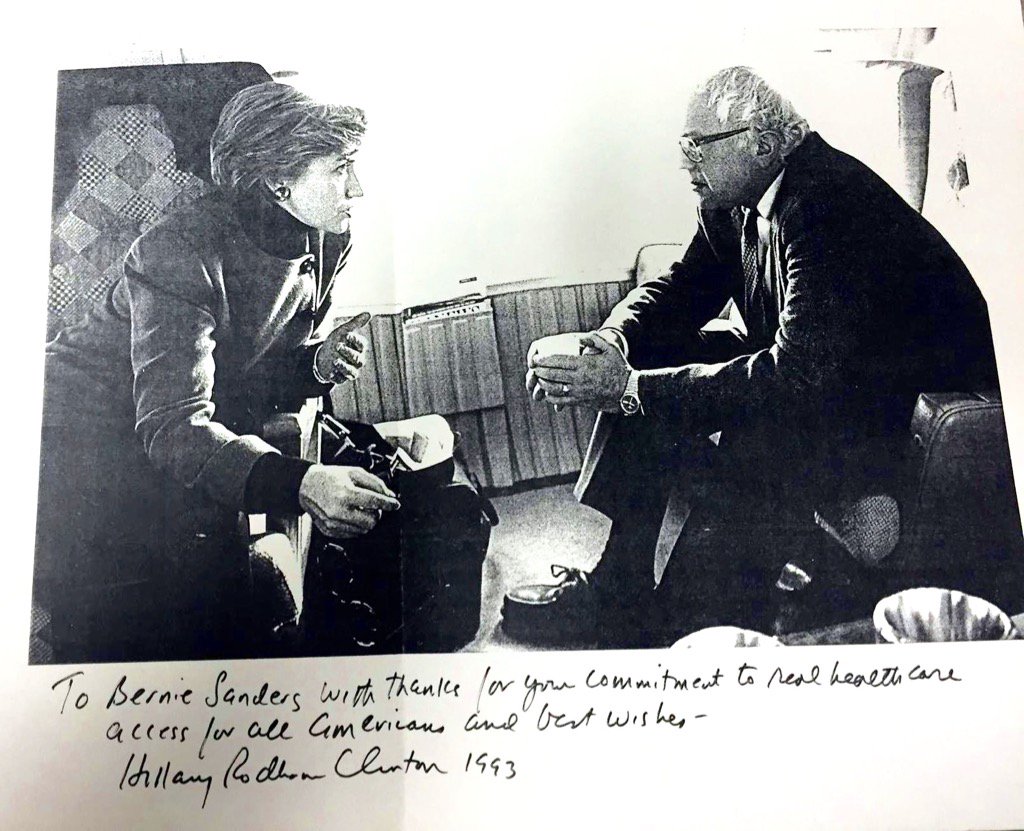
    As polling indicates that Bernie Sanders is a viable candidate in the Democratic race, Hillary has begun attacking him.

    The attacks have apparently helped . . .

    Helped Bernie.


  • Clinton’s Attacks Backfire as Bernie Sanders Hauls in $1.4 Million in One Day                                                                                                                                                                            


  • Wednesday, January 13, 2016

    The speculation about Aaron

    Aaron Rogers is not engaged.

    How do these rumors get started?

    You know, how?


    Who ever thought that he was straight?

    Why do people spread such vicious rumors?

    Just because photographs exist of him and Olivia Munn, there's no reason for people to think they were in a relationship, let alone engaged.

    Now we learn that the actress and the Green Bay Packers quarterback have never been engaged.

    Why do gossips insist upon making everyone straight?

    Don't they have anything better to do?

    How would you feel if everyone called you straight?

    [Consider this a post from an alternate universe.  But, yes, I've always believed Aaron was gay.]


    "Iraq snapshot" (THE COMMON ILLS): 


    Tuesday, January 12, 2016.  Chaos and violence continue, Congress talks the Islamic State, Barack Obama offers more generalities, Human Rights Watch calls out abuses, and much more.


    "ISIS has gained affiliates faster than al Qaeda ever did," Mike Morell declared today.  "From nothing a year ago, there are militant groups in nearly 20 countries that has sworn allegiance to ISIS."


    The former CIA deputy director was speaking before the House Armed Services Committee.  


    The Committee Chair is US House Rep Mac Thornberry and US House Rep Loretta Sanchez was the Acting Ranking Member for the hearing.  Along with Morell, also appearing before the Committee was the former Under Secretary of Defense Michael Vickers and former US Ambassador to Syria Robert Ford.


    The focus of the hearing?

    Acting Ranking Member Loretta Sanchez; The influence of ISIL is spreading.  I think we have to -- we have to get our heads around that and we also see other extremist groups that are beginning to align or coordinate with ISIL from North Africa and that is a problem.  So in general, I would say that the international community, the US, Democrats, Republicans, we're trying to really grapple with how we define, how we handle, what is the best way in which we defeat this evolving situation of ISIL and aligned groups.

    Sanchez repeatedly stressed the need for a strategy to confront the Islamic State -- a clearly defined one.

    In plain speak: Where's the plan?


    Today, the US Defense Dept announced:


    Strikes in Iraq
    Fighter and bomber aircraft conducted 19 strikes in Iraq, coordinated with and in support of Iraq’s government:

    -- Near Baghdadi, one strike cratered three ISIL-used roads.

    -- Near Habbaniyah, one strike destroyed an ISIL bridge and denied ISIL access to terrain.

    -- Near Mosul, eight strikes struck two separate ISIL tactical units and an ISIL cash distribution center and destroyed two ISIL command-and-control nodes, an ISIL tactical vehicle, and 20 ISIL fighting positions.

    -- Near Qayyarah, one strike destroyed an ISIL command-and-control node and destroyed six ISIL staging areas.

    -- Near Huwayjah, one strike struck an ISIL tactical unit and destroyed an ISIL vehicle.

    -- Near Kisik, three strikes struck three separate ISIL tactical units and destroyed an ISIL light machine gun, two ISIL fighting positions, an ISIL vehicle, and an ISIL assembly area.

    -- Near Ramadi, two strikes destroyed an ISIL vehicle bomb, two ISIL front end loaders, and denied ISIL access to terrain.

    -- Near Sultan Abdallah, one strike struck an ISIL tactical unit and destroyed an ISIL fighting position.

    -- Near Tal Afar, one strike destroyed an ISIL-used bridge.


    Task force officials define a strike as one or more kinetic events that occur in roughly the same geographic location to produce a single, sometimes cumulative, effect. Therefore, officials explained, a single aircraft delivering a single weapon against a lone ISIL vehicle is one strike, but so is multiple aircraft delivering dozens of weapons against buildings, vehicles and weapon systems in a compound, for example, having the cumulative effect of making those targets harder or impossible for ISIL to use. Accordingly, officials said, they do not report the number or type of aircraft employed in a strike, the number of munitions dropped in each strike, or the number of individual munition impact points against a target.


    Since August 2014, US President Barack Obama's answer has been?

    To drop bombs on Iraq.

    Two months prior, he had insisted publicly that the only answer to Iraq's crises was a political solution.

    But he quickly shoved that aside.

    His focus has been on bombing and more bombing.


    Tonight, he delivered his final State of the Union Address.  The Islamic State did come up.


    US President Barack Obama:  Priority number one is protecting the American people and going after terrorist networks.  Both al Qaeda and now ISIL pose a direct threat to our people, because in today’s world, even a handful of terrorists who place no value on human life, including their own, can do a lot of damage.  They use the Internet to poison the minds of individuals inside our country; they undermine our allies.
    But as we focus on destroying ISIL, over-the-top claims that this is World War III just play into their hands.  Masses of fighters on the back of pickup trucks and twisted souls plotting in apartments or garages pose an enormous danger to civilians and must be stopped.  But they do not threaten our national existence.  That’s the story ISIL wants to tell; that’s the kind of propaganda they use to recruit.  We don’t need to build them up to show that we’re serious, nor do we need to push away vital allies in this fight by echoing the lie that ISIL is representative of one of the world’s largest religions.  We just need to call them what they are – killers and fanatics who have to be rooted out, hunted down, and destroyed.
    That’s exactly what we are doing.  For more than a year, America has led a coalition of more than 60 countries to cut off ISIL’s financing, disrupt their plots, stop the flow of terrorist fighters, and stamp out their vicious ideology.  With nearly 10,000 air strikes, we are taking out their leadership, their oil, their training camps, and their weapons.  We are training, arming, and supporting forces who are steadily reclaiming territory in Iraq and Syria. 
    If this Congress is serious about winning this war, and wants to send a message to our troops and the world, you should finally authorize the use of military force against ISIL.  Take a vote.  But the American people should know that with or without Congressional action, ISIL will learn the same lessons as terrorists before them.  If you doubt America’s commitment – or mine – to see that justice is done, ask Osama bin Laden.  Ask the leader of al Qaeda in Yemen, who was taken out last year, or the perpetrator of the Benghazi attacks, who sits in a prison cell.  When you come after Americans, we go after you.  It may take time, but we have long memories, and our reach has no limit.

    Our foreign policy must be focused on the threat from ISIL and al Qaeda, but it can’t stop there. For even without ISIL, instability will continue for decades in many parts of the world – in the Middle East, in Afghanistan and Pakistan, in parts of Central America, Africa and Asia.  Some of these places may become safe havens for new terrorist networks; others will fall victim to ethnic conflict, or famine, feeding the next wave of refugees.  The world will look to us to help solve these problems, and our answer needs to be more than tough talk or calls to carpet bomb civilians.  That may work as a TV sound bite, but it doesn’t pass muster on the world stage.


    Where's that political solution, Barack?

    It's not even mentioned.

    Last week, at CNN, analyst Peter Bergen covered the topic of the Islamic State and its rise and noted:

    The third factor was the feckless and incompetent rule of then-Iraqi Prime Minister Nuri al-Maliki, who marginalized Sunnis and disenfranchised them from Iraq's political process to the point that many Sunnis preferred the rule of the Islamist militants in ISIS to that of the "Shia" government in Baghdad. Inexplicably, the Obama White House kept backing Maliki despite his manifest flaws as a leader.


    You'd think that responsibility would, if nothing else, prompt Barack to focus on a political solution.

    You want to defeat the Islamic State?

    Strip away the reason they ever had support.

    You do that by stopping the persecution of the Sunnis.


    At today's hearing, former Dept of Defense Under Secretary Michael Vickers declared that "time is not on our side" in the fight against the Islamic State.

    So if time isn't on our side, why is Barack doing the same damn thing day after day with no real results?


    Mike Morell insisted at today's hearing that what was needed was "a political solution in Iraq to the problem of the disenfranchisement of the Sunnis there."


    When does that get addressed?


    At today's hearing?

    Yes.

    But never by the White House.

    And maybe that's why US House Rep Loretta Sanchez asked repeatedly today -- as she had last month in an Armed Services Committee hearing -- where is the plan for addressing the Islamic State?


    Where?


    Let's note some remarks from Robert Ford.


    Former Ambassador Robert Ford:  But it build support. It recruits.  It replaces fighters who are killed.  It even trains little children.  And so, confronting something like that, we need to think about what is a sustainable solution over time.  And therefore I'm going to talk about resources and the politics of national reconciliation.  First, Iraq.  I visited Iraq a couple of months ago.  It was my first time on the ground in five years.  I was there in Iraq for five years with the American embassy and before that with the Coalition Provisional Authority.  My sense is that, in Iraq, on the military side, there is progress.  But there are too big challenges. Two big challenges.  First, on the resource side, both the Iraqi government in Baghdad and the Kurdish regional government in Erbil -- both are heavily dependent on oil and oil sales.  And low oil prices are really crunching their ability to mobilize resources against the fight against the Islamic State.  It was very noticeable to me that the Kurdish leadership, who I have known since 2004, were generally concerned about their budget  abilities to sustain the fight against the Islamic State.  Some of the Peshmerga fighters had not been paid for three months.  But even in Baghdad, the authorities were concerned about the resources.  Second issue on Iraq, the politics of national reconciliation.  Mike Vickers just mentioned the importance of devolution and decentralization.  I certainly agree with that and I'm hopeful on that because the Sunni Arab leaders -- again, whom I have known since 2004 -- have really come around 180 degrees. They used to be in favor of a tight, strong central government. And now they are arguing for devolution of power.  That is what the Shia and the Kurds always wanted ten years ago.  For the first time, I have actually seen the Sunnis, the Shia and the Kurds in Iraq all talking about the same form of government.  That's new and that's hopeful. But at the same time, as events in Diyala, northeast of Baghdad, yesterday  showed, there is serious sectarian tension. The Islamic State yesterday exploded several car bombs in the weary city of Baquba and there was immediate concern among the local Sunni population that Shia -- irregular Shia militia -- would retaliate.  There was actually fear that they would attack Sunni Arab mosques. In order to mobilize Sunni Arabs to contain the Islamic State there must be efforts at national reconciliation.  And this is important because we don't want the Islamic State to be put down militarily and then revive as happened between 2011 and 2013.  I really don't want to see an Islamic State version 2.0.  It is important for the Americans to therefore maintain pressure on the Shia militia problem in Iraq.  There are Iraqis such as prime minister [Haider al-] Abadi,Ayatollah [Ali al-] Sistani -- a superb religious leader in the Shia community -- people like, on the Sunni side, Speaker [of Parliament Salim al-] Jabbouri who are all working or national reconciliation.  And so, in Iraq, we need to help mobilize resources for both the central authorities in Iraq, Baghdad, for the Kurdish regional government in Erbil.  And we have to be engaged on the national reconciliation, working with the gentlemen I have pointed out.


    National reconciliation was supposed to take place in 2007 -- per the promise Nouri al-Maliki (forever thug and then prime minister) made Bully Boy Bush in order to continue receiving US tax dollars.  It didn't happen in 2007 or 2008 or 2009 or 2010 or 2011 or 2012 or 2013 or 2014 or 2015.

    Will it happen in 2016?


    Will Barack ever demand that it happen?

    Former US Secretary of Defense Chuck Hagel is none too pleased with the do-nothing Iraqi government.  Aaron Mehta (DEFENSE NEWS) reports Hagel called out the wasted time in the five year period of 2008 through 2013 by the Iraqi government and argued it squandered real opportunities:

    “The breakdown in the Sunni-Shia relationship, the breakdown of the Shia-Kurd relationship, [the] prime minister [Nouri al-Maliki] did not fulfill any of the constitutional requirements and the promises he had made to bring Iraq together,” Hagel continued. “I don’t blame all that on him – there were forces that were probably bigger than he was able to deal with – but in my opinion, that’s what happened in Iraq. The five years were squandered, were wasted, and that’s what’s led to so much of the turmoil, the trouble, the chaos, the slaughter and the killing in Iraq today.”


    Kristina Wong (THE HILL) largely avoids Iraq (and then gets it wrong) in her report.

    But if Hagel believes Nouri al-Maliki's second term sewed the current problems (an opinion most analysts share), he is speaking out against the administration.

    Nouri did not win a second term as prime minister in the 2010 elections.

    He lost to Ayad Allawi.

    Barack had US officials in Iraq broker an agreement (The Erbil Agreement) which gave Nouri a second term after the voters said "no."

    In his remarks on Monday, Hagel also declared the most important thing a president could do was "listen" to military leadership.

    Who didn't get listened to on Nouri?

    The then-top US commander in Iraq: Gen Ray Odierno.

    Ahead of the 2010 elections, Odierno saw a scenario where Nouri could lose the popular vote but refuse to step down.  He argued that the White House needed to be prepared for that possibility.

    He was iced out of the process by US Ambassador to Iraq Chris Hill (the great failure Hill).

    And when it came to pass, when Odierno's nightmare scenario came to pass?

    It took the intervention of then-US Secretary of Defense Robert Gates and then-US Secretary of State Hillary Clinton for Barack to listen to Odierno.

    If you actually connect Hagel's remarks with reality from that time period, he offered a blistering critique of the administration.


    Today, Human Rights Watch issued an alert which opened:


    Kurdish and Shia Turkmen armed groups have repeatedly harmed and endangered civilians in clashes in Iraq’s Tuz Khurmatu district, in Salah al-Din province, since October 2015. The armed groups have killed, wounded, and abducted civilians and destroyed scores, if not hundreds, of homes and shops.
    “Some of those involved in the conflict in Tuz Khurmatu appear to be targeting civilians on the basis of their ethnicity,” said Joe Stork, deputy Middle East director. “They have been carrying out killings, abductions, and widespread property destruction with complete impunity.”


    They also noted:

     Willful killing of captured fighters and detained civilians; torture and other ill-treatment of people in custody; and looting and unjustified destruction of civilian property are serious violations of international humanitarian law, which is applicable to all parties fighting in Iraq.
    On April 7, 2015, the Iraqi cabinet formally included the Popular Mobilization Forces among the state forces under the command of Prime Minister Haider al-Abadi as commander-in-chief. In doing so, the government has legitimized these forces as a matter of law and became responsible for their actions.
    [. . .]
    Human Rights Watch reiterates its recommendation that the Iraqi government take immediate steps to establish effective command and control over the Popular Mobilization Forces and other pro-government militias and disband those that resist government control. The government should also ensure that militia members implicated in violations of international human rights and humanitarian law are fairly and appropriately disciplined or prosecuted. This includes military and civilian officials responsible for abuses as a matter of command responsibility.


    When does Barack plan to address this?

    We'll again note two Tweets from Monday:


  • Militias tell residents by sound amplifiers attached to cars "Sunnis should leave Muqdadya-Diyala".


  • Crowd popular Shia executed innocent citizens in Diyala


  • When will this be addressed?


    Dropping back to Sunday:


    Though many Americans have tuned out since 2009, they need to be paying attention.


  • And it is graphic.

    And guess what?

    You don't have the right to look away.


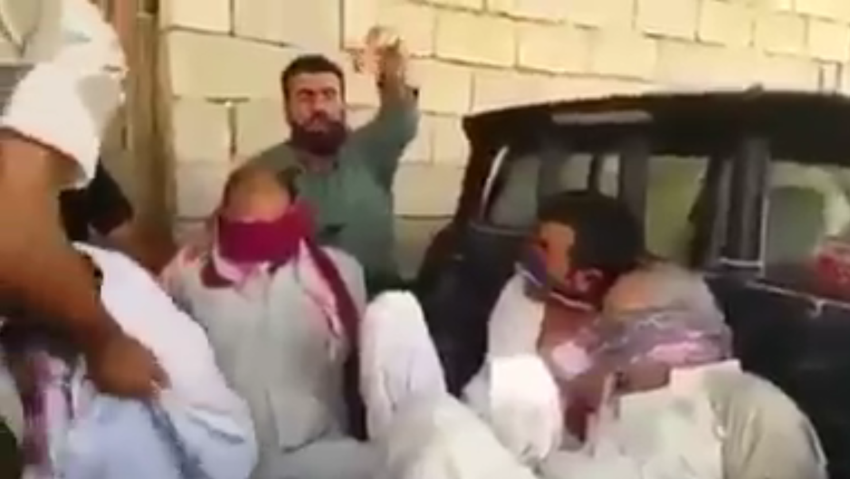
    militiamen cut off captive's ear                                                                                                          
    Embedded image permalink


    When Iraqis don't have the right to safety in their country because thugs were put in charge by the US government and thugs continued to be backed by the US government, you don't have the luxury of looking away.

    Above?

    That's outrageous.

    There's no legal justification for it.

    Not even in the joke that is the Iraqi legal system.

    What happened should result in immediate prosecution.

    Those are War Crimes.

    The prime minister of Iraq, Haider al-Abadi, should be denouncing the crimes.

    Any refusal to do so should result in the US Congress exploring whether or not they should continue their support of Haider's government.


    When these crimes and attacks are not addressed, support for the Islamic State is fueled.  Is again fueled.  To destroy ISIL, you have to destroy the reasons it has support.  The persecution of Sunnis has fueled support for the Islamic State.


    Monday, January 11, 2016

    Shut up Allie McCracken

    Did you read this garbage from CODESTINK's latest White idiot  Alli McCracken?


    CODESTINK is a fake ass who can't talk about Iraq and can't call out Barack -- even all this time later.


    They're cheap little whores who have no ethics.


    White girl Alli wants to give Barack his "props" -- White girl, just shut up, okay?


    Your group is White-White-White.


    Stop trying to appropriate my culture.


    From Margaret Kimberley's "Freedom Rider: Cuba in the American Imagination" (Black Agenda Report):


    Even supposedly serious thinkers succumbed and revealed more about their own fantasies than any insight about Cuba. Liberal pundit David Corn could only think of his stereotypes in a startling missive posted on twitter. “Cuba's a swell place to visit. Beaches, rum, baseball, music. It'll be great for more USers to visit-& that could counter repression there.” If there were a prize awarded for truly stupid twitter posts, Code Pink’s Medea Benjamin should win with these words, “Obama spoke with Raul Castro yesterday. The ice is melting. Mojitos for all!” It is difficult to know where to begin in analyzing such nonsense. It isn’t clear what Corn means by repression, but surely the presence of Americans having fun has never made people safe anywhere in the world. As for Benjamin, anyone whose response to a foreign policy decision includes references to a cocktail should be ignored now and forever. 


    How I hate CODESTINK and it's excuses for Barack and it's distraction from real issues and real activism.


    It's time that make-work group for bored White women closed shop.


    "Iraq snapshot" (THE COMMON ILLS): 


    Monday, January 11, 2016.  Chaos and violence continue, Basra continues to be a hot spot (and the western media continues to ignore it), Haider says Iraq can do its air bombings just well but then . . . ,
    Shi'ite militias commit War Crimes, Ramadi lays in ruin, and much more.


    Iraq was slammed with violence today.  REUTERS counts a minimum of 51 dead in Baghdad and the eastern town of Muqdadiya. MIDDLE EAST EYE explains, "Three bloody attacks struck Iraq on Monday evening, with gunmen raiding a Baghdad shopping mall, a bomb rocking a busy market in the capital and further bombings killing at least 20 in a town north of Baghdad."

    Of the violence, Judy Woodruff (THE NEWSHOUR, PBS) notes, "It began with a car bomb and suicide blast at the Jawhara Mall. That touched off a 90-minute gun battle before security forces gained control. To the north, another suicide attack killed two dozen people. Ten more were killed in other bombings." Muqdadiya is a town in Diyala Province.  Of the violence there, Mu Xuequan (XINHUA) reports, "Up to 23 people were killed and 44 others wounded on Monday in two coordinated bomb attacks at a coffee shop in a town in Iraq's eastern province of Diyala, a provincial security source told Xinhua."


    Hamdi Alkhshali (CNN) notes, "ISIS claimed responsibility for both bombings in statements posted on its media site."

    DEUTSCHE WELLE observes, "The bombings and attacks on Monday left the biggest death toll in three months. Without naming IS, Interior Ministry spokesman Brigadier General Saad Maan blamed 'this terrorist group after they suffered heavy losses by the security forces'."  In light of today's attacks, ALL IRAQ NEWS notes, Ammar al-Hakim, leader of the Islamic Supreme Council of Iraq, has called on the Baghdad Operations Command to re-examine their security plans.

    U.S. Condemns Terrorist Attacks in Iraq


    Press Statement
    John Kirby
    Washington, DC
    January 11, 2016

    The United States condemns the barbaric acts of terrorism today in Iraq, including a suicide bombing and hostage-taking at a mall in Baghdad for which ISIL has claimed responsibility and two separate suicide attacks in Muqdadiyah. We express our deep condolences to the survivors and to the families of the victims.
    These attacks once again display the utter disregard ISIL has for the lives of innocent civilians. We stand united with the Iraqi people as they confront the scourge of violent extremism.
    The United States remains committed to working with Prime Minister al-Abadi, the Iraqi Security Forces, and our Coalition partners to support Iraqi-led efforts to degrade and destroy ISIL.


    On Muqdadiyah, Diyala Province has been placed under curfew.  The unrest includes:


  • Militias tell residents by sound amplifiers attached to cars "Sunnis should leave Muqdadya-Diyala".


  • Crowd popular Shia executed innocent citizens in Diyala


  • Dropping back to Sunday:


    Though many Americans have tuned out since 2009, they need to be paying attention.


  • And it is graphic.

    And guess what?

    You don't have the right to look away.


    militiamen cut off captive's ear                                                                                                          
    Embedded image permalink


    When Iraqis don't have the right to safety in their country because thugs were put in charge by the US government and thugs continued to be backed by the US government, you don't have the luxury of looking away.

    Above?

    That's outrageous.

    There's no legal justification for it.

    Not even in the joke that is the Iraqi legal system.

    What happened should result in immediate prosecution.

    Those are War Crimes.

    The prime minister of Iraq, Haider al-Abadi, should be denouncing the crimes.

    Any refusal to do so should result in the US Congress exploring whether or not they should continue their support of Haider's government.


    Haider didn't not denounce the War Crimes.

    John Kirby didn't even acknowledge them in today's US State Dept press briefing.

    You can be sure Sunnis across the Middle East are aware of the silence.


    There was other violence today -- including a Baquba car bombing that killed 1 woman and left three other civilians injured -- but let's note this from the US Defense Dept:


    Strikes in Iraq

    Bomber, fighter, ground attack and remotely piloted aircraft and rocket artillery conducted 12 strikes in Iraq, coordinated with and in support of Iraq’s government:

    -- Near Haditha, two strikes struck two separate ISIL tactical units and destroyed an ISIL fighting position.

    -- Near Hit, one strike struck inoperable coalition equipment, denying ISIL access.

    -- Near Kisik, one strike destroyed an ISIL warehouse.

    -- Near Mosul, four strikes struck an ISIL tactical unit and an ISIL improvised explosive device facility and destroyed 11 ISIL fighting positions and an ISIL vehicle.

    -- Near Qayyarah, two strikes struck an ISIL tactical unit and destroyed an ISIL-used culvert.

    -- Near Ramadi, two strikes struck two separate ISIL tactical units and destroyed two ISIL mortar positions, two ISIL heavy machine guns and two ISIL fighting positions.


    Task force officials define a strike as one or more kinetic events that occur in roughly the same geographic location to produce a single, sometimes cumulative, effect. Therefore, officials explained, a single aircraft delivering a single weapon against a lone ISIL vehicle is one strike, but so is multiple aircraft delivering dozens of weapons against buildings, vehicles and weapon systems in a compound, for example, having the cumulative effect of making those targets harder or impossible for ISIL to use. Accordingly, officials said, they do not report the number or type of aircraft employed in a strike, the number of munitions dropped in each strike, or the number of individual munition impact points against a target.


    On air strikes, yesterday XINHUA reported, "Iraqi Prime Minister Haider al-Abadi on Saturday said that more than 60 percent of sorties in the battles against the Islamic State (IS) militant group were carried out by the Iraqi air force conducted."

    Today?


    AL MADA reports Haider wants an explanation for Iraqi planes bombing an area near Spyker -- a bombing that killed Iraqi fighters by mistake.


    Dropping back to Saturday's snapshot:


    From December 31, 2015's "Those never-ending victory laps:"


    I guess every day is going to be about declaring and celebrating the liberation of Ramadi -- since it was first claimed on Monday and until the day finally comes that it is liberated.
    Point of fact, it's still not liberated.
    But every day, the limited amount of time the world press spends on Iraq is taken up by tales of Ramadi's liberation.
    And so much more gets ignored.
    For example?
    IRAQI SPRING MC reports counter-terrorism forces in Diyala shot dead a female civilian in front of civilians and Iraqi troops.
    Or how about a new flashpoint developing?
    IRAQI SPRING MC notes troops being sent to Basra.  This comes as NATIONAL IRAQI NEWS AGENCY notes MP Abd al-Salam al-Maliki is calling for the declaration of a state of emergency in Basra arguing the situation there is turning into a crisis.
    But by all means, let's all waste another day declaring Ramadi liberated (when it's not).


    That's how the year ended -- and with no western press coverage of Basra, to be very clear.

    Nine days later?

    Sinan Salaheddin (AP) reports, "Fear has become part of daily life amid a surge of violence in Basra, where rampant crime, kidnappings and extortion have become commonplace. Marauding Shiite militiamen drive around in cars with tinted windows and without plates, while local clans wage bloody feuds."

    Basra's struggling and, in part, that's said to be because Iraqi forces are being deployed elsewhere in Iraq.


    Basra remains in the news.

    Not in the coverage from the western press.

    But the Iraqi press is noting it today.

    For example, ALL IRAQ NEWS reports Major General Abdul-Karim Mustafa Mizel (chief of police of Basra) states the conflict in Iraq has a negative impact in Basra and that Basra is under attack.  Mohammad Sabah (AL MADA) notes that previously when Basra was seen as in trouble, former prime minister Nouri al-Maliki ordered the Charge of the Knights (2008).


    At some point, Basra's going to demand attention even from the fickle US press.

    Turning to today's US State Dept press briefing moderated by spokesperson John Kirby:


    QUESTION: The governorate council of Anbar say that Ramadi was left in ruins after its liberation and they say it needs billions of dollars. But they also say that the United States pledged $50 million for the repair of the city of Ramadi. Could you confirm that you guys put about $50 million to aid Ramadi?


    MR KIRBY: I don’t know if I have – I don’t know if I have that. I don’t know if I have that, Said. Hang on a second. So, yeah. So the UN established a funding facility for immediate stabilization in June of last year, so this past summer, to provide assistance for immediate needs in areas liberated from ISIL. Over a dozen coalition partners have contributed or pledged more than 50 million. That’s where the number comes from. This included an initial U.S. contribution of $8.3 million followed recently by an additional pledge of another $7 million for a total of, obviously, 15.3. This money will support four categories: public works and light infrastructure rehabilitation, livelihoods support to jumpstart the local economy, capacity building of local governments, and community reconciliation.
    So our share of the 50 million pledged by the coalition was 15.


    QUESTION: Do you have any sort of independent assessment of what kind of damage was inflicted on Ramadi during the occupation of ISIS?


    MR KIRBY: I don’t have – I simply don’t have that level of detail, but we absolutely would not dispute the reports that there was damage. And we know very specifically even through just the use of overhead imagery that lots of infrastructure and buildings were destroyed during ISIL’s occupation of Ramadi. I’m not able to give you sort of a number figure, metrics on that. But I tell you what, I’m going to – I think that’s a fair question. I’d like to take that and see if we can get you back a little bit more fidelity on it because it’s a very fair question. We know that there was damage, some of it significant. I’m just not at liberty to sort of give you a more specific metric of that.


    Ramadi is destroyed.

    What a wonderful 'accomplishment' for Haider and the White House.


    Back to the press conference.


    QUESTION: Iraq.

    MR KIRBY: Yeah.

    QUESTION: Thank you. So there have been some media reports about Mosul Dam being – facing the imminent risk of collapse. Do you have anything on that? Is the State Department involved in helping prevent that from happening?

    MR KIRBY: What I can tell you is that we continue to support Iraqi-led efforts to help take measures to repair the dam to prevent a potential humanitarian crisis and educate the Iraqi people about the potential damages of a dam breach. Sorry. We have provided some equipment to monitor the stability of the dam and we’ve sent some technical experts to assess the dam’s structural integrity, and we’re going to continue to work with Iraqi leaders on that.
    I’m not at liberty to make any predictions about the fate of the dam right now. Obviously, we all have a shared interest in making sure that its integrity is preserved.

    QUESTION: But since you provided some equipment, does that suggest you are – your assessment is that the dam is in danger of collapsing anytime soon?

    MR KIRBY: The data that we have from the dam indicates that it has experienced additional stress since ISIL captured it in the summer of ’14. Since Iraqi and Kurdish forces have liberated the dam – since they liberated the dam in August of ’14, we’ve been working closely with Iraqi partners to help them monitor the integrity and make necessary repairs. It’s just – it’s impossible right now for us to make a prediction about if or even when the dam might break.

    QUESTION: Has Iraq sought financial assistance from the U.S.? Because its economy apparently is struggling because of the drop in oil prices.

    MR KIRBY: I’m not aware of any financial assistance that they asked for. Obviously, as I said, we provided some equipment and some technical expertise.

    QUESTION: John, could I ask a question about the aid to Ramadi?

    QUESTION: Sorry, could I ask just one more on the dam, then? The expertise – does that involve U.S. engineers at the site, or of the dam itself?

    MR KIRBY: Well, we sent technical experts to assess the dam’s structural integrity.

    QUESTION: But they are not based at the dam? They were visiting recently?

    MR KIRBY: I believe whatever access they had to the dam was temporary, I mean, just in order to do their job.

    Yeah.


    Winding down, singer-songwriter David Bowie has passed away.  Jody Watley notes the passing in "Celebrating David Bowie."  The New Year began with the sad news that Natalie Cole had passed away December 31st.  I wrote about this in "Natalie Cole (C.I. filling in for Ruth)" but really haven't noted it here.  Tavis Smiley noted Natalie last week on his PBS program (link is video and transcript).  Still on music, but with some non-death news, singer-songwriter Carly Simon has authored the best selling memoir BOYS IN THE TREES.  It topped "2015 in Books (Martha & Shirley)" -- the community's picks for best books of 2015.  And Carly's two-disc set SONGS IN THE TREES is a musical accompaniment to the book (and made Kat's "Kat's Korner: 2015 In Music"). Today, Diane Rehm spoke with her about the book on the second hour of   THE DIANE REHM SHOW (NPR), Diane also raised other issues.


    DIANE REHM: Somebody else, Michael, wants to know your response to the passing of David Bowie.

    CARLY SIMON:  You really have caught me off guard.

    DIANE REHM: You didn't know?

    CARLY SIMON: I didn't know.  No.

    DIANE REHM: Oh, my dear, he died last night or today --

    CARLY SIMON: Oh my God.

    DIANE REHM (Con't): -- of cancer at 69.

    CARLY SIMON: I'm speechless.  I'm just speechless.

    DIANE REHM: I'm so sorry to be the one to tell you.

    CARLY SIMON: Goodness. Goodness. --

    DIANE REHM: Did you know him?

    CARLY SIMON: I did know him.  I didn't know him well, but I certainly knew his music.  And I did meet him a couple of times.  And it's just -- it's really shocking when you hear something about a contemporary who's passed.  It's just -- I mean, it just seems -- of course, as you grow older, there are more and more. I'm afraid to say that a little like life.