Isaiah's latest THE WORLD TODAY JUST NUTS "The Glenn Greenwald Reaction"

Good morning. I'm Rachel Martin. There's a house for sale in Albuquerque, N.M. Unassuming on the outside, step inside, and you're in a whole different atmosphere. Marten Griego painted one of his walls like the edge of a cave that looks out onto space. Griego also put together another wall resembling a spaceship, same with the fireplace.
That was Tuesday. This is from NPR's MORNING EDITION on Monday:
The fastest and largest way to cut emissions by 2030 is likely through the way we generate electricity. Across three independent assessments which ran simulations of different policies, the power sector would have to make up the majority of the overall emissions cuts.
Solar, wind and other renewables, already growing rapidly, would produce roughly half of the country's electricity by 2030, according to an analysis by the University of Maryland and World Resources Institute. That would be significantly faster than current federal estimates, which forecast renewables being below half of the energy mix in 2050, 20 years later. If renewables continue to grow at the current rate, the country would need to turn to other carbon-free sources of energy like nuclear power, according to a Princeton University analysis.
The recent growth of solar and wind has largely been driven by their falling costs, making them cheaper options than fossil fuels in some locations. The Biden administration recently announced an initiative to drive those costs down even farther, cutting the price of solar by more than half by 2030.
"We saw a record amount [of renewables] in 2020, even despite the effects of the pandemic," Arostegui says. "So we're looking at an acceleration of trends that are in place, not a wholesale new process that doesn't have any basis in what's going on in reality."
On the flip side, fossil fuels would shrink correspondingly, with coal power dropping to just a tiny percentage, if not disappearing completely. Because both renewable energy and natural gas are more affordable, coal power plants are already on the decline. Many have closed and existing power plants aren't being operated as much.
And this is from NPR's ALL THINGS CONSIDERED on Tuesday:
Corporate America wants you to know that it takes climate change seriously. But how can you tell if businesses will follow through?
Here's one idea that's catching on: Cut the pay of corporate leaders if they don't meet their climate goals.
Though the practice is not widespread, several firms — including oil companies such as Shell, Murphy Oil and the refiner Valero — are embracing it, often under pressure from activist shareholders.
"We believe that compensation drives outcomes," says Danielle Fugere, president of As You Sow, a nonprofit that works in shareholder activism. "So when an executive team is incentivized to actually accomplish a goal, then they're more likely to do so."
I thought NPR was going to up there science content? Remember that broken promise when they cancelled TALK OF THE NATION?
"Iraq snapshot" (THE COMMON ILLS):
Tuesday, April 20, 2021. A Joe Biden devotee/accolyte tries to rescue Joe from reality, Paul Wood tells a little truth about Brett McGurk (just a little -- as usual we are stuck doing the heavy lifting), Iraqis remember those killed for the 'crime' of protesting, and much more.
Never forget that is' always about oil or whatever else Iraq can be robbed of. This morning, REUTERS reports:
China's Sinopec has won a deal to develop Iraq's Mansuriya gas field near the Iranian border, the oil ministry said on Tuesday.
Last year Iraq cancelled a contract signed with a group led by Turkish Petroleum Corp (TPAO) to develop the field and invited international energy companies to compete to develop it.
Sinopec won the contract in a bidding round held at the oil ministry headquarters in Baghdad on Tuesday, the oil ministry said in a statement
At THE ATLANTIC, Jonah Blank writes:
The original sin of the war in Iraq was going to war in Iraq. And the original sin of the war in Afghanistan was going to war in Iraq.
In September 2001, when Joe Biden was the chair of the Senate Foreign Relations Committee, I was the policy adviser for the stretch of Asia that included Afghanistan. By 9 a.m. on 9/11, I felt certain that al-Qaeda (which was based in Afghanistan) was behind the attacks—but that we’d end up invading Iraq anyway.was a year and a half off. And that interim period was the only time the mission in Afghanistan ever stood a real chance. This week, President Biden announced that all United States forces will be withdrawn from Afghanistan by the 20th anniversary of 9/11. To understand his decision to get out, one has to understand the decision to get in—and how that choice was quickly undermined by the invasion of another country.
In 2001, even the most ardent war hawks didn’t want to invade Afghanistan: They wanted to invade Iraq. Neoconservatives, such as the Pentagon officials Paul Wolfowitz and Doug Feith, had a grand vision of remaking the country in America’s image. Paleoconservatives, such as Vice President Dick Cheney and Secretary of Defense Donald Rumsfeld, wanted to oust Saddam Hussein, install a pliable puppet, and thereby deter any other would-be adversaries. Both camps saw Afghanistan as an unwelcome distraction from the main event, but they applied the same rationales there.
Jonah offers a very kind assessment of Joe Biden. Not very real, but kind. What he has Joe avoiding -- nation building, for example -- and wants you to know isn't in Joe's character? It's exactly what Joe advocated in Iraq. On Iraq, for example, Michael R. Gordon (NEW YORK TIMES) observed in August of 2008:
During the early part of the American occupation, Mr. Biden initially argued that more troops were needed. As the conflict dragged on, and the notion of sending additional troops became more unpopular with the voters, he began to advocate a new plan, one that sought to apply his Balkan experience to Iraq and appeared to open the door to troop withdrawals.
In a 2006 Op-Ed article in The New York Times that he wrote with Leslie H. Gelb, the president emeritus of the Council on Foreign Relations, Mr. Biden recalled how Bosnia had been divided into Muslim, Croat and Serbian federations. He advocated the creation of three largely autonomous Sunni, Shiite and Kurdish regions, while preserving a limited central government.
Critics complained that the sectarian groups in Iraq were too intermingled to be so easily disentangled. And in its original formulation, the plan had another liability: it was more popular in Washington than in Baghdad, where Iraqi leaders viewed it suspiciously as an effort to partition their country. When the Senate passed a resolution in September that endorsed Mr. Biden’s plan for a loose Iraqi federation, the Iraqi prime minister, Nuri Kamal al-Maliki, and other Iraqi leaders initially objected.
Mr. Biden has sought to refine the original concept by emphasizing that his major point is the need for a decentralized federal system in Iraq. But the plan has faded from the public debate as violence has declined and the Maliki government has begun to assert its sovereignty.
Dismantling one system to impose another -- especially when the people in said country are not asking to be put into three semi-autonomous regions -- upon them? That is nation building.
Maybe Jonah's confused about Joe because when Joe talks about things like Iraq, for example, Joe tends to praise neoconservatives -- they're bright, they're this, they're that -- while trashing the American people as uninformed? Check out this speech he gave to the Brookings Institution in 2003.
In other news, Martiza Abdel Tweets:

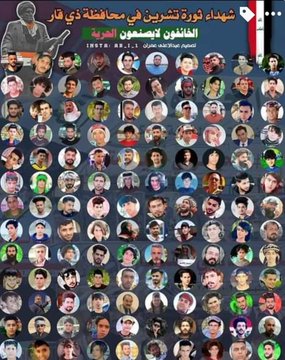
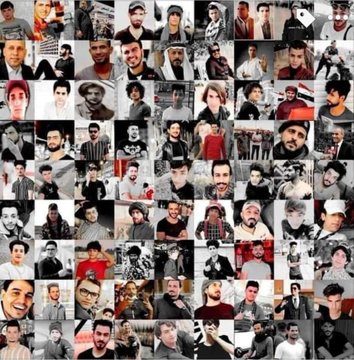
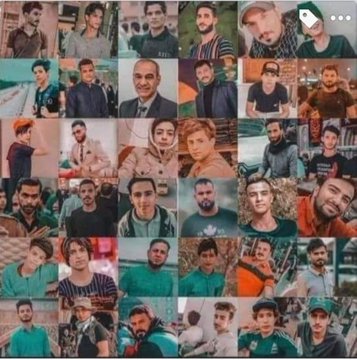
The attacks on peaceful protesters happened during the month of Ramadan. Ramadan is a month of worship and fasting. This year, it started April 12th and ends May 12th. And at the holy time of Ramadan, many Iraqis are reflecting on the Iraqi protesters. For example, Mohamed Ali Tweets:


Those responsible for the brutalities against the peaceful protesters in IRAQ must be hold accountable . Under one thousand got murdered, and many thousands disabled or disfigured, it was utterly ruthless.

Replying to



In other news, Amnesty's Donatella Rivera Tweets:
She's referring to Paul Wood's article for NEW LINES about US failure Brett McGurk:
In 2006, al-Maliki -- Abu Isra to those who knew him -- was an obscure member of the Iraqi Parliament begging for Green Zone passes from American officials. He was not obviously corrupt and was ready to put in 16-hour days, and so the U.S. backed him to become prime minister. But al-Maliki turned out to be a hard-faced Shiite nationalist: “sectarian, intolerant, ideologically Islamist and a paranoid politician,” in the words of one Western official who dealt with him. “If you’re working 16 hours a day, that’s not a virtue in the Middle East. It means you’re working to conspire against everybody else 16 hours a day.”
Abu Isra set about excluding Sunni opponents from power and turning the security forces into his own praetorian guard. Iraq became, once again, a place of secret prisons and torture. McGurk’s critics say his lack of Arabic meant he missed the vicious, sectarian undertones of what al-Maliki was saying in meetings right from the start. Translators censored or failed to keep up. Like many Americans in Iraq, McGurk was deaf to what was happening around him.
Al-Maliki was the consequence of two mistakes by the U.S. How much McGurk had to do with them remains in dispute. The first mistake was the “80 Percent Solution” for ruling Iraq. The Sunni Arabs were mounting a bloody insurgency, but they were just 20% of the population. The theory was that you could run Iraq with the Kurds and the Shiites. The second error was to identify the Shiites with hardline, religious parties backed by Iran. Al-Maliki, a member of the religious Da’wa Party, was the beneficiary of this.
The U.S. diplomat who was in Baghdad with McGurk remembers him asking a junior member of staff to type out a cable to Washington. “He decides to write the strategy for Iraq moving forward. This is after he talks to like three people in the government who speak English. And it’s completely off base, it’s hogwash: Make al-Maliki a dictator and, you know, Iraq in the rearview mirror.”
McGurk was “the Maliki whisperer,” as newspaper profiles put it — but as events turned out, it wasn’t clear who was “whispering” to whom. The former senior Western diplomat in Baghdad said there was ample evidence that al-Maliki was “poison,” but the U.S. believed that a “Shia tough guy” was needed to run Iraq. “He may be a son of a bitch, but he’s our son of a bitch. This narrative pervaded the Washington debate, and McGurk was at the heart of it. … McGurk convinced everybody. You will find huge numbers of Iraqis who had anything to do with Americans hate McGurk.”
But al-Maliki was not America’s son of a bitch. Two sources told me his aides dismissed McGurk as a “useful idiot.” They joked that he was not America’s man in Baghdad but Da’wa’s in Washington. These same aides later allegedly called the U.S. military commander, Lloyd Austin, now Biden’s defense secretary, a “coward” for his (supposedly) obsequious attitude toward Abu Isra. Such extraordinary insults stemmed from the confidence al-Maliki had in the unwavering support of the White House. Crocker, the former U.S. envoy to Iraq, told me that in 2008, he and McGurk tried to get President George W. Bush to drop al-Maliki but were told in no uncertain terms to think again. Under President Barack Obama, too, the policy was the same: “There is no alternative to Maliki.”
The U.S. even came together with Iran to save Abu Isra when he lost the 2010 election to a secular Shiite, Ayad Allawi. Allawi should have had the first chance to form a coalition but — after the votes had been counted — al-Maliki got the Iraqi supreme court to change the rules and horse trading began. Essentially, al-Maliki was being allowed to steal the election. Years later, McGurk told The Atlantic that he and other American officials had worked to find alternatives to al-Maliki but that “Maliki worked his ass off from day one and just collected seat after seat.”
Once again, there was “no alternative” to al-Maliki. One former senior U.S. official who worked with McGurk said: “Like every American operates overseas, you form relationships, and you get captured by those relationships. Al-Maliki was his guy. So he stayed with al-Maliki even when it was clear that al-Maliki was a serious human rights abuser who was ruthless and dangerous to the further development of his own country. Everybody in foreign policy makes these mistakes. Everybody. You wind up picking the people you’ve met, getting comfortable with them and then being stuck with whatever they’re doing on their own. You don’t know until it’s too late, and then you have to figure out how to manage it.”
Another former senior official who knows McGurk was less forgiving. He thought his influence over the Obama administration’s Iraq policy had helped to give al-Maliki another four years in power. “Those years were disastrous” — Iraq started to return to civil war; al Qaeda in Iraq reemerged and began to evolve into the Islamic State group, also known as ISIS.
At several moments in al-Maliki’s premiership, Iraq’s government would probably have collapsed — the country itself might have ceased to exist — without the U.S. presence in Iraq. The U.S. had all the power, but somehow they were the supplicants at Abu Isra’s court. In 2011, the issue was once again whether U.S. troops would stay. And once again, the U.S. was begging the Iraqis to grant permission for something that was supposedly happening at their request.
A participant in the talks told me: “McGurk had persuaded himself that he and Maliki had a unique relationship and that they could work something out. This was complete and utter … folly.”
Al-Maliki did do a deal — with Iran. He would get the U.S. out, and Iran would support him as the leader of Iraq’s Shiites. Al-Maliki’s government duly told U.S. forces to leave. Obama declared that he had fulfilled a campaign promise (already a foregone conclusion by the time he came into office) to bring the troops home, their job done. “We’re leaving behind a sovereign, stable and self-reliant Iraq.” In truth, it was a defeat for the U.S.
And we'll stop there because (a) it's a long enough excerpt and (b) Paul doesn't know what the hell he's writing about in the paragraph after our excerpt. I say the second part as the first person to ever write about the scandal Paul notes -- and gets wrong -- Brett's extra-marital affair with Gina Chon. Two days before THE ATLANTIC article -- bad article -- that Paul links to, one day before the DC paper. We covered it and we covered it best. All this time later, Paul can't grasp the issues. Late to the dinner party and he didn't even bring a hostess gift, such poor manners.
Gina Chon was a reporter for THE WALL STREET JOURNAL. Apparently, we have to go over all of this and we have to because other people won't do their damn jobs -- the jobs they're paid to do. Me? I have had a nasty cold since Friday. Because my doctor insisted, I just got back from taking a COVID test. I'm sure it will come back negative but that was my morning. And all I want to do is go to sleep. But because Paul can't do the job he's paid to do, I have to do it.
Brett McGurk was an employee of the US government. He was married. Gina Chon was an employee of THE WALL STREET JOURNAL. She was married. She gave him "blue balls" as he told her in that 'sweet' and 'romantic' e-mail. Gina apparently had little experience with men and found that e-mail 'hot' and she began an affair with him.
If that's all that happened, that would have been bad enough.
A US employee was in Iraq and despite the cultural difference he began an affair with a woman -- a woman of color -- important when the country isn't, for example, the UK. He instantly becomes "American infidel" in Iraq on social media when the affair is finally discovered. He is the married, White American who came to Iraq and violated social customs.
It does matter when the US has put religious fanatics in charge of Iraq.
And let's also not forget that 'honor' killings are not uncommon in Iraq.
That's what killed the nomination for Brett and I documented it here in real time. The only thing I left out -- and I noted this in real time -- was the Democratic Party member who was then a US senator and went to Barack Obama to tell him that Brett would never get Senate approval to be US Ambassador to Iraq because that would put a target on the backs of any Iraqi women who worked at the embassy or needed to visit the embassy.
They would, as the senator explained to Barack, be seen by religious zealots in Iraq as ''consorting' with the infidel who had a reputation for seducing non-White women in Iraq.
I reported that as it happened and the only thing I omitted was the senator's name. I would happily -- to this day -- give the senator credit. I had spent many years calling this senator out. (After many years praising.) When the senator, who I have known for years, decided not to run for re-election, I asked, one more time, "Do you want me to credit you?" No.
So I have left the senator unnamed and unless they pass away before this site ends, I never will credit them.
But that is what happened. And Brett could never be ambassador for that reason.
Now Paul is a journalist so there's another part he needs to cover.
If Brett's scandal had happened under Bully Boy Bush -- Wait. It did happen under him. It didn't get exposed though until Barack was president and was nominating Brett for US Ambassador to Iraq. If Barack had not bneen involved, the cowards and hypocrites at FAIR would have led on this issue. They would have told you that it was unethical for Gina Chon, a reporter in Baghdad, to have an affair with a US government employee. That alone was unethical.
What made it worse is Gina let him vet her copy. Before she submitted it to THE WALL STREET JOURNAL, she let him vet it and she changed it as he instructed.
Gina did not 'leave' THE WALL STREET JOURNAL. The paper fired her. I noted that in real time too. I was told it was going to happen hours before hand and, as I covered here, I was given an audio recording of the meeting in which she was fired. She raged, she screamed. Didn't matter, she had broken journalistic ethics and she got her ass fired.
Paul doesn't cover that and in terms of the ambassadorship that was never to be, he doesn't get it. He's rather piggish (thinking that Brett -- any man -- can do whatever they want with no consequences) or just rather xenophobic (not caring that threat of the lives of Iraqi women that would be in place if Brett had become ambassador).
It's not a minor issue. We are yet again having to cover it because those who should do the job refuse to do so.
Let me wind this down by noting that CJR refused to cover it -- the supposed watchdog of journalism. They ignored it over and over. Then they wanted to go to town with some reporter who slept with a fire fighter (I believe that's what it was) when she was on the city beat and how could she!!!! When they posted that ridiculous item, our own Martha (who, with Shirley, does our book review at the end of each year) left a blistering comment at CJR calling them out for their rank hypocrisy and for that reaosn -- and only that reason -- they finally wrote a sentence or two about Gina and Brett and the lapse of journalistic ethics.
After this posts, I'm going to bed. Whenever I wake up -- this afternoon, tonight, early in the morning -- I will post some of the stuff sent to the public account.
The following sites updated:
-
-
-
-
First flight on Mars9 hours ago
-
-
-
-
Kane Brown10 hours ago
-
GODZILLA VS. KONG10 hours ago
-
The murder of J.F.K.10 hours ago
-
Crazy Maxine10 hours ago
-
-
-
Batwoman1 day ago


