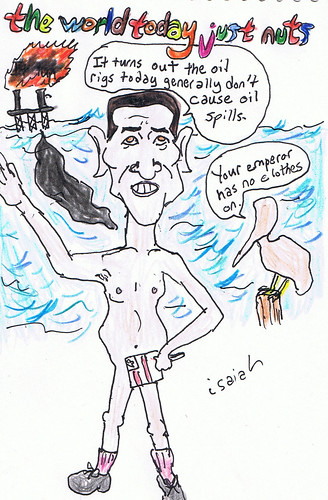
"The Obama Death Threat: You Got Me"(Hillary Is 44):
As we wrote yesterday, “most of the winners in today’s primaries are getting a ticket to nowhere – well, at least the Dimocrats.” These Dimocrats will lose for the same reason we wrote on May 11th, “Get the fork, get the shovel, call the undertaker, order the coffin, schedule the burial, get the foot tag – Arlen Specter’s dead, doornail dead. Diagnosis: Poison. Death by Obama.”
Yup, Barack Obama is Poison. Poison.
Obama is Poison and that is reflected in low Dimocratic voter turnout. In the district where Bill Clinton campaigned, turnout was up even contrary to the statewide turnout evn though the Sestak/Specter race generated a lot of “buzz”. But Bill Clinton can only help he cannot save a candidate that runs with Barack Obama. Indeed Dimocrats are still in a great deal of trouble in November:
Yup, Barack Obama is Poison. Poison.
Obama is Poison and that is reflected in low Dimocratic voter turnout. In the district where Bill Clinton campaigned, turnout was up even contrary to the statewide turnout evn though the Sestak/Specter race generated a lot of “buzz”. But Bill Clinton can only help he cannot save a candidate that runs with Barack Obama. Indeed Dimocrats are still in a great deal of trouble in November:
He is poison. He is toxic. And I'm so very happy by indications that he will be leaving the White House in two years. He can be a name on a page in a book. He'll do far less damage that way.
I caught him on NPR tonight. The hourly report noted that he was entertaining Mexican president Felipe Calderon and that the two spoke about immigration. Then we heard Barack stating that he'd like to fix immigration but he didn't have 60 votes in the Senate.
I'm so damn sick of his excuses. I'm so damn sick of the Democrats excuses. "We need one house!" they swore in 2006. They get two. "We need the White House!" They get it in 2008. They always have some excuse for why they can't govern as a majority party or even an opposition party. And that's why I'm voting Green this election and urge others to do likewise.
Vanessa Williams is joining the cast of Desperate Housewives. That's probably the only good news for today.
"Iraq snapshot" (The Common Ills):
Wednesday, May19, 2010. Chaos and violence continue in Iraq, a big meet up takes place, a high ranking US senator declares OMB doesn't give a "s**t" about homeless veterans, and more.
Scott Brown is a junior US senator, just elected in January. Does he know that he stopped a very important conversation from taking place today? Does he know that the American people almost got some truth but he cut off the Veterans Affairs official? I have no idea. I don't know Brown. But I do know that the White House wants to put Social Security on the chopping block ("trims" is their codeword that no one in the press wants to report on but everyone in the DC press knows). Last week, US House Rep Susan Davis chaired a Subcommittee hearing of the House Armed Services Committee. I like Davis, she's a great Chair. But I ignored the hearing because I really didn't want to unpack all this. Today we have to. The White House wants to cut Social Security benefits (again "trim" is their word). To sell that, the current plan is to spin that "we" "all" "have to sacrifice." That means "all." And "all" means everyone not independently wealthy. (That's not sour grapes on my part. I'll be sitting pretty regardless of what happens.) That would include veterans. And, for a brief second, before Scott Brown cut the witness off, Americans almost learned what the White House might have in store.
Senator Scott Brown: I'm wondering if you could just tell me what benefits might be at risk at this point and time? Any specific issues that we need to focus on that we're missing or falling through the cracks? Thomas Pamperin: Benefits that are currently being delivered that might be taken away? Senator Scott Brown: Right. Things that we -- that you're saying, "You know what? We got to keep our eye on this."
Thomas Pamperin: Uh - uh, we'd be glad to - to give you a more extensive response in - in the future. Uh . . . My - my concern is that the nation clearly --
Senator Scott Brown: Can I interrupt just for a second?
He clearly could because he did and he then rephrased the question so that it was about benefits that are in place that aren't being worked in full. (Wally is covering Brown's testimony at Rebecca's site tonight.)
What benefits, Brown asked, might be at risk. And Pamerin was clearly frustrated -- taking long pauses in responding (in the above excerpt), stumbling over his words and uh-uh-ing. "Benefits," he asked Brown, "that are currently being delivered that might be taken away?" And then continuing down that line, he started talking about a "concern" "that the nation clearly" when he was cut off.
The US "clearly" had what "concern" at present? That would be the economy, that would be the debt. Brown should not have cut off the witness, he should not have rephrased the question. DC talk is all about the cuts that the White House is dreaming of pushing through. And there was the VA's Thomas Pamperin stating -- before he was cut off -- what everyone's talking about on the social circuit in DC while they avoid reporting on it at their papers and on their broadcasts.
The Senate Veterans Affairs Committee is Chaired by Daniel Akaka and today's hearing was on pending legislation. Not on the lengthy list of pending legislation? The national list that Senator Evan Bayh presented to the Committee in October of last year. The first panel is our focus -- both for the Brown exchange and another. But we need to pick up one aspect of the second panel first. Vietnam Veterans of America's Richard Weidman was among those testifying on the second panel. In his opening testimony, he commented on each proposed piece of legislation. Senator Richard Burr is the Ranking Member on the Committee. On Burr's proposed Multifamily Transitional Housing Loan Program legislation, Weidman testified:
In regards to possible improvements in the multifamily transitional housing loan program, VVA favors signficant expansion of this program beyond five loans. We have been stuck at no more than five loans since this program was first enacted as a loan guaranty progrm in 1998. The animus of the permanent bureaucracy at the Office of Management and Budget to this program from the outset continues to be a classic study in the irrationality of a runaway and virtually unaccountable fourth branch of government. Initially the OMB opposition was because it was a loan guaranty program and therefore less subject to tight control by the OMB bureaucracy. Whether this move to change this from a loan guaranty program to a direct loan program is due to finally acceding to bureaucratic wishes, or simply a reflection fo a vry different reality in the private capital markets due to financial problmes of the last few years, we do not know. However, we do know that if this program is worth doing, and we believe it is, then after being in existence for more than a decade it must be expanded beyond something that can and is used for the benefit of only one or two private investors. This program in an expanded form is very much needed if we are to virtually eliminate, or at least to dramatically reduce, homelessness among veterans with the next five or six years.
His prepared remarks will be noted (ahead of time) in this exchange during the first panel.
Ranking Member Richard Burr: Mr. Jefferson, I'll show you the same love today OMB provided you to come to this hearing. [C.I. note: OMB did not clear the prepared remarks by the Dept of Labor's Raymond Jefferson in time for them to be included in the record. ] Mr. Pamperin, in your testimony, it indicated VA would be submitting a legislative proposal in the near future. Now I didn't see anything in your description of it relating to homelessness so let me turn to Dr. Jesse. Does the administration require legislative changes as part of its overall homelessness program?
Dr. Robert Jesse: Uhm, I don't think so at this point. Right now as you know homelessness is one of uhm -uhm Secretary Schinzeki's major initatives. It's his top initiative. Not just to reduce homelessness but to eliminate it. And there are, uh, significant forces being martialed towards that end -- both at very high levels within his office as well as in uh, uhm, the VHA to address homelessness not just from providing housing but trying to address the fundamental issues related to that.
Ranking Member Richard Burr: Were those the FY011, 012 advance funding requests anticipate or require changes in the law to release funding for homeless veterans programs?
Dr. Robert Jesse: Uhm -- from my perspective, I don't see that it does at this point but I don't think we should preclude asking for that.
Ranking Member Richard Burr: Can anybody tell me when the Committee would be wise to expect legislation to come from the VA?
Richard Hipolit: Uh, I was in touch with the Office of Management and Budget yesterday and they're assuring us they're going to clear our bill for submission.
Ranking Member Richard Burr: I hope they do better than they did with Mr. Jefferson's testimony today.
Richard Hipolit: Yeah, they're telling me they hope to clear it today in fact. So hopefully we'll be getting it up very shortly.
Ranking Member Richard Burr: Well Dr. Jesse, our second panel, Mr. Weidman, testifies, will testify in support of my bill but he had some criticism of the Office of Management and Budget -- arguing that OMB's permanent bureacracy has been opposed to the program from the onset. What's been your experience as it relates to the oversight of the program?
Dr. Robert Jesse: Uhm -- I apologize but I don't think I can really speak to that.
Ranking Member Richard Burr: Have you had an opportunity to look through the bill that I've introduced with Senator Akaka, with Senator [Roland] Burris, with Senator [Dick] Durbin?
Dr. Robert Jesse: Uh, we -- we -- we're -- we don't have comments cleared for - for that, sir.
Ranking Member Richard Burr: Well, I -- Do you have any personal comments that you'd like to make? Other than the comments of the Office of Management and Budget? Now let me say, I whole heartedly endorse the Secretary's committement to homelessness. Let me tell you, OMB doesn't give a s**t about homelessness. If they did, this problem would be solved. The Secretary is genuine and passionate about ending it. But if OMB is going to design the program, it's not going to get solved. I'm not soliciting an answer. I'm not asking a question. I'm making a statement that I hope all of you let it penetrate. If we're going to solve this problem, we can't wait for somebody down the street to come up with another bureaucratic solution to a problem that keeps veterans on the streets. We can go home and feel good about the fact that we put a shelter over their head. But if OMB is not willing to release the program to work where the wrap around services provide that veteran everything they need to end permanent homelessness, it isn't going to happen. So let's quit fooling ourselves. And you might say to the Secretary, he's the only one who can have a conversation with OMB. If OMB is the one that we need to pull up here and not VA, then for goodness sake, tell the Chairman and we'll start pulling OMB up. Mr. Pamperin, in a recent opinion, Posey v. Shinseki, a judge on the US Court of Appeals for Veterans [Judge Lawrence B. Hagel] provided this observation [concurring opinion] about what happens when an individual tries to appeal to the court but mistakenly sends his or her notice of appeal to a VA office: "It has become clear to me that VA somewhat routinely holds correspondence from claimants that it determines, sometime after receipt, are Notices of Appeal to this Court. As a result, in far too many cases, the Court receives the Notice of Appeal from VA only after the 120-day appeal period has expired, permitting the Secretary to then move to dismiss the appeals for lack of jurisidiction." First of all, can you give us an idea of how frequently a Notice of Appeal mistakenly is sent to the VA rather than the court?
Thomas Pamperin: Uh, no - no, sir. I - I am aware that it does happen periodically. But in terms of a hard number, I don't have such a number.
Ranking Member Richard Burr: What policies are in place for dealing with a Notice of Appeal that's mistakenly been sent to the VA?
Thomas Pamperin: The letter is sup -- is to be returned to the veteran and advised as to where he should file it.
Ranking Member Richard Burr: Has a written guidance been provided to VA staff on these policies and, if so, can the Committee have a copy of that written policy?
Thomas Pamperin: Uh -- Sir -- I don't know specifically that but if -- I will bring that back and we will provide you with the instructions that have been provided.
Ranking Member Richard Burr: Do you know if VA staff is following these policies?
Thomas Pamperin: [Long inhale] The VA routinely conducts site surveys of its regional offices. Each regional office, once every three years. And an assessment of the performance of the office in terms of compliance with instruction is included in that. I do not recall, in the last couple three years, a specific reference that that has been idenfitied as an issue.
Ranking Member Richard Burr: Last question, Mr. Chairman, do you think that more could be done to protect the appeal rights of veterans who mistakenly send their Notice to the VA instead of to the court?
Thomas Pamperin: Yes, sir. I think that there are legitimate uh occasions when the 120 day, hard and fast rule needs to be adjusted.
Ranking Member Richard Burr: Well given - given that you can't cite an instance lately, I'll be more than happy to supply you with some instances that you can look back at. I thank the Chair.
Again, Senator Daniel Akaka is the Chair of the Committee and his office notes:
WASHINGTON, D.C. -- Senate Veterans' Affairs Committee Chairman Daniel K. Akaka (D-Hawaii) held a hearing today to review pending veterans' benefits and health care legislation. The Committee questioned witnesses and reviewed 20 bills in preparation for later legislative action.
"The bills before us represent a sincere effort to improve the care and benefits veterans receive. I will work with my colleagues on developing a package of legislation that can move forward," said Akaka.
The Committee heard from the Departments of Veterans Affairs (VA) and Labor (DOL), as well as representatives from leading veterans service organizations, on legislation to improve veteran employment, telehealth services, and VA outreach. Assistant Secretary for Veterans' Employment and Training Ray Jefferson described several veterans' employment initiatives currently underway at DOL. The Committee also reviewed four technical bills Akaka introduced to help veterans and their survivors, based on Committee oversight of the VA disability compensation system.
Chairman Akaka's full statement, as well as written testimony from today's witnesses, and a webcast, is available at veterans.senate.gov. To view the agenda, including a list of the bills reviewed today, please click here: LINK.
In addition, Chair Akaka's office notes:
The U.S. Senate passed legislation last night to clarify that VA health care programs can meet the minimum coverage standard required by the Patient Protection and Affordable Care Act. This includes the health care VA provides to children with spina bifida born to veterans of the Vietnam War, to some veterans who served in Korea during specified times, and to children of women Vietnam veterans with certain birth defects. The bill passed the House of Representatives last week, and now awaits the President's consideration.
"This bill gives the Secretary of Veterans Affairs the authority to ensure that veterans' family members who receive health care from VA will meet the health insurance reform law's minimum health care coverage requirement," said Senate Veterans' Affairs Committee Chairman Daniel K. Akaka (D-Hawaii), author of the Senate bill.
Under the Patient Protection and Affordable Care Act, individuals must hold a minimum level of health care coverage. The bill passed last night, H.R. 5014, would provide the VA Secretary with the authority to designate VA health care programs as meeting the minimum standard.
The original clarification bill authored by Akaka, S. 3162, was approved in the Senate on March 26. H.R. 5014 is the House companion to Akaka's bill.
Repeating, Wally is covering Brown's testimony at Rebecca's site tonight. Also noting, Memorial Day (May 31st) will not have a snapshot unless the news of the day demands one. But there will be an entry re: veterans that a number of community members and visitors are helping with. Reminder on that, you need to weigh in (including responses) no later than May 27th to ensure that you're heard on that. Rural veterans (community members and visitors) are weighing in (and thank you for that) and if that remains where the bulk of responses are, that will be the focus of that Memorial Day entry.
August 19th Baghdad was slammed with car bombings and rocket attacks targeting various sections of the government -- Ministry of Finance, Ministry of Foreign Affairs, Ministry of Health, Ministry of Education and Ministry of Housing. Today, Press TV reports, Nouri al-Maliki made a big-to-do out of reopening the Ministry of Foreign Affairs. David Gura (NPR) notes that it is "nine months to the day" of the attack. Little Nouri wants to continue as prime minister. Each day is another wave of talking points and spin from Little Nouri as he attempts to convince someone -- anyone! -- that he's brought safety to Iraq and can continue to do so. Hence the World Cup 'confessions' (we're ignoring that crap and the US military doesn't buy it either, FYI). Today Caroline Alexander and Nayla Razzouk (Bloomberg News) report Little Nouri's insisting that 2010 will be the year he ends inflitration of the security forces! Apparently the last four year-plus were just a dress rehearsal for Little Nouri but if he's allowed to continue as prime minister, he will absolutely, positively continue making loud statements . . . if not providing action. Iraq held Parliamentary elections March 7th. McClatchy Newspapers provides a primer on what took place and where things stand. From that, we'll note the following:Q: Have the major players changed since election day?A: Not much. The main blocs are still Allawi's Iraqiya, a mixed-sect ticket with broad Sunni support; Maliki's State of Law, mostly from his conservative Shiite Dawa Party; the Iraqi National Alliance, the main religious Shiite grouping of Iranian-backed parties, including politicians loyal to militant cleric Muqtada al Sadr. The two main Kurdish parties ran on a single ticket as the Kurdistan Alliance. An upstart Kurdish opposition party, Gorran, won some seats, as well.Q: One of the first snags was an attempt to disqualify some winning candidates by accusing them of ties to the late dictator Saddam Hussein's Baath Party. Did they lose their seats? A: There were several rounds of de-Baathification, the controversial process of rooting out former Baathists and barring them from public service. Former exile and Bush administration ally Ahmad Chalabi and his deputy Ali al Lami, who both ran in the elections, oversaw the purges. Hundreds of candidates were eliminated, but an Iraqi court Monday ruled in favor of nine victorious candidates whose cases were in dispute. Those candidates are expected to take their seats in the next parliament.
Ernesto Londono (Washington Post) quotes the US Assistant Sec of State Jeffrey D. Feltman stating, "Iraqi leaders now are spending a lot of time debating who gets to go first trying to form a government. I would argue it's more important to be talking about what the programs of the new government are going to be." Others would argue that who it is will determine what the programs are. Sami Moubayed (Asia Times)provides an overview of the process thus far and includes this on the coalition of Iraqi National Alliance and al-Maliki's State Of Law, "Both the INA and Maliki's team are Shi'ites, and both have a desire to create a mini-theocracy in Baghdad modeled after the government in Tehran. Both have scores to settle with the Sunni community for having produced Saddam Hussein, whom they fought for decades until his downfall in 2003. The new coalition is closely affiliated with Iran, which bankrolled their activities and offered them sanctuary during Saddam's three decades of power. United States ambassador Christopher Hill called the alliance a 'Shi'ite mega party'." What a proud contribution for Hill and -- like so much he's done in Baghdad -- 'snazzy' if the year were 1993. Jane Arraf (Christian Science Monitor) reports that "key political players, international diplomats, and government officials" met today and that the UN's Ad Melkert sees it as a hopeful sign for movement on Parliament. Arraf reports, "As waiters passed canapés around at a reception following the ceremony, much of the talk was over who would show up for a presidential lunch on Thursday aimed at bringing political leaders together. More than two months after the vote, Maliki and former Prime Minister Ayad Allawi -- leaders of two political blocs considered essential to a coalition government -- have still not met."
Turning to some of today's reported violence . . .
Bombings?
AFP reports Iskandiriyah car bombings claimed 6 lives with ten more left injured. Mazin Yahya (AP) says it was one car bombing and "The car was left in front of a restaurant where people had gathered to eat grilled meat." Reuters notes the bombing was in Mussayayb and puts the death toll at one, a Mosul roadside bombing which injured one Iraqi soldier and the wounded at thirteen and, dropping back to yesterday, they note that a Baghdad roadside bombing injured five people.
Shootings?
AFP reports 2 Iraqi soldiers were shot dead in Mosul. Reuters notes an armed clash in Basra.
Iraqi journalist Sardasht Osman was kidnapped from his college campus and murdered. His corpse was discovered May 6th. Demonstrations have been held to protest the murder. Sam Dagher (New York Times) reports, "Now his death is underscoring the limits of free expression and igniting angry debate about what issues could cost journalists their lives. Many question whether true democracy can take hold in this corner of Iraq that has been spared much of the violence and instability that has plagued the rest of the country over the past seven years, allowing it to be considered a haven for business and investments." Wamith al-Kassab (MidEast Youth) writes:Sardasht Osman wrote over two years under the pseudonym Sardo Zardasht the Kurdish website Kurdistanpost.com, is well known for its satirical articles about the two ruling parties, the Kurdistan Democratic Party (KDP) and Patriotic Union of Kurdistan (PUK ). Sardasht also wrote for Hawlati, a popular newspaper with its headquarters in Sulaimaniya, in the south of Kurdistan.He drew the attention of the situation of the poor people and Kurdish youth who cannot find jobs other in security forces through the rolling parties. He translated the anger of young Kurdish citizen in a sarcasm of his dream to marry Barazani's daughter.[. . .]I will not talk about human rights or freedom of speech, because many people like this young man died in Iraq and received death threats for saying words against holy men or political leaders. Both groups would not be in such power if not for America to come and get ride of Saddam so they can "enjoy" freedom of choice and expression. Both groups, the religious and politicians, were refugees and in exile and fighting Saddam for his tyranny and for preventing any man to speak against him or his policies and beliefs.Today it is funny to know they will kill you if you speak or make fun or express disapproval of them. Why the victim became a punisher? I do not know.The Committee to Protect Journalists notes an open letter to the KRG:As journalists who have covered Iraqi Kurdistan for many years, we are writing to express our concern over the apparent deterioration in the right of Kurdish journalists to report and comment freely and in particular about the recent murder of twenty-three-year-old journalist Zardasht Othman. The Kurdistan Regional Government condemned the killing and stated, "This is a heinous crime and a crime designed to undermine the security of the region and to attack the life and liberty of the people. The relevant security forces are closely investigating this case and are doing their utmost to bring the perpetrators to justice." We echo the condemnation of the Kurdistan Regional Government. However, given the credible allegations of security force involvement in Mr. Othman's kidnapping on 4 May and his brutal murder immediately afterwards, we respectfully request that an independent investigation be empowered. Mr. Othman, as you know, was handcuffed, tortured and shot dead, before his family were told to collect his body from the outskirts of Mosul. We further request a public commitment from the Kurdistan Regional Government to Articles V and VI of the Kurdish Press Law of 2008 calling for severe punishment of anyone, including the security forces, who attacks members of the press. The murder of Mr. Othman, a university student who had written critically of the leadership and published biting satires of a kind that are tolerated by leaders in other democracies, is only the latest in a series of assaults on independent journalism in Iraqi Kurdistan. Last year, Kurdish journalist Soran Mama Hama was murdered in front of his house in Kirkuk after he had written articles that offended government officials. On 20 April 2010, regional security forces attacked at least sixteen Kurdish journalists reporting student demonstrations in Suleimania. Some were beaten severely by police, and others had their cameras taken and their photographs destroyed. On 28 April, police interrogated the editor of the respected journal Hawlati, Kamal Rauf, for five hours after he published information on the absence of public services in a Kurdish village. Another editor, Fuad Sadiq, lost his job for criticizing Prime Minister Barham Salih. Hakim Qubadi Jali Zada, a Kurdish jurist and poet, was dismissed as a judge in Suleimania for writing an article in the newspaper Hawal that disparaged aspects of the judicial system. Despite these and other assaults on Kurdish journalists, no one has been apprehended or charged in a court of law. The effect of the government's inaction has been to intimidate Kurdish journalists, many of whom rightly fear for their lives. During the Kurdish struggle against the Iraqi dictatorship, when Kurds suffered savage repression and attempted genocide, the maxim was that the "Kurds had no friends but the mountains." The truth was that the Kurds had friends in the free press, many of whose members risked their lives to cover Iraqi government crimes against the people. Dana Adams Schmidt of the New York Times in 1963, Peter Sturken of ABC News in 1975, Gwynne Roberts after the massacre at Hallabja and many others raised the alarm to an outside world that would otherwise have been ignorant of the crimes committed against the Kurds. We were always grateful for the protection that the Pesh Merga afforded us on hazardous missions in northern Iraq. All of us who send you this letter have covered your country at great personal risk going back to the revolts against the Iraqi dictatorship by the father of the Kurdish national movement, Mulla Mustafa Barzani. Some of our colleagues, including Gad Gross and Kaveh Golestani, died to bring the news of the Kurds' suffering to the world. On many occasions, when you were in hiding in the mountains or in exile, both of you told us of your intention to end the abuses of freedom, including the suppression of the press, in your country. We who write to you today do so as friends rather than opponents, as correspondents who believed your words when you were seeking power and as journalists who respectfully remind you of your past commitment to your people's liberty. This liberty includes the right to expose corruption and, yes, to satirise national leaders. Kurdish journalism has an honorable tradition dating to the first Kurdish-language newspaper, Kurdistan, in Cairo in 1898. In solidarity with our Kurdish colleagues and as friends of the Kurds, we urge you not to imitate the oppressive policies of the regime your people struggled against for so long. Yours sincerely, Geraldine Brooks Gérard Chaliand Charles Glass Yves Harté Cécile Hennion David Hirst Jim Hoagland Marc Kravetz Chris Kutschera Quil Lawrence François-Xavier Lovat David McDowall Edward Mortimer Fabrice Moussus Jim Muir Jonathan Randal Hazhir Teimourian Martin Woollacott
Turning to the US where President Barack Obama plans to give a commencement address at West Point May 22nd. Scott Horton discussed it with World Can't Wait's Debra Sweet on Antiwar Radio:Scott Horton: Well, you know, Ehren Watada said, "I will not lead men into battle to commit war crimes. I will not do it, put me in prison. I will not --" Well, he tried to stay out of prison, but he said I would rather go to prison and it wasn't just I don't want to commit War Crimes. It was, "Look, I'm an officer. I'm responsible for the men under me. How can I give them illegal orders to invade and murder people in their own country? I will not do it. And [yet] this is what Barack Obama's asking of these young officers graduating from West Point: To bring young men into battle and order them to commit atrocities.Debra Sweet: You're right. And we're going to be out at the gate with hundreds of people. Not thousands and not tens of thousands but hundreds who, I'm sure, are going to be giving a counter message to this. This is an immoral, unjust, it's an illegitimate occupation. It has to stop. And we are going to be reading the names of the civilians in Afghanistan killed and also the US military killed. We want their to be an accounting.Need more on that protest? This is from Debra Sweet's "Obama Readies Troops: Protest Needed Now!" (World Can't Wait):
Saturday, May 22: President Obama speaks at West Point. Anti-war Protest 10:00 am Memorial Park in Highland Falls, NY. Rally and march to the West Point Gate. Call 866 973 4463
Help publish Crimes are Crimes - No Matter Who Does Them again, in another national publication.
Listen to former C.I.A. analyst Ray McGovern, advisor to War Criminals Watch, on the history of U.S. government assasination, and Obama's order to kill al-Awlaki.
ACLU Letter Urges President Obama To Reject Targeted Killings Outside Conflict Zones
May 13, the New York Times front page: U.S. Decision to Approve Killing of Cleric Causes Unease
This is exactly the moment are voices are needed! Please take a moment to circulate this statement, and ask your friends to sign it!
Cindy Sheehan's Peace of the Action announces a Sizzlin' Summer Protest in Washington DC July 4-17. Join in!
4th of July in Lafayette Park (North Side of White House) at 1pm to pass out Peace Literature to the people who flock to DC for the Nation's Birthday.
The Wars Drone On and On Monday, July 5th -- Friday, July 9th
Hands off our Kids! Monday, July 12 to Friday, July 16
iraqthe new york timessam daghermideast youthwamith al-kassabthe committee to protect journalistsmcclatchy newspapersthe washington posternesto londonomcclatchy newspapersthe asia timessami moubayedbloomberg newscaroline alexandernayla razzoukantiwar radioscott hortondebra sweetthe world cant wait
Wednesday, May19, 2010. Chaos and violence continue in Iraq, a big meet up takes place, a high ranking US senator declares OMB doesn't give a "s**t" about homeless veterans, and more.
Scott Brown is a junior US senator, just elected in January. Does he know that he stopped a very important conversation from taking place today? Does he know that the American people almost got some truth but he cut off the Veterans Affairs official? I have no idea. I don't know Brown. But I do know that the White House wants to put Social Security on the chopping block ("trims" is their codeword that no one in the press wants to report on but everyone in the DC press knows). Last week, US House Rep Susan Davis chaired a Subcommittee hearing of the House Armed Services Committee. I like Davis, she's a great Chair. But I ignored the hearing because I really didn't want to unpack all this. Today we have to. The White House wants to cut Social Security benefits (again "trim" is their word). To sell that, the current plan is to spin that "we" "all" "have to sacrifice." That means "all." And "all" means everyone not independently wealthy. (That's not sour grapes on my part. I'll be sitting pretty regardless of what happens.) That would include veterans. And, for a brief second, before Scott Brown cut the witness off, Americans almost learned what the White House might have in store.
Senator Scott Brown: I'm wondering if you could just tell me what benefits might be at risk at this point and time? Any specific issues that we need to focus on that we're missing or falling through the cracks? Thomas Pamperin: Benefits that are currently being delivered that might be taken away? Senator Scott Brown: Right. Things that we -- that you're saying, "You know what? We got to keep our eye on this."
Thomas Pamperin: Uh - uh, we'd be glad to - to give you a more extensive response in - in the future. Uh . . . My - my concern is that the nation clearly --
Senator Scott Brown: Can I interrupt just for a second?
He clearly could because he did and he then rephrased the question so that it was about benefits that are in place that aren't being worked in full. (Wally is covering Brown's testimony at Rebecca's site tonight.)
What benefits, Brown asked, might be at risk. And Pamerin was clearly frustrated -- taking long pauses in responding (in the above excerpt), stumbling over his words and uh-uh-ing. "Benefits," he asked Brown, "that are currently being delivered that might be taken away?" And then continuing down that line, he started talking about a "concern" "that the nation clearly" when he was cut off.
The US "clearly" had what "concern" at present? That would be the economy, that would be the debt. Brown should not have cut off the witness, he should not have rephrased the question. DC talk is all about the cuts that the White House is dreaming of pushing through. And there was the VA's Thomas Pamperin stating -- before he was cut off -- what everyone's talking about on the social circuit in DC while they avoid reporting on it at their papers and on their broadcasts.
The Senate Veterans Affairs Committee is Chaired by Daniel Akaka and today's hearing was on pending legislation. Not on the lengthy list of pending legislation? The national list that Senator Evan Bayh presented to the Committee in October of last year. The first panel is our focus -- both for the Brown exchange and another. But we need to pick up one aspect of the second panel first. Vietnam Veterans of America's Richard Weidman was among those testifying on the second panel. In his opening testimony, he commented on each proposed piece of legislation. Senator Richard Burr is the Ranking Member on the Committee. On Burr's proposed Multifamily Transitional Housing Loan Program legislation, Weidman testified:
In regards to possible improvements in the multifamily transitional housing loan program, VVA favors signficant expansion of this program beyond five loans. We have been stuck at no more than five loans since this program was first enacted as a loan guaranty progrm in 1998. The animus of the permanent bureaucracy at the Office of Management and Budget to this program from the outset continues to be a classic study in the irrationality of a runaway and virtually unaccountable fourth branch of government. Initially the OMB opposition was because it was a loan guaranty program and therefore less subject to tight control by the OMB bureaucracy. Whether this move to change this from a loan guaranty program to a direct loan program is due to finally acceding to bureaucratic wishes, or simply a reflection fo a vry different reality in the private capital markets due to financial problmes of the last few years, we do not know. However, we do know that if this program is worth doing, and we believe it is, then after being in existence for more than a decade it must be expanded beyond something that can and is used for the benefit of only one or two private investors. This program in an expanded form is very much needed if we are to virtually eliminate, or at least to dramatically reduce, homelessness among veterans with the next five or six years.
His prepared remarks will be noted (ahead of time) in this exchange during the first panel.
Ranking Member Richard Burr: Mr. Jefferson, I'll show you the same love today OMB provided you to come to this hearing. [C.I. note: OMB did not clear the prepared remarks by the Dept of Labor's Raymond Jefferson in time for them to be included in the record. ] Mr. Pamperin, in your testimony, it indicated VA would be submitting a legislative proposal in the near future. Now I didn't see anything in your description of it relating to homelessness so let me turn to Dr. Jesse. Does the administration require legislative changes as part of its overall homelessness program?
Dr. Robert Jesse: Uhm, I don't think so at this point. Right now as you know homelessness is one of uhm -uhm Secretary Schinzeki's major initatives. It's his top initiative. Not just to reduce homelessness but to eliminate it. And there are, uh, significant forces being martialed towards that end -- both at very high levels within his office as well as in uh, uhm, the VHA to address homelessness not just from providing housing but trying to address the fundamental issues related to that.
Ranking Member Richard Burr: Were those the FY011, 012 advance funding requests anticipate or require changes in the law to release funding for homeless veterans programs?
Dr. Robert Jesse: Uhm -- from my perspective, I don't see that it does at this point but I don't think we should preclude asking for that.
Ranking Member Richard Burr: Can anybody tell me when the Committee would be wise to expect legislation to come from the VA?
Richard Hipolit: Uh, I was in touch with the Office of Management and Budget yesterday and they're assuring us they're going to clear our bill for submission.
Ranking Member Richard Burr: I hope they do better than they did with Mr. Jefferson's testimony today.
Richard Hipolit: Yeah, they're telling me they hope to clear it today in fact. So hopefully we'll be getting it up very shortly.
Ranking Member Richard Burr: Well Dr. Jesse, our second panel, Mr. Weidman, testifies, will testify in support of my bill but he had some criticism of the Office of Management and Budget -- arguing that OMB's permanent bureacracy has been opposed to the program from the onset. What's been your experience as it relates to the oversight of the program?
Dr. Robert Jesse: Uhm -- I apologize but I don't think I can really speak to that.
Ranking Member Richard Burr: Have you had an opportunity to look through the bill that I've introduced with Senator Akaka, with Senator [Roland] Burris, with Senator [Dick] Durbin?
Dr. Robert Jesse: Uh, we -- we -- we're -- we don't have comments cleared for - for that, sir.
Ranking Member Richard Burr: Well, I -- Do you have any personal comments that you'd like to make? Other than the comments of the Office of Management and Budget? Now let me say, I whole heartedly endorse the Secretary's committement to homelessness. Let me tell you, OMB doesn't give a s**t about homelessness. If they did, this problem would be solved. The Secretary is genuine and passionate about ending it. But if OMB is going to design the program, it's not going to get solved. I'm not soliciting an answer. I'm not asking a question. I'm making a statement that I hope all of you let it penetrate. If we're going to solve this problem, we can't wait for somebody down the street to come up with another bureaucratic solution to a problem that keeps veterans on the streets. We can go home and feel good about the fact that we put a shelter over their head. But if OMB is not willing to release the program to work where the wrap around services provide that veteran everything they need to end permanent homelessness, it isn't going to happen. So let's quit fooling ourselves. And you might say to the Secretary, he's the only one who can have a conversation with OMB. If OMB is the one that we need to pull up here and not VA, then for goodness sake, tell the Chairman and we'll start pulling OMB up. Mr. Pamperin, in a recent opinion, Posey v. Shinseki, a judge on the US Court of Appeals for Veterans [Judge Lawrence B. Hagel] provided this observation [concurring opinion] about what happens when an individual tries to appeal to the court but mistakenly sends his or her notice of appeal to a VA office: "It has become clear to me that VA somewhat routinely holds correspondence from claimants that it determines, sometime after receipt, are Notices of Appeal to this Court. As a result, in far too many cases, the Court receives the Notice of Appeal from VA only after the 120-day appeal period has expired, permitting the Secretary to then move to dismiss the appeals for lack of jurisidiction." First of all, can you give us an idea of how frequently a Notice of Appeal mistakenly is sent to the VA rather than the court?
Thomas Pamperin: Uh, no - no, sir. I - I am aware that it does happen periodically. But in terms of a hard number, I don't have such a number.
Ranking Member Richard Burr: What policies are in place for dealing with a Notice of Appeal that's mistakenly been sent to the VA?
Thomas Pamperin: The letter is sup -- is to be returned to the veteran and advised as to where he should file it.
Ranking Member Richard Burr: Has a written guidance been provided to VA staff on these policies and, if so, can the Committee have a copy of that written policy?
Thomas Pamperin: Uh -- Sir -- I don't know specifically that but if -- I will bring that back and we will provide you with the instructions that have been provided.
Ranking Member Richard Burr: Do you know if VA staff is following these policies?
Thomas Pamperin: [Long inhale] The VA routinely conducts site surveys of its regional offices. Each regional office, once every three years. And an assessment of the performance of the office in terms of compliance with instruction is included in that. I do not recall, in the last couple three years, a specific reference that that has been idenfitied as an issue.
Ranking Member Richard Burr: Last question, Mr. Chairman, do you think that more could be done to protect the appeal rights of veterans who mistakenly send their Notice to the VA instead of to the court?
Thomas Pamperin: Yes, sir. I think that there are legitimate uh occasions when the 120 day, hard and fast rule needs to be adjusted.
Ranking Member Richard Burr: Well given - given that you can't cite an instance lately, I'll be more than happy to supply you with some instances that you can look back at. I thank the Chair.
Again, Senator Daniel Akaka is the Chair of the Committee and his office notes:
WASHINGTON, D.C. -- Senate Veterans' Affairs Committee Chairman Daniel K. Akaka (D-Hawaii) held a hearing today to review pending veterans' benefits and health care legislation. The Committee questioned witnesses and reviewed 20 bills in preparation for later legislative action.
"The bills before us represent a sincere effort to improve the care and benefits veterans receive. I will work with my colleagues on developing a package of legislation that can move forward," said Akaka.
The Committee heard from the Departments of Veterans Affairs (VA) and Labor (DOL), as well as representatives from leading veterans service organizations, on legislation to improve veteran employment, telehealth services, and VA outreach. Assistant Secretary for Veterans' Employment and Training Ray Jefferson described several veterans' employment initiatives currently underway at DOL. The Committee also reviewed four technical bills Akaka introduced to help veterans and their survivors, based on Committee oversight of the VA disability compensation system.
Chairman Akaka's full statement, as well as written testimony from today's witnesses, and a webcast, is available at veterans.senate.gov. To view the agenda, including a list of the bills reviewed today, please click here: LINK.
In addition, Chair Akaka's office notes:
The U.S. Senate passed legislation last night to clarify that VA health care programs can meet the minimum coverage standard required by the Patient Protection and Affordable Care Act. This includes the health care VA provides to children with spina bifida born to veterans of the Vietnam War, to some veterans who served in Korea during specified times, and to children of women Vietnam veterans with certain birth defects. The bill passed the House of Representatives last week, and now awaits the President's consideration.
"This bill gives the Secretary of Veterans Affairs the authority to ensure that veterans' family members who receive health care from VA will meet the health insurance reform law's minimum health care coverage requirement," said Senate Veterans' Affairs Committee Chairman Daniel K. Akaka (D-Hawaii), author of the Senate bill.
Under the Patient Protection and Affordable Care Act, individuals must hold a minimum level of health care coverage. The bill passed last night, H.R. 5014, would provide the VA Secretary with the authority to designate VA health care programs as meeting the minimum standard.
The original clarification bill authored by Akaka, S. 3162, was approved in the Senate on March 26. H.R. 5014 is the House companion to Akaka's bill.
Repeating, Wally is covering Brown's testimony at Rebecca's site tonight. Also noting, Memorial Day (May 31st) will not have a snapshot unless the news of the day demands one. But there will be an entry re: veterans that a number of community members and visitors are helping with. Reminder on that, you need to weigh in (including responses) no later than May 27th to ensure that you're heard on that. Rural veterans (community members and visitors) are weighing in (and thank you for that) and if that remains where the bulk of responses are, that will be the focus of that Memorial Day entry.
August 19th Baghdad was slammed with car bombings and rocket attacks targeting various sections of the government -- Ministry of Finance, Ministry of Foreign Affairs, Ministry of Health, Ministry of Education and Ministry of Housing. Today, Press TV reports, Nouri al-Maliki made a big-to-do out of reopening the Ministry of Foreign Affairs. David Gura (NPR) notes that it is "nine months to the day" of the attack. Little Nouri wants to continue as prime minister. Each day is another wave of talking points and spin from Little Nouri as he attempts to convince someone -- anyone! -- that he's brought safety to Iraq and can continue to do so. Hence the World Cup 'confessions' (we're ignoring that crap and the US military doesn't buy it either, FYI). Today Caroline Alexander and Nayla Razzouk (Bloomberg News) report Little Nouri's insisting that 2010 will be the year he ends inflitration of the security forces! Apparently the last four year-plus were just a dress rehearsal for Little Nouri but if he's allowed to continue as prime minister, he will absolutely, positively continue making loud statements . . . if not providing action. Iraq held Parliamentary elections March 7th. McClatchy Newspapers provides a primer on what took place and where things stand. From that, we'll note the following:Q: Have the major players changed since election day?A: Not much. The main blocs are still Allawi's Iraqiya, a mixed-sect ticket with broad Sunni support; Maliki's State of Law, mostly from his conservative Shiite Dawa Party; the Iraqi National Alliance, the main religious Shiite grouping of Iranian-backed parties, including politicians loyal to militant cleric Muqtada al Sadr. The two main Kurdish parties ran on a single ticket as the Kurdistan Alliance. An upstart Kurdish opposition party, Gorran, won some seats, as well.Q: One of the first snags was an attempt to disqualify some winning candidates by accusing them of ties to the late dictator Saddam Hussein's Baath Party. Did they lose their seats? A: There were several rounds of de-Baathification, the controversial process of rooting out former Baathists and barring them from public service. Former exile and Bush administration ally Ahmad Chalabi and his deputy Ali al Lami, who both ran in the elections, oversaw the purges. Hundreds of candidates were eliminated, but an Iraqi court Monday ruled in favor of nine victorious candidates whose cases were in dispute. Those candidates are expected to take their seats in the next parliament.
Ernesto Londono (Washington Post) quotes the US Assistant Sec of State Jeffrey D. Feltman stating, "Iraqi leaders now are spending a lot of time debating who gets to go first trying to form a government. I would argue it's more important to be talking about what the programs of the new government are going to be." Others would argue that who it is will determine what the programs are. Sami Moubayed (Asia Times)provides an overview of the process thus far and includes this on the coalition of Iraqi National Alliance and al-Maliki's State Of Law, "Both the INA and Maliki's team are Shi'ites, and both have a desire to create a mini-theocracy in Baghdad modeled after the government in Tehran. Both have scores to settle with the Sunni community for having produced Saddam Hussein, whom they fought for decades until his downfall in 2003. The new coalition is closely affiliated with Iran, which bankrolled their activities and offered them sanctuary during Saddam's three decades of power. United States ambassador Christopher Hill called the alliance a 'Shi'ite mega party'." What a proud contribution for Hill and -- like so much he's done in Baghdad -- 'snazzy' if the year were 1993. Jane Arraf (Christian Science Monitor) reports that "key political players, international diplomats, and government officials" met today and that the UN's Ad Melkert sees it as a hopeful sign for movement on Parliament. Arraf reports, "As waiters passed canapés around at a reception following the ceremony, much of the talk was over who would show up for a presidential lunch on Thursday aimed at bringing political leaders together. More than two months after the vote, Maliki and former Prime Minister Ayad Allawi -- leaders of two political blocs considered essential to a coalition government -- have still not met."
Turning to some of today's reported violence . . .
Bombings?
AFP reports Iskandiriyah car bombings claimed 6 lives with ten more left injured. Mazin Yahya (AP) says it was one car bombing and "The car was left in front of a restaurant where people had gathered to eat grilled meat." Reuters notes the bombing was in Mussayayb and puts the death toll at one, a Mosul roadside bombing which injured one Iraqi soldier and the wounded at thirteen and, dropping back to yesterday, they note that a Baghdad roadside bombing injured five people.
Shootings?
AFP reports 2 Iraqi soldiers were shot dead in Mosul. Reuters notes an armed clash in Basra.
Iraqi journalist Sardasht Osman was kidnapped from his college campus and murdered. His corpse was discovered May 6th. Demonstrations have been held to protest the murder. Sam Dagher (New York Times) reports, "Now his death is underscoring the limits of free expression and igniting angry debate about what issues could cost journalists their lives. Many question whether true democracy can take hold in this corner of Iraq that has been spared much of the violence and instability that has plagued the rest of the country over the past seven years, allowing it to be considered a haven for business and investments." Wamith al-Kassab (MidEast Youth) writes:Sardasht Osman wrote over two years under the pseudonym Sardo Zardasht the Kurdish website Kurdistanpost.com, is well known for its satirical articles about the two ruling parties, the Kurdistan Democratic Party (KDP) and Patriotic Union of Kurdistan (PUK ). Sardasht also wrote for Hawlati, a popular newspaper with its headquarters in Sulaimaniya, in the south of Kurdistan.He drew the attention of the situation of the poor people and Kurdish youth who cannot find jobs other in security forces through the rolling parties. He translated the anger of young Kurdish citizen in a sarcasm of his dream to marry Barazani's daughter.[. . .]I will not talk about human rights or freedom of speech, because many people like this young man died in Iraq and received death threats for saying words against holy men or political leaders. Both groups would not be in such power if not for America to come and get ride of Saddam so they can "enjoy" freedom of choice and expression. Both groups, the religious and politicians, were refugees and in exile and fighting Saddam for his tyranny and for preventing any man to speak against him or his policies and beliefs.Today it is funny to know they will kill you if you speak or make fun or express disapproval of them. Why the victim became a punisher? I do not know.The Committee to Protect Journalists notes an open letter to the KRG:As journalists who have covered Iraqi Kurdistan for many years, we are writing to express our concern over the apparent deterioration in the right of Kurdish journalists to report and comment freely and in particular about the recent murder of twenty-three-year-old journalist Zardasht Othman. The Kurdistan Regional Government condemned the killing and stated, "This is a heinous crime and a crime designed to undermine the security of the region and to attack the life and liberty of the people. The relevant security forces are closely investigating this case and are doing their utmost to bring the perpetrators to justice." We echo the condemnation of the Kurdistan Regional Government. However, given the credible allegations of security force involvement in Mr. Othman's kidnapping on 4 May and his brutal murder immediately afterwards, we respectfully request that an independent investigation be empowered. Mr. Othman, as you know, was handcuffed, tortured and shot dead, before his family were told to collect his body from the outskirts of Mosul. We further request a public commitment from the Kurdistan Regional Government to Articles V and VI of the Kurdish Press Law of 2008 calling for severe punishment of anyone, including the security forces, who attacks members of the press. The murder of Mr. Othman, a university student who had written critically of the leadership and published biting satires of a kind that are tolerated by leaders in other democracies, is only the latest in a series of assaults on independent journalism in Iraqi Kurdistan. Last year, Kurdish journalist Soran Mama Hama was murdered in front of his house in Kirkuk after he had written articles that offended government officials. On 20 April 2010, regional security forces attacked at least sixteen Kurdish journalists reporting student demonstrations in Suleimania. Some were beaten severely by police, and others had their cameras taken and their photographs destroyed. On 28 April, police interrogated the editor of the respected journal Hawlati, Kamal Rauf, for five hours after he published information on the absence of public services in a Kurdish village. Another editor, Fuad Sadiq, lost his job for criticizing Prime Minister Barham Salih. Hakim Qubadi Jali Zada, a Kurdish jurist and poet, was dismissed as a judge in Suleimania for writing an article in the newspaper Hawal that disparaged aspects of the judicial system. Despite these and other assaults on Kurdish journalists, no one has been apprehended or charged in a court of law. The effect of the government's inaction has been to intimidate Kurdish journalists, many of whom rightly fear for their lives. During the Kurdish struggle against the Iraqi dictatorship, when Kurds suffered savage repression and attempted genocide, the maxim was that the "Kurds had no friends but the mountains." The truth was that the Kurds had friends in the free press, many of whose members risked their lives to cover Iraqi government crimes against the people. Dana Adams Schmidt of the New York Times in 1963, Peter Sturken of ABC News in 1975, Gwynne Roberts after the massacre at Hallabja and many others raised the alarm to an outside world that would otherwise have been ignorant of the crimes committed against the Kurds. We were always grateful for the protection that the Pesh Merga afforded us on hazardous missions in northern Iraq. All of us who send you this letter have covered your country at great personal risk going back to the revolts against the Iraqi dictatorship by the father of the Kurdish national movement, Mulla Mustafa Barzani. Some of our colleagues, including Gad Gross and Kaveh Golestani, died to bring the news of the Kurds' suffering to the world. On many occasions, when you were in hiding in the mountains or in exile, both of you told us of your intention to end the abuses of freedom, including the suppression of the press, in your country. We who write to you today do so as friends rather than opponents, as correspondents who believed your words when you were seeking power and as journalists who respectfully remind you of your past commitment to your people's liberty. This liberty includes the right to expose corruption and, yes, to satirise national leaders. Kurdish journalism has an honorable tradition dating to the first Kurdish-language newspaper, Kurdistan, in Cairo in 1898. In solidarity with our Kurdish colleagues and as friends of the Kurds, we urge you not to imitate the oppressive policies of the regime your people struggled against for so long. Yours sincerely, Geraldine Brooks Gérard Chaliand Charles Glass Yves Harté Cécile Hennion David Hirst Jim Hoagland Marc Kravetz Chris Kutschera Quil Lawrence François-Xavier Lovat David McDowall Edward Mortimer Fabrice Moussus Jim Muir Jonathan Randal Hazhir Teimourian Martin Woollacott
Turning to the US where President Barack Obama plans to give a commencement address at West Point May 22nd. Scott Horton discussed it with World Can't Wait's Debra Sweet on Antiwar Radio:Scott Horton: Well, you know, Ehren Watada said, "I will not lead men into battle to commit war crimes. I will not do it, put me in prison. I will not --" Well, he tried to stay out of prison, but he said I would rather go to prison and it wasn't just I don't want to commit War Crimes. It was, "Look, I'm an officer. I'm responsible for the men under me. How can I give them illegal orders to invade and murder people in their own country? I will not do it. And [yet] this is what Barack Obama's asking of these young officers graduating from West Point: To bring young men into battle and order them to commit atrocities.Debra Sweet: You're right. And we're going to be out at the gate with hundreds of people. Not thousands and not tens of thousands but hundreds who, I'm sure, are going to be giving a counter message to this. This is an immoral, unjust, it's an illegitimate occupation. It has to stop. And we are going to be reading the names of the civilians in Afghanistan killed and also the US military killed. We want their to be an accounting.Need more on that protest? This is from Debra Sweet's "Obama Readies Troops: Protest Needed Now!" (World Can't Wait):
Saturday, May 22: President Obama speaks at West Point. Anti-war Protest 10:00 am Memorial Park in Highland Falls, NY. Rally and march to the West Point Gate. Call 866 973 4463
Help publish Crimes are Crimes - No Matter Who Does Them again, in another national publication.
Listen to former C.I.A. analyst Ray McGovern, advisor to War Criminals Watch, on the history of U.S. government assasination, and Obama's order to kill al-Awlaki.
ACLU Letter Urges President Obama To Reject Targeted Killings Outside Conflict Zones
May 13, the New York Times front page: U.S. Decision to Approve Killing of Cleric Causes Unease
This is exactly the moment are voices are needed! Please take a moment to circulate this statement, and ask your friends to sign it!
Cindy Sheehan's Peace of the Action announces a Sizzlin' Summer Protest in Washington DC July 4-17. Join in!
4th of July in Lafayette Park (North Side of White House) at 1pm to pass out Peace Literature to the people who flock to DC for the Nation's Birthday.
The Wars Drone On and On Monday, July 5th -- Friday, July 9th
Hands off our Kids! Monday, July 12 to Friday, July 16
iraqthe new york timessam daghermideast youthwamith al-kassabthe committee to protect journalistsmcclatchy newspapersthe washington posternesto londonomcclatchy newspapersthe asia timessami moubayedbloomberg newscaroline alexandernayla razzoukantiwar radioscott hortondebra sweetthe world cant wait