Tuesday, October 14, 2014

The Exorcist

I'm not sure if it's when the little girl goes up to an astronaut and tells him "you're going to die up there" or when she begins peeing on the carpet but had there ever been a film like "The Exorcist" before?

Linda Blair played the little girl, Reagan.

Her mother Chris was played by the amazing Ellen Burstyn/

They live in Georgetown and there's a problem with Reagan.

Is it a brain tumor?

Tests say no.

But Reagan is scary and not herself and . . .

She's possessed!

And the spirit does not want to leave Reagan's body!

It's really scary when that demented voice comes out of Linda Blair's body.

Not even Reagan's head doing a 360 turn is as scary as that voice.

It's my pick for best horror movie of all time.


"Iraq snapshot" (The Common Ills):

Tuesday, October 14, 2014.  Chaos and violence continue, Barack Obama attends (but does not lead) a meaningless meet-up, State Dept confuses itself with the Defense Dept (again), Turkey resumes bombing Iraq, Amnesty releases a report on the targeting of Sunnis and much more.


Eugene Robinson (Washington Post via News-Leader) concludes what many still seem afraid to say:

 It's not too soon to state the obvious: At this point, the war against the Islamic State can only be seen as failing.
U.S.-led air power has barely been able to keep the jihadist militants from capturing the Syrian town of Kobane, near the Turkish border — and the besieged city may yet fall. Far to the southeast, Islamic State fighters have come within a few miles of Baghdad and threaten to consolidate their control of the vast Anbar Province, the Sunni heartland of Iraq. The self-proclaimed "caliphate" remains intact and its forces are advancing.


Earlier today, CBS News reported, "President Obama met military commanders from more than 20 countries on Tuesday to discuss how to fight the Islamic State of Iraq and Syria (ISIS)."

That 'brain trust' must have been something.


Better have been considering how much the US taxpayer is forking over for Barack's 'plan.'

  • Pentagon says the airstrike campaign in Iraq & Syria has cost $424 million so far since they started on August 8 -- first strike in Iraq


  • At the meet up today, Barack, of course, advocated leadership.

    Right?

    Not exactly.


    The White House captioned the official photo, by Pete Souza, as follows:

    President Barack Obama participates in a meeting hosted by Gen. Martin E. Dempsey, Chairman of the Joint Chiefs of Staff, with more than 20 foreign chiefs of defense to discuss the coalition efforts in the ongoing campaign against ISIL.


    He participated, did he?

    Well then he takes home a participation trophy!

    Of course, being the highest ranking official in the room, most people would expect him to do more than just 'participate.'  Most people would expect him to lead, right?

    Guess no leadership with Barack.

    Today, he declared, "One of the things that has emerged from the discussions, both before I came and during my visit here, is that this is going to be a long-term campaign.  There are not quick fixes involved.  We’re still at the early stages.  As with any military effort, there will be days of progress and there are going to be periods of setback."

    This is only the beginning.  Well that gives him time to come up with a plan, right?

    Because dropping bombs isn't a plan, no matter how many people pretend otherwise.

    What did he used to say over and over, like a trained parrot, about Iraq?

    Oh, that's right: It required a political solution.

    Help me out, how does the big meet-up of "more than 20" defense ministers get to work on political solutions?

    Oh, that's right, it doesn't.

    And, turns out, the big meet-up?

    It was something of a fake.

    An official explained to the press that it was no big deal. New Zealand's Prime Minister John Key told Audrey Young (New Zealand Herald):


    "It is a regular meeting the CDF always goes to."

    "It's true that one of the topics of conversation will be what contributions countries might make although that is not the purpose of the meeting as I understand it."


    Barack likes to inflate the truth, doesn't he?  And he's got such a willing partner in the US press.


    Also questioning the 'plan'?  Artist Neil Young.  Of the singer-songwriter, Joe Newby (Spokane Conservative Examiner) reports:

    The radical Islamic group ISIS is taking large areas of land in Iraq and Syria, enslaving women and beheading anyone with whom they disagree -- even children. But those are secondary concerns as far as singer Neil Young is concerned, Canada's Sun News reported Tuesday. What's more important to Young is the impact a conflict with ISIS would have on the environment.
    "We can do little things to fight climate change but our armed forces are the biggest carbon dioxide providers in the world, and yet we are fighting, what, ISIS?" he told Howard Stern over the weekend. According to Young, terror groups like al-Qaida and ISIS have smaller carbon footprints than Western militaries and their "big machines," Sun News added.
    "Since 1950 we've lost 90% of the fish in the ocean (and) we've doubled our own population," he told Stern. "Since 1970, we've lost half the wildlife on the planet and again we've doubled our population."

    "And we are fighting these wars against these organizations and their carbon footprint has got to be like one percent of our huge army and our navy and all of this stuff that have with all our big machines," he added, as though America's foreign policy and national defense should be based solely on the carbon footprint of its military. "We're doing more damage to the earth with our wars. And you try to find out? Hey, freedom? No, freedom, you don't get it. You can't find out what that carbon footprint is of the military. It's not available for us."


    Andrew Kirell (Mediaite) adds:

    But when it came to politics, Young made it quite clear he is disappointed in the environmental policies of the Obama administration. “Our leaders are doing a bang-up job,” he snarked when discussing whether policies have shifted in a direction he’d find favorable.
    “Obama just opened up the Gulf of Mexico to fracking for all the oil companies,” he said. “I don’t see the prescience in that.”
    Stern and Young both noted that the president campaigned with an environmental theme back in 2008.
    “Isn’t that what Barack Obama said? ‘Change and hope’ and all that?” Young recalled. “And they’re fracking in the Gulf of Mexico. Hello, Barack! Wake up, buddy!”

    Young insisted that among powerful world leaders, Obama has failed to take a stronger stance in favor of alternative energy sources. “If the United States of America is the leader of the free world, why is it that we are saying that we can maybe have two percent solar energy by 2020 and Germany has 50 percent renewable energy right now with the same sun and the same crops?” he asked.


    That's Neil's own hair.

    I mention that because maybe gutless Robert Redford is so ridiculous while pretending to give a damn about the environment because of that ginger colored rat's nest he wears on his head which he pretends is his own hair?

    Unlike Redford, Neil cares about the environment so he's never going to whore for any politician.  (Or get caught producing a 'documentary' that staged events to make Rahm Emanuel look good.)


    Changing topics, but on the same theme, John Kerry is the US Secretary of State.  Today, he met with Laurent Fabius, France's Minister of Foreign Affairs, and Sergey Lavrov, Russia's Minister of Foriegn Affairs.


    And they discussed Iraq . . . .

    Well . . .

    They discussed how to defeat the Islamic State.


    Secretary of State John Kerry:  And in addition, we particularly talked about ISIL. We both recognize the need to destroy and ultimately defeat ISIL, to degrade their efforts and ultimately to defeat them, and also to counter the violent and oppressive approach of ISIL. Minister Lavrov acknowledged, as we acknowledged, both of us have people from our countries who are fighting in ISIL. There may be as many as 500 or more from Russia. We both recognize that ISIL has absolutely no place in the 21st century. No decent country by any definition could support the horrors that are perpetrated by ISIL, and no civilized country should shirk its responsibility to stand up and be part of the effort to stamp out this disease.
    In our discussions today, I suggested to Foreign Minister Lavrov that we intensify intelligence cooperation with respect to ISIL and other counterterrorism challenges of the region, and we agreed to do so. And we also agreed to explore whether Russia could do more to support Iraqi Security Forces, and the foreign minister indeed acknowledged their preparedness to help with respect to arms, weapons – they are doing that now and they already have provided some – and also potentially with the training and advising aspects.


    In terms of "counterterrorism" and  how "to support Iraqi Security Forces"?


    John Kerry is still head of the State Dept, right?

    Not the Defense Dept?

    Even State doesn't have time to work on diplomacy.


    Or to promote it -- as evidenced by this Tweet today.

  • U.S. military and partner nations continued airstrikes against ISIL in Syria and Iraq today: via


  • Barack and his entire administration are bunch of overgrown kids who think they're in a sandlot with plastic toy soldiers they can play with.


    But apparently, there are a lot of 'big kids' all over the world wanting to play war.  For example, BBC reports:


    Turkish F-16 and F-4 warplanes have bombed Kurdish PKK rebel targets near the Iraqi border, as their ceasefire comes under increasing strain.
    The air strikes on Daglica were in response to PKK shelling of a military outpost, the armed forces said.

    You can do Turkey a favor and pretend this is somehow 'Islamic State' related.

    It's not.

    But you can play dumb.  AFP does.

    This is part of the non-stop violence that began in the 80s between the PKK (Kurdish group that uses violence) and the Turkish government.  At the heart of it all, the PKK feels the Kurds are discriminated against in Turkey -- and they are.  Dan Murphy (Christian Science Monitor) observes, "The PKK, deemed terrorists by both the US and Turkey, have proven among the most capable of Kurdish fighters taking on IS inside both Iraq and Syria. But Turkey's priority is to contain the Marxist group, which it sees as a bigger threat to its interests than IS. For the past 18 months, Turkey has held peace talks with the PKK, which appeared willing to accept some kind of autonomy in Turkey in exchange for giving up its independence ambitions."

    During Nouri al-Maliki's first term as prime minister of Iraq, Turkey began bombing northern Iraq.

    They did so with the help of the US government which, among other things, provided 'intelligence.'

    For Iraq it wasn't a big deal at first.  By the time Nouri was in his second term, it was.  Iraqis -- not just in the north where the bombings took place -- were outraged by the attacks on their sovereignty and by the civilians being killed in these bombings.

    Maybe AFP and others have to lie today because they don't want you to know that Barack's bombings today will soon meet the same fate with Iraqi citizens calling out their 'leaders' who allow the country to be bombed and innocents to be killed.

    But while AFP tried to act as though it was Islamic State related, US State Dept spokesperson Jen Psaki wasn't clowning:

    QUESTION: I mean, although you’re trying to encourage us not to link the situation in Kobani with the bombardment of PKK positions, that might not be the interpretation of ISIS. So my question is: Do you think that targeting PKK, which is fighting ISIS, Turkey is maybe risking sending the wrong message to ISIS?


    MS. PSAKI: I think I’ve addressed this question. I don’t think I have more to add to what I said.


    Reporters had much to add -- including rumors that the White House has made a secret deal with the Kurdistan Regional Government.


    QUESTION: One more question. Secretary Kerry made a phone call with President Masoud Barzani of Kurdistan, I think last week. Do you have anything on that? And shortly after that meeting, according to a statement first of all put out by President Barzani’s office, they discussed the situation in Kobani. That was all it said. And after that, just today actually, President Barzani hosted the Kurdish – the Syrian Kurdish leader in Erbil. I just want to see what – do you have anything on that phone call?


    MS. PSAKI: I don’t – I think it’s not at all out of the ordinary for Secretary Kerry or any Secretary of State to have calls touching base with officials in the region when they’re facing the threat that they do, and it was simply, as I understand it, a check-in call. I can see if there’s anything more we can provide in terms of a readout.

    QUESTION: So just one more thing. Some media outlets in Kurdistan, they have said from anonymous officials again that Secretary Kerry promised Barzani if the Syrian Kurds unite then there will be more U.S. support. Is that something that you can confirm?


    MS. PSAKI: I – that is not our position, so it seems unlikely that’s an accurate report.


    Unlikely is the political solution the White House keeps forgetting to work on.

    Daniel R. Green (The Hill) feels that a model for a Sunni buy-in on the Iraqi government would involved revisiting the program where Sunnis were part of policing force -- they were known as Awakenings, Sons Of Iraq (and Daughters Of Iraq) and Sahwa.  Green writes:


    As the Obama administration begins to implement its strategy to defeat the Islamic State of Iraq and al-Sham (ISIS), Iraq’s tribes are getting a fresh look as a possible partner to confront the terrorist group. Having successfully utilized tribal groups against al-Qaeda in the Sunni Arab heartland of Anbar Province in 2006-2008 during the Awakening movement, Iraq’s tribes provide the U.S. with a number of advantages in an era where placing U.S. troops directly in harms way is off the table. Arab tribes are a social institution based upon extended family and kinship ties that operate like a system with members sharing obligations to each other and to their leaders or sheiks. The tribal structure is hierarchical, usually led by a paramount sheik, with sub-sheiks leading smaller tribal groupings or family clans. These tribal structures can be harnessed to use family loyalty to trump Islamist identity and to better organize communities to resist oppression.

    The “Anbar model” consisted of enlisting local tribes in their own defense by working through local sheiks to form community police forces to not only protect local villages but to partner with the Iraqi Army and Iraqi Police against al-Qaeda. When successfully applied to the Fallujah area in 2007, in addition to using a counter-insurgency approach for the city, the number of security incidents went from approximately 750 in March to less than 80 in October. The key benefit of working with the tribes is that they rob the insurgency of manpower by employing their potential recruits into the government’s security services, it increases the eyes and ears of the government against the insurgency, and organizes the community to better resist insurgent intimidation. This very successful program turned Anbar Province around but was eventually undercut by the Maliki Government as it reduced and then eliminated funding, persecuted tribal leaders, and marginalized the Sunni Arab community.


    So what's the status on that?

    Oh, right, a Sahwa leader didn't even get a seat at the table for Barack's DC event today.


    In Iraq?


    Salem, a 40-year-old businessman and father of nine from Baghdad was abducted in July. Two weeks after his family had paid the kidnappers a $60,000 ransom, his body was found in Baghdad’s morgue; with his head crushed and his hands still cuffed together.

    The growing power of Shi’a militias has contributed to an overall deterioration in security and an atmosphere of lawlessness. The relative of one victim from Kirkuk told Amnesty International:

    “I have lost one son and don’t want to lose any more. Nothing can bring him back and I can’t put my other children at risk. Who knows who will be next? There is no rule of law, no protection.”

    Among the Shi’a militias believed to be behind the string of abductions and killings are: ‘Asa’ib Ahl al-Haq, the Badr Brigades, the Mahdi Army, and Kata’ib Hizbullah.

    These militias have further risen in power and prominence since June, after the Iraqi army retreated, ceding nearly a third of the country to IS fighters. Militia members, numbering tens of thousands, wear military uniforms, but they operate outside any legal framework and without any official oversight.

    “By failing to hold militias accountable for war crimes and other gross human rights abuses the Iraqi authorities have effectively granted them free rein to go on the rampage against Sunnis. The new Iraqi government of Prime Minister Haider al-Abadi must act now to rein in the militias and establish the rule of law,” said Donatella Rovera.

    “Shi’a militias are ruthlessly targeting Sunni civilians on a sectarian basis under the guise of fighting terrorism, in an apparent bid to punish Sunnis for the rise of the IS and for its heinous crimes.”

    At a checkpoint north of Baghdad, for instance, Amnesty International heard a member of the ‘Asa’ib Ahl al-Haq militia say: “If we catch ‘those dogs’ [Sunnis] coming down from the Tikrit area we execute them…. They come to Baghdad to commit terrorist crimes, so we have to stop them.” 


    Yeah, the White House might need to work on those abuses.  Amnesty International outlines them in their new report entitled Absolute Impunity: Militia Rule in Iraq.


    The US efforts at political solutions in Iraq are apparently so tiny, they can be reduced to a Tweet:


    On the topic of violence, Lu Hui  (Xinhua) notes, "A total of 50 people were killed on Tuesday in clashes and air strikes against the positions of the Islamic State (IS) militants in Iraq, security source said."  Jason Ditz (Antiwar.com) examines the Islamic State's movement in Anbar Province, "The new target seems to be the al-Assad airbase, the second largest airfields in Iraq, and one of the last bases around Haditha Dam. The base is now surrounded, according to reports."

    BBC News notes:

    Two Iraqi journalists have been killed by Islamic State (IS) in the past four days, Reporters Without Borders says.
    Mohanad al-Akidi, the correspondent for the Sada news agency in the IS-held northern Iraqi city of Mosul, was shot dead at the Ghazlani base on Monday.
    Mr Akidi was abducted in July while he travelled to Dohuk province.

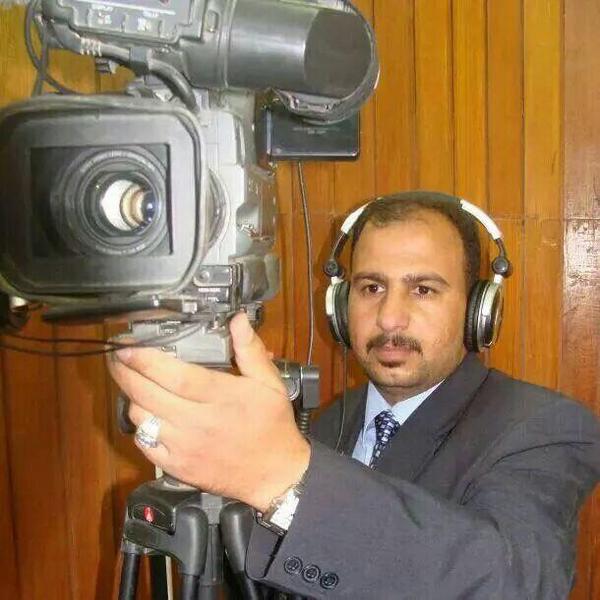
    On Friday Raad Mohamed al-Azzawi, a cameraman for Sama Salah Aldeen TV, was beheaded by IS militants in the city of Samarra. He had been held for a month.


    Still on violence, State Dept spokesperson Jen Psaki issued the following statement today:

    The United States strongly condemns the vicious string of suicide, vehicle borne, and other attacks that the Islamic State of Iraq and the Levant (ISIL) has perpetrated in Baghdad and surrounding provinces in recent days, taking scores of innocent lives. Those lost in these attacks include courageous citizens from all walks of life and represent the full diversity of Iraqi society, including Ahmed al-Khafaji, an elected Member of Parliament from Basrah Province, and Major General Ahmed Saddak al-Dulaimi, the Police Chief of Anbar Province. We extend our condolences to the families of the victims and hope for a rapid recovery for those who were injured.
    The United States is committed to working with the Government of Iraq and our coalition partners to end this terrorist scourge. We will continue to target ISIL leaders, fighters, supplies and weapons, facilities, and safe havens, working in support of our Iraqi partners, as we also work in parallel to restore the capacity of the Iraqi Security Forces to effectively counter ISIL on their own.
    ISIL, through these attacks, looks to tear apart the diverse fabric of Iraqi society, something it has sought to do over the past decade in its earlier incarnation, al-Qaida in Iraq. The Iraqi people have shown resilience in the face of this terror before, and with the world now united behind a global campaign to degrade and defeat ISIL, they will prevail once again.


    The United States will continue to stand with all Iraqi citizens, from all parts of the country, as they work to root out violent extremists, and promote the unified, federal, pluralistic, and democratic state, as envisioned in the Iraqi Constitution.


    Iraq

    "In ‘war on ISIS,’ the main enemy is at home"
    By on October 13, 2014
    The Turkish government decided Oct. 12 to permit U.S. fighter-bombers to launch attacks on Syrian targets from Incirlik Air Force Base near the Turkish-Syrian border. This decision marked the latest escalation of the U.S.-led “war on ISIS.” It is a further step toward a major U.S. invasion into Syria and Iraq.
    Meanwhile, two key battles are raging, with the Islamic State (also called ISIS or ISIL) forces on the offensive.
    In Syria, Kurdish guerrillas in the Kurdish-majority town of Kobani at the Turkish border are defending the town against ISIS. The Pentagon announced that the U.S. carried out a half-dozen air strikes on Oct. 12, mainly against ISIS’ heavy armor. ISIS has captured most of its weapons from U.S.-backed forces in the first place.
    In Anbar province and at the Baghdad Airport in Iraq, the Iraqi army has been yielding ground despite heavy U.S., Dutch and other air support.
    These wars involve a confusing array of state and guerrilla forces in battle against each other. With alliances, all temporary, changing so quickly, only a Marxist evaluation of the forces can even begin to make sense of them.
    U.S. imperialism is main threat
    The most important concept is that the gravest threat to the people of the region comes from U.S. imperialism, which is the lynchpin of world imperialism and the killer of millions in Iraq alone. No one should expect that U.S. intervention will liberate the region from ISIS or any other reactionary force.
    The Turkish state is a regional capitalist power, a NATO member and an oppressor state. Besides exploiting its own working class and peasantry, the Turkish ruling class oppresses the Kurdish people and nation within Turkey’s borders. It thus considers the PKK (Workers Party of Kurdistan) its main enemy. Turkey’s regime has supported the opponents of the Bashar al-Assad government in Syria, including ISIS.
    The Arab monarchies — Saudi Arabia, Qatar, the United Arab Emirates and the other Gulf states — are ideological soulmates of ISIS, and their ruling classes have funded and armed ISIS in the past. Now these oppressive tyrannies — which all depend on U.S. imperialism — have given lip service to joining the U.S. “coalition.” Qatar and the UAE have flown a few bombing sorties into Iraq.
    The recent change of government in Iraq still left the regime a client of U.S. imperialism. Its army and some of the militias have oppressed Sunni regions of the country and killed more civilians than ISIS has. Thus, many of the tribal fighters — not to speak of the guerrillas who were once officers in former President Saddam Hussein’s Ba’athist army and have been resisting the U.S. client regime — consider the Baghdad government a more dangerous enemy than ISIS.
    Who battles ISIS on the ground?
    Syria and Iran — capitalist nations with exploited working classes — are both combating ISIS. But world imperialism has targeted these two states through military threats and economic sanctions while demonizing them. The two governments have fought back to survive and their resistance deserves internationalist solidarity.
    The PKK and its sister party in Syria (YPG — People’s Protection Units) are liberation organizations of the Kurdish nation. Both directly fight ISIS on the ground.  So, too, do the Hezbollah guerrillas from Lebanon, who have successfully resisted Israeli invasions of their country in the past. However, the imperialists define all three groups as “terrorist.”
    The best way for anti-imperialists in the West to show solidarity with these fighters is to demand  the U.S. State Department and the European Union stop defining them as “terrorist” groups. A demonstration of tens of thousands of people, mainly Kurdish immigrants, in Dusseldorf, Germany, on Oct. 11 raised this as a main demand, along with freeing PKK leader Abdullah Ocalan after 15 years of imprisonment in Turkey.
    Washington, to serve its own ends, has manipulated al-Qaida and other groups similar to ISIS in the past — most notably in Afghanistan and partially in Libya and Syria. But such groups created instability across North Africa, upended Libya and took over the Syrian opposition from U.S. puppets. Starting this June, ISIS threatened to drive the U.S. and its clients out of Iraq.
    Despite its current clash with U.S. imperialism and its client states from West Africa to Pakistan, ISIS plays a thoroughly reactionary role throughout the region. Its reactionary — even medieval — viciously anti-woman and virulently sectarian program prevents and disrupts the development of an anti-imperialist front that would cross ethnic and sectarian lines. Only such unity can prevent imperialism from exploiting differences among the peoples and using them to divide and conquer.
    The general secretary of Hezbollah in Lebanon, Hassan Nasrallah, has called for such a united front of the peoples and nations of the region to fight ISIS and similar forces, which he considers dangerous enemies of the peoples. But, he said, they should not join President Barack Obama’s imperialist “coalition,” which he rightly considers a threat to the region and the world. (al-akhbar.com, Sept. 23)
    For anti-imperialists in the West and especially in the United States, the most important thing is to oppose U.S. intervention in Iraq and Syria, even if the present manifestation of that intervention is to bomb ISIS targets. Senator John McCain has demanded ground troops. This could quickly become a U.S. ground war against Iraq and Syria.
    In this confusing war, many are saying, “The enemy of my enemy is my friend.” For anti-imperialists it is better to apply the Leninist slogan: “The main enemy is at home.”


    Articles copyright 1995-2014 Workers World. Verbatim copying and distribution is permitted in any medium without royalty provided this notice is preserved.

    I've got nothing tonight, sorry.  So I'm just highlighting Workers World and C.I.

    "Iraq snapshot" (The Common Ills):

    Monday, October 13, 2014.  Chaos and violence continue, the Iraqi military flees a base in Anbar, criticism continues to mount of US President Barack Obama's so-called 'plan' to confront the Islamic State, the Islamic State assassinates another journalist, Turkey is letting the US use its air bases and -- oh, maybe it's not, the Iraq and Syria crises continue to result in more and more refugees, and much more.

    Yesterday, ABC's This Week aired an interview Martha Raddatz did with General Martin Dempsey, the Chair of the Joint Chiefs.


     GEN. MARTIN DEMPSEY, CHAIRMAN, JOINT CHIEFS OF STAFF: ISIS is blending in to parts of the disenfranchised Sunni population. So for indirect fire, the answer is yes. Heretofore, we've been successful -- mostly the Iraqis have been successful -- in keeping them out of range. But I have no doubt there will be days when they use indirect fire into Baghdad.

    RADDATZ: But perhaps most critical right now, keeping the Baghdad Airport out of the hands of ISIS. The chairman revealing a recent fierce battle near there between ISIS and Iraqi forces, where for the first time the U.S. had to call in Apache attack helicopters to prevent the Iraqi forces from being overrun.
    Those helicopters fly low and at a much greater risk than fighter jets.

    DEMPSEY: The tool that was immediately available was the Apache. The risk of operating in a hostile environment is there constantly.

    RADDATZ: That was righty by the airport.

    DEMPSEY: Well, this is a case where you're not going to wait until they're climbing over the wall. They were within, you know, 20 or 25 kilometers whereÉ

    RADDATZ: Of Baghdad airport?

    DEMPSEY: Sure. And had they overrun the Iraqi unit it was a straight shot to the airport.
    So, we're not going to allow that to happen. We need that airport.

    [. . .]

    RADDATZ: What is it like inside Mosul and Fallujah where ISIS controls those areas?

    DEMPSEY: Extraordinarily strict interpretations of Shariah Law, punishments -- you know, crucifixions and beheadings of a nature that the world hasn't seen in hundreds of years.

    RADDATZ: That's still going on.

    DEMPSEY: Yeah.
    But ISIL is also clever to give the enemy its due. They are also providing basic goods and services. They seek to reach out to children to influence the next generation.

    RADDATZ: It was, of course, Dempsey who testified some weeks back.

    DEMPSEY: If we reach the point where I believe our advisers should accompany Iraq troops on attacks against specific ISIL targets, I'll recommend that to the president.

    RADDATZ: This, after the president had said there would be no American combat boots on the ground.
    Would we be more effective against ISIS if we had U.S. troops on the ground spotting targets, if we had those ground control?

    DEMPSEY: Yeah, there will be circumstances when the answer to that question will likely be yes. But I haven't encountered one right now.

    RADDATZ: What kind of point would that be?

    DEMPSEY: I've actually used the example of -- you know, Mosul will likely be the decisive battle in the ground campaign at some point in the future.

    RADDATZ: When the Iraqi security forces have to go back and try to.

    DEMPSEY: Yeah, when they are ready to back on the offensive. My instinct at this point is that that will require a different kind of advising and assisting, because of the complexity of that fight. 


    Dempsey's focus on Baghdad was mirrored by the media on Sunday.  CBS News' Elizabeth Palmer reported yesterday morning on the advance towards Baghdad:


     ISIS is now on the attack in a kind of half circle around Baghdad from the north around the west, and down to the south. At the closest point their fighters are in an outer suburb called an Abu Ghraib, which is about eight miles from the perimeter of Baghdad International Airport. There are now twelve teams of American military advisors on the ground with the Iraqi forces whose are charged with protecting the capital and America is also carrying out airstrikes nearby, mainly to the west and to the south. Now, nobody expects a major assault on the city anytime soon, but it's likely ISIS will keep up the pressure with a bombing campaign by slipping through the many army and police checkpoints in the city and even civilian security checks that have been set up in all public places, including in mosques. In fact, yesterday more than thirty people were killed in three separate bomb attacks.


    While Palmer noted "nobody expects a major assault on the city anytime soon," the focus remained on Baghdad.  Today, CBS News notes:

    Inside Baghdad itself, there are ISIS sleeper cells that carry out almost daily bombings and assassinations, CBS News correspondent Elizabeth Palmer reported.
    An Iraqi officer told CBS News that the U.S.-led airstrikes are helping to clear an ISIS-free buffer zone around the city, where there are Iraqi boots on the ground. In fact, there are 60,000 men assigned to defend the capital, and CBS News correspondent David Martin reports that there are 12 teams of American advisers deployed with the Iraqi brigades. The estimate is that the Iraqi army will fight for the capital and there is no real concern that Baghdad is in imminent danger, Martin says. 


    But it wasn't Baghdad where major news was made today.  No, news came out of a neighboring province. This morning, CNN (link is text and video) broke the news that Iraqi forces had abandoned a military base "outside the city of Hit" in Anbar Province.  Aziz Alwan (Bloomberg News) observes, "Islamic State came closer to gaining full control of Iraq’s Anbar province after it seized a military base to the west of Baghdad that had been one of the government’s few remaining outposts there."

    Vivian Salama and Sameer N. Yacoub (AP) observe, "In Anbar, the capture of the Iraqi military camp came despite the U.S. airstrikes campaign. The U.S. military, which withdrew its forces from the country in late 2011 after more than eight years of war, first launched the airstrikes in early August to help Iraqi and Kurdish ground forces fight back and retake ground lost to the Islamic State group."

    It's October.  US President Barack Obama started bombing Iraq in August and calling it a "plan" to deal with the Islamic State.  There's been no success and it's comical when officials, such as State Dept spokespersons, are put on the spot by a media asking them to point to even one singular success.

    As Chuck Todd put it yesterday on Meet The Press (NBC), "But after hundreds of U.S. air strikes, the terror group is still gaining ground. "

    Yet 'the plan' continues.

    It's not a 'plan.'  And there are no other facets to it in terms of the military.  (Barack has insisted Iraq needs a political solution but he's done nothing to work towards that solution.)

    He has nothing else to offer.

    Former CIA director and former Secretary of Defense Leon Panetta attempted to spin pretty Sunday on Face The Nation (CBS) as he insisted Barack "has taken the right steps" leading a skeptical Bob Schieffer to attempt a redirect.

    BOB SCHIEFFER: Basically, what you are saying, we have to have some kind of people on the ground here.


    LEON PANETTA: You have got to have boots on the ground. Maybe doesn't have to be American boots on the ground, but you have got to have people on the ground who can identify targets and who can help us develop the kind of effective airstrikes that are going to be needed if we are going to be able to undermine, destroy this vicious enemy that we are dealing with.


    Quick note, Leon will be the guest for the second hour of The Diane Rehm Show (NPR) on Tuesday where he will discuss his book Worthy Fights: A Memoir of Leadership in War and Peace  with Diane.

    As for boots on the ground, they really aren't part of Barack's 'plan' thus far (yes, there are US soldiers on the ground in Iraq, Barack splits hairs and pretends otherwise).  On Meet The Press yesterday, Barack's national security advisor Susan Rice insisted that there would be no change to the plan in that regard, "The president has been very plain that this is not a campaign that requires or even would benefit from American ground troops in combat again. The Iraqi prime minister, the government of Iraq have said very plainly, they don't want American troops in combat. We are there to help build up the Iraqi capacity to sustain their territory and to hold their ground. "

    So what is the plan?

    To bomb and continue bombing.  Maybe throw in a couple of prayers for success.

    There is nothing else at present.

    Which is why Barack should never have started bombing Iraq to begin with.

    It was never going to solve anything.  But once the bombing started, all talk of a political solution was set aside as war was treated as a game and bombs as toys by the White House.

    It's really accomplished nothing.


    On Meet The Press, NBC News' Richard Engel offered this evaluation of the 'plan:'


    The Iraqi army is in no better shape now than it was when it collapsed. The new Iraqi government is not instilling confidence in the people. It is not instilling confidence in the armed forces. The U.S. spent years and years and billions of dollars to build the Iraqi army, only to watch it collapse and hand over so many of its weapons.
    So it is completely unrealistic to think that now, with a little bit of outside help and a lot of American good will, that the army is going to fundamentally change and the Iraqi government, which is really just a reshuffle of the same characters, is going to fundamentally change and suddenly inspire the Iraqi people to be behind it.


    Of the Iraqi military, Fareed Zakaria (CNN's Global Public Square) offers, "Billions of dollar poured into it, because it was based on the idea that there was an Iraq, that there was a nation that there would be a national army for. Maybe we need a different strategy, which is to stand up sectarian militias, Shia militias, Sunni militias. They already exist. And the Kurds have their Peshmerga, that model. Send them into fight in their areas, not in other areas where they would be regarded as a foreign army."


    Meanwhile, Peter Symonds (WSWS) notes, "Haditha is reportedly the only major town in Anbar still firmly in government hands. Since the beginning of the month, ISIS forces have captured a series of towns including the provincial capital of Ramadi."  The fall of city after city in Iraq has become almost as much a daily staple in the news cycle as the never-ending violence.  In terms of today's abandoned base and takeover, Al Jazeera notes:

    Al Jazeera's Imran Khan, reporting from Baghdad, said that ISIL's takeover puts nearby towns including Amiri under threat.
    "Amiri is a very key town, that is where the main supply line from Anbar province into Baghdad and the rest of the south of the country goes from," he said.


    The fall of the base comes as residents of the area flee to other parts of Anbar.  BBC News reports:


    As many as 180,000 people have fled fighting between Iraqi forces and Islamic State (IS) militants in and around the city of Hit in western Anbar province, the UN says.
    The civilians - many of whom were already displaced - have headed east towards the war-torn city of Ramadi.


    On the topic of refugees, UNHCR notes Mohammed Ali of Syria and that "He is one of more than 2,500 Kurdish Syrians from Kobane to have made the crossing since Iraq's Kurdistan Regional Government opened the border to refugees last Friday, with the authorities predicting that tens of thousands more could arrive in the coming weeks."

    While the military abandoned the base near Hit, they continue to hold the base in Ramadi -- at least so far.  This despite a major loss over the weekend. Jean Marc Mojon (AFP) reports:


    The region's police chief was killed on Sunday by a roadside bomb blast as he led forces battling Islamic State (IS) fighters on the outskirts of provincial capital Ramadi.
    His death was the latest setback suffered by the government in Anbar, a vast Sunni region, parts of which IS had control over even before it launched its sweeping June offensive in Iraq.


    In Peru today, US Secretary of Defense Chuck Hagel was asked about events in Anbar Province.

    Q: Mr. Secretary, I was wondering if you could talk a little bit about Anbar. The U.N. said today that 180,000 civilians had left. And there was also reports about an airbase near Hit being evacuated by Iraq security forces. I was wondering if you could confirm that, talk a little bit about it.

    SEC. HAGEL: Well, I talked a few hours ago with our CENTCOM commanders on what they know and to give me an update. What they told me was they are not aware of any fighting around the airport or in the area that the press reports are specifically focused on.

    As to the Hit town and whether Iraqi security forces left that area, I'm aware of the fact that the Iraqi security forces make strategic decisions on these issues. They deploy their forces where strategically they think they can have the most impact. I don't know any of the specifics beyond that.


    National Iraqi News Agency reports that Anbar police earlier transferred 82 people suspected of being Islamic State members "from prisons of Ramadi and Khalidiya to Baghdad."

    On the topic of violence, NINA notes 1 corpse was discovered in Husseiniya (gunshot wounds),  13 corpses "were found dumped in a farm south of Tikrit,"  1 person was shot dead in Baghdad, 2 bombs "near Baquba, north of the Edhaym Dam" killed 2 Iraqi soldiers and left four more injured, 2 Baghdad bombings (Aden Square and Sadr City) left 7 people dead and fifty-two injured, and "15 civlians and policemen were killed and injured" in a Kirkuk motorcycle bombing.

    It was just days ago that Raad al-Azzawi became the latest journalist to die in the Iraq War.  All Iraq News noted, "The Islamic State (IS) militants executed on Friday a cameraman works for an Iraqi television and three of his relatives in Iraq's central province of Salahudin, a provincial police source said. Raad al-Azzawi, 37, cameraman for local news Sama Salahudin satellite channel, was kidnapped about month ago with his brother and two relatives by the IS militants for alleged collaboration with Iraqi security forces, the source told Xinhua on condition of anonymity."  The western press frenzy that greeted the recent deaths of American journalists James Foley and Steven Sotloff was not matched when it came to Raad's murder. Instead, western outlets offered silence on Raad's murder or a brief paragraph.  As we noted at Third in "Editorial: The Western Media Makes Its Point:"

    But the western press did something even more valuable than cover the death.
    They made it clear (yet again) that Iraqi lives do not matter.
    Not to them.
    Repeatedly, they've been (rightly) accused of ignoring the deaths of Iraqis while pretending to care about Iraq.
    But the same media that sold the war in 2003 and that continues to sell the war today doesn't care about the Iraqi people.
    That is the message they sent after their wall-to-wall, non-stop coverage bemoaning the deaths of two American journalists compared to their coverage of the execution of Raad.
    They only care about Iraq in terms of selling war.


    National Iraqi News Agency notes that journalist Muhannad Ekaidat was executed by the Islamic State today in Mosul.  All Iraq News reports:

    The terrorist gangs of the Islamic State in Iraq and the Levant executed on Monday the Iraqi journalist Muhanad al-Egaidi in Mosul city.
    The Media official within the Kurdistani Democratic Party in Nineveh province, Saeed Memozin, said in a press statement "the terrorists of the ISIL executed on Monday the journalist Muhanad al-Egaidi by shooting him to death."
    "The ISIL terrorists kidnapped Egaidi two months ago and today they executed him in Ghizlani camp of southern Mosul city," he added.  
    Memozin mentioned "The dead body of the killed journalist was transported to the morgue so that his parents can receive it."

    It is worth to mention that Muhanad al-Egaidi was working as a reporter for SADA Press Agency in Mosul as well as program presenter at Mosuliya Satellite channel.


    Some Tweets on the murder:

  • Would really like to see the same outcry when Iraqi journos are executed by - Muhannad Akidi is the latest one. RIP
  • Iraqi journalist Muhannad Akidi was executed by ISIS today. Let's spread as much awareness abt him as his foreign peers that were IS victims


  • Iraq has fallen by the way side repeatedly for the White House as they've rushed to zoom in on Syria and their desire to force out or overthrow Syrian President Bashar al-Assad.  The inability to focus may explain the conflicting reports on whether or not Turkey was participating in Barack's 'plan' for Iraq and Syria.  In this morning's New York Times, Eric Schmitt and Kirk Semple noted, "Turkey will allow American and coalition troops to use its bases, including a key installation within 100 miles of the Syrian border, for operations against Islamic State militants in Syria and Iraq, Defense Department officials said Sunday."  However, i24 News and AFP report:

    Turkey has denied reports that they had reached an agreement to let the United States use its Incirlik air base for operations against Islamic State militants in Syria.
    Sources at the Turkish Prime Minister Ahmet Davutoglu's office have said that talks on the subject are continuing.


    The issue/confusion popped up in US Defense Secretary Chuck Hagel's Peru press conference today:


    REAR ADM. KIRBY: First question will come from Lolita Baldor from the Associated Press.

    Q: Mr. Secretary, Syria, Turkey, have there been any developments in the ongoing negotiations with Turkey over Syria? I'm just wondering, there's a lot of back-and-forth going on. Are you still optimistic about it? And do you have any goals for the chiefs of defense meeting tomorrow? Anything you really hope they try to accomplish?

    SEC. HAGEL: Lita, I am optimistic about progress that we are making with the Turks, as the Turks further define their role in the coalition against ISIL. As you know, we have teams from Central Command and European Command there. As you all know, I spoke with General Allen yesterday to get a readout from his meetings there, as well as I spoke with the Turkish minister of defense.
    I said yesterday that I'll leave public announcements about what the Turks are committed to do to them, but I would say, though, to answer your question, we are making very good progress and I am optimistic.
    As to your question regarding General Dempsey bringing 20 of the chiefs of defense together from 20 nations, that is going to be an important meeting. As I think you know, President Obama is going to stop by at the end of that meeting tomorrow.

      The objective of the meeting that General Dempsey put together was to further coordinate and organize countries' efforts to participate in the coalition. They will be working through those specific areas and defining specific contributions that the nations will make. So I am much encouraged with that meeting, and it's going to be a very important meeting.


    So, in other words, even Chuck Hagel, Secretary of Defense had no idea what the status was with regards to Turkey providing US forces access to their air bases.


    the new york times
    eric schmitt

    Sunday, October 12, 2014

    Netflix?

    Louis Proyect is an effete snob who should find something to write about other than popular culture.

    I don't care for Netflix.

    But the deal with Adam Sandler isn't the reason.

    Proyect is appalled that they're doing a deal with Adam.

    Why not?

    Adam's made funny movies.

    They aren't Noel Coward but they don't have to be.

    The Three Stooges are still funny to this day and there's nothing high-brow about that.

    Adam has films he can be proud of.  My favorites are the ones with Drew Barrymore ("The Wedding Singer," "50 First Dates" and "Blended") as well as "Bulletproof" and "Billy Madison."

    He's often funny.

    Netflix's problem is that they aren't about movies anymore.

    It's like MTV giving up on music videos.

    Sure, some people like watching that 'reality' crap but MTV became a weak brand.

    That's what's going on with Netflix which is all about TV shows -- their own and those of others.

    I left Netflix when they lost their deal with Starz.  That's when they no longer had access to classic movies that weren't in the public domain.  (Bette Davis' "Of Human Bondage" -- the only film they carry starring one of the country's greatest actresses -- is in the public domain.)


    "Iraq snapshot" (The Common Ills):

    Saturday, October 11, 2014.  Chaos and violence continue, 4 Iraqi soldiers are killed by . . . the Iraqi military, women are targeted in northern Iraq, Iraqi journalist Raad al-Azzawi is assassinated by the Islamic State, and much more.


    Despite a BBC media whore spinning (we'll get to it), violence remains common place in Iraq.

    For example, Baghdad was slammed by two bombings today.  Reuters notes the car bombing left 19 people dead and twenty-nine more injured.  AP reports one was a car bombing and the other a suicide car bombing.  Al Jazeera adds, "Also on Saturday, a suicide bomber detonated his explosives belt in a market 28km north of Baghdad, between the towns of Tarmiyah and Mishahda, killing at least seven people and wounding 25 others. The area has been the scene of clashes between Iraqi forces and Islamic State of Iraq and the Levant (ISIL) fighters, who have taken control of large sections of northern and western Iraq this year."


    AFP adds "The Islamic State group has executed at least four women, including two doctors and a politician, in their northern Iraq strongholds this month, relatives and rights activists said on Saturday." The politician was MP Iman Mohammed Yunnis, the name of the woman who was a law school graduate has not been released but the two doctors are Maha Sabhan and Lamia Ismail.  Activist Hanaa Edwar, of Al-Amal Association. tells AFP, "After going after the ethnic and religious minorities, they are now hunting down Sunni members of civil society groups and anyone remotely connected with the government.  [. . .] When you abduct and kill women, you are really spreading horror."


    Along with the above, there was certainly much damage in bombs dropped from the sky.  CENTCOM announced today:


    In Iraq, an airstrike north of Tal Afar struck a small ISIL unit and destroyed an ISIL armed vehicle. Two airstrikes northwest of Hit struck two small ISIL units. These strikes, in which the Netherlands also participated, employed attack and fighter aircraft deployed to the Centcom area of operations.
    All aircraft exited the strike areas safely, officials added.
    At the Iraqi government’s request, U.S. aircraft from several air bases in the Centcom area of operations airdropped 36 container delivery system bundles containing 7,328 halal meals, 2,065 gallons of water and 16,000 pounds of ammunition to Iraqi security forces near Bayji, officials said, and left the airdrop zone safely.

     The airdrops were intended to support the Iraqi forces, which continues to control Bayji, Centcom officials said, noting that areas outside the city remain contested, as ISIL continues to conduct operations in the area.


    Oh, those 'precision strikes.'  Another 'precision strike' has left 4 people dead.  The four were Iraqi soldiers.  Wounded Iraqi soldiers, in fact.  Their killers?

    The Iraqi militaty.

    Al Jazeera explains, "The soldiers, who had been wounded by ISIL fighters, were being taken to hospital when Shia volunteer fighters mistook them for ISIL fighters and fired a rocket-propelled grenade at their vehicle, police and medical officials said."

    And actually, that's Reuters explains -- specifically Ahmed Rasheed, Raheem Salman, Ned Parker and Raissa Kasolowsky -- though Al Jazeera forgets to credit the journalists.


    Even when the not-so-precise 'precision strikes' hit their intended targets, there's still the problem with ensuring that the people targeted are indeed 'terrorists.'

    The four Iraqi soldiers are just the latest in a long list of Iraqis who were wrongly killed.


    On Friday, Margaret Griffis (Antiwar.com) reports that 197 people died in violence with another twenty left injured.


    AP also notes that Iraqi journalist Raad al-Azzawi with Salahuddin Television was killed yesterday in Tikrit according to Salahuddin Province Governor Raed Ibrahim. All Iraq News adds, "The Islamic State (IS) militants executed on Friday a cameraman works for an Iraqi television and three of his relatives in Iraq's central province of Salahudin, a provincial police source said. Raad al-Azzawi, 37, cameraman for local news Sama Salahudin satellite channel, was kidnapped about month ago with his brother and two relatives by the IS militants for alleged collaboration with Iraqi security forces, the source told Xinhua on condition of anonymity."  Al Jazeera speaks to the family who states Raad and his brother were killed along with two other people who are not identified.  An unnamed relative of Raad's tells Al Jazeera, "They came to his home and took him and his brother.  He did nothing wrong; his only crime was to be a cameraman. He was just doing his job."

    September 11th, Reporters Without Borders noted the kidnapping of Raad in a press release:

    Reporters Without Borders expresses grave concern over the fate of Raad Mohamed Al-Azaoui, an Iraqi journalist taken prisoner by ISIS on 7 September and threatened with beheading. The Islamic State offensive in Iraq that began last June, shows journalists more unprotected than ever in the face of mounting danger.
    “The Islamic State since its emergence has made journalists a terror target,” said Virginie Dangles, assistant research director of Reporters Without Borders. “The terrorist organization, in setting up an apparatus for kidnapping and executing news professionals, is attempting to eliminate all those who refuse to swear allegiance to ISIS.”
    Al-Azaoui, a camerman for Sama Salah Aldeen TV, was captured by members of the Islamic State, accompanied by about 20 Iraqi nationals, in Samara, in Salahuddin province, north of Baghdad. The jihadist organization has announced that it plans to carry out its decapitation threat because the journalist refused to work for the Islamic State.
    Three weeks earlier, on 15 August, members of the jihadist organization had captured Ahmed Khaled Al-Dlimi - known as Bassem Ahmed Al Watani – in Tikrit. His fate remains unknown.
    Metro Center, an Iraqi journalists’ rights NGO based in Suleimaniya in Iraqi Kurdistan, has expressed concern following the 13 August capture of journalist and Yazidi activist Tarek Salah Shankali. According to some information from people close to him, Shankali was killed soon after he was taken. But other sources claim he remains a prisoner of the Islamic State.

    Iraq’s Journalistic Freedoms Observatory – RWB’s partner organization in Iraq – confirms that ISIS publicly threatened nine journalists by name in Mosul and Salahuddin provinces. The jihadist organization demanded that they stop their professional activities and join ISIS ranks or face execution. In addition, rumours are circulating to the effect that ISIS has seized digital files with personal data on journalists in the two provinces.


     Much has been made over the recent deaths of two American journalists -- you could make a strong argument that their deaths were used by the US government to sell the latest wave of the Iraq War (especially considering the grave disrespect the White House has shown the families of James Foley and Steven Sotloff.).  The two were executed by the Islamic State.  Two British aid workers were also executed -- Alan Henning and David Haines  -- but they received very little attention because they didn't feed into the deep-seated narcissm at the heart of modern-day journalism.  Will Raad fare better in terms of coverage and recognition from western media because he was also a journalist or will his being Arab result in the western press (and governments) largely ignoring his execution?  Online, Conflict Nred is attempting to ensure that he is not overlooked.


    In other news, is John Simpson the new Judith Miller?


    Set aside the fact that Simpson, unlike Miller, is shockingly obese and looks a great deal like a more feminine Bea Arthur and the answer comes back:  YES!


    In fact, "YES!" screams throughout his propaganda report for BBC News where John sees success as he's hauled around safe areas outside Baghdad:  "The other day I was driven in a convoy of awkward but heavily armoured Humvees through the scene of a recent battle near the village of al-Yusufiyah, 20 miles (32km) south-west of Baghdad."  Much closer to the Green Zone than al-Yusufiyah is Abu Ghraib and Jason Ditz (Antiwar.com) points out, "Though it is still nominally controlled by the Iraqi military, the key Baghdad suburb of Abu Ghraib continues to have a significant ISIS presence, meaning the fighters are just eight miles away from the runways of Baghdad Airport."

    John makes perfectly clear that Brigadier Jabbar Karam al-Taee (who, John squeals, has "his personal Humvee" -- sounds like love!) can eat crackers in his bed any time and John will gladly sleep in the wet spot.
    Mainly, he makes clear that there needs to be a new classification for these 'embeds' -- reporters who travel with the military -- and, in John's honor, we'd suggest "spreads."

    While he's seeing success as he rides around in Jabbar's Humvee, an unsigned BBC report notes, "Iraqi officials have made an urgent appeal for military help in the western Anbar province, saying the area could fall to Islamic State (IS) militants. The jihadist group has been attacking the provincial capital Ramadi, and has seized army bases in the area."  Jim Sciutto and Greg Botelho (CNN) also report on the Islamic State's continued hold on Anbar (a hold that's continued for months) and offer what appears to be a mini-wave of Operation Happy Talk:

    The first official said the U.S. military is more confident right now about the Iraqi military's ability to protect Baghdad. The Iraqi brigades defending the capital are more capable and include U.S. military advisers, so at least Washington should have a better sense there if there's any imminent danger.


    That splash in the kiddie pool appears to argue that although Barack's plan is a failure in Anbar, the positive is that the heavily armored Green Zone of Baghdad will continue to resist and repel attacks.


    AP quotes the Rand Corporation's Richard Brennan stating, "It's not plausible at this point to envision ISIL taking control of Baghdad, but they can make Baghdad so miserable that it would threaten the legitimacy of the central government."


    On Anbar Province, Erin Cunningham (Washington Post) reported Thursday:


    The Islamic State’s offensive in Anbar has received less attention than its assault on the Syrian border city of Kobane, which has played out in view of news photographers standing on hills in nearby Turkey. But in recent weeks, Islamic State fighters have systematically invaded towns and villages in Anbar, besieged army posts and police stations, and mounted attacks on Iraqi troops in Ramadi, the provincial capital.
    The Islamic State secured a major foothold in Anbar province in January when it seized the city of Fallujah and parts of Ramadi. It pushed farther into the province in June, but Iraq’s government was able to maintain small pockets of authority in the majority-Sunni region.


    That was Thursday.  Today?  Laura Smith-Spark, Ben Wedeman and Kareem Khadder (CNN) report:


    The situation in Anbar, just to the west of Baghdad, is "very bad," the president of Anbar Provincial Council told CNN by phone on Saturday.
    Sabah Al-Karhout said the council has intelligence that ISIS has dispatched as many as 10,000 fighters to Anbar from Syria and Mosul in northern Iraq.
    The council's deputy head, Falleh al-Issawi, told CNN that it had asked the central government to intervene immediately to save the province from imminent collapse -- and to request the deployment of U.S. ground forces there.


    Of the appeal coming from the officials, Al Jazeera's Zeina Khodr states, ""They believe that it is just a matter of days, up to 10 days, and ISIL can control the whole province of Anbar." Friday, the State Dept was asked if there was any thought of moving beyond airstrikes to ground forces and spokesperson Marie Harf replied, "Well, our strategy hasn’t changed and it’s not just airstrikes. If you – I mean, we have said there will be no American boots on the ground in combat roles in Iraq or Syria. That has not changed, period."

    That has not changed.

    Period.

    Hmm.

    At the same press briefing on Friday, Anbar came up.


    Of course, Harf didn't raise the issue, the press had to.


    She was too busy attempting to spin the 'success' of Barack's 'plan' which, as we noted Thursday, is taking hits from across the political spectrum.  Excerpt:


    QUESTION: Not that the criticism hasn’t been there almost from the beginning of the airstrikes back on August 8th, but there seems to be a cresting of criticism of the Administration’s strategy on confronting ISIL, primarily focused on the airstrikes from quarters as varied as David Ignatius in The Washington Post, Frederick Kagan writing in The LA Times, Congressman Buck McKeon speaking on one of the cable channels in the past couple of days, a former top advisor to General David Petraeus who was with him in Iraq, all suggesting that the airstrikes really need to be backed up at this point by U.S. ground forces.
    And my question to you is: Are these people coming from different perspectives wrong? Is the criticism misplaced? What are they and the American public not understanding about the Obama Administration’s strategy?


    MS. HARF: Well, a couple of points, Roz. I think, first, it’s easy to sort of try to be an armchair general and look at a very surface level of the strategic picture in Iraq and Syria and offer suggestions. I think that what we are confident in is the strategy as outlined by this President is being implemented by the Department of Defense, by other agencies working on the different five lines of effort, has a very comprehensive and clear path forward here. This is going to be a long fight. No one phase of it will be decisive. That’s how these fights happen. We only – how long ago was it that we started airstrikes? Not that long ago.
    As of this week, the Defense Department and our coalition – the U.S. and our coalition partners have conducted a total of 398 airstrikes in Iraq and Syria. We have continued to say that we will make every effort to degrade ISIL’s capabilities, to take out their command and control, to go after their sources of financing with the oil facilities, and to really push them back out of parts of Iraq. This is a long-term fight, and looking at any one day or any one week or any one town by no means gives a comprehensive picture of (a) what the fight looks like or how we’re going to take it on.
    So I appreciate some of the commentary and understand where it comes from, but it’s just not a comprehensive look of what we’re facing, how we’re facing it, and how we’re fighting it. That’s what the Pentagon is doing. We’re obviously playing a role in some of the other lines of effort. And if you look at other conflicts we’ve faced, these are long-term efforts here. They can’t be driven by any one cable news cycle; that’s just not how it works.


    QUESTION: But it’s not just the focus on what’s happening with the status of Kobani. There’s also concern about what is happening in Iraq, which some could argue isn’t getting as much headline attention because of the fighting in Kobani.


    MS. HARF: Mm-hmm.


    QUESTION: But there is concern in particular about the status of Anbar province –


    MS. HARF: Mm-hmm.


    QUESTION: -- where ISIL has been quite aggressive in its –


    MS. HARF: Mm-hmm.


    QUESTION: -- efforts to take large parts of that province.


    MS. HARF: And you’re not wrong, Roz, in that ISIL is going to be aggressive. We didn’t think that as soon as we started airstrikes and taking out their fighters and their positions and their tanks that they would just stop fighting. They’ve shown themselves to be brutal, aggressive. That’s why we’re taking the fight to them. But nobody thought as soon as we would take airstrikes they would stop fighting. We know there will be intense fights as part of this conflict in the days and months ahead. We should all be prepared for that. This is a tough fight.
    But I will say when it comes to the fact that we are taking direct U.S. military action in Iraq and in Syria with our coalition partners, I just named at the top of the briefing all of the countries even since UNGA that have signed up to take strikes. This is a global effort here to do so. We don’t see an imminent threat to Baghdad at this time. I know there’s been speculation in the press about this.
    Iraqi Security Forces in and around Baghdad are strong. They’re under constant assessment. The Embassy remains open and we continue to conduct business. We’ve deployed a significant number of our own military personnel to Iraq and to the region for the protection of American personnel and to advise and assist Iraqi forces.

    When it comes to Anbar, it’s difficult to speculate as it has been under severe threat – you are absolutely right – since the beginning of this year. The situation remains very fluid. I’m probably not going to be providing battlefield updates from the State Department podium. But we continue to support efforts by Iraqi Security Forces, working in conjunction with the tribal fighters, directed against ISIL in Anbar. So this is going to be a tough fight. We are committed to it. Our partners are committed to it. You’ve seen us take almost – what did I say? – 400 strikes now. Those are going to continue.


    The spin never ends.  If you doubt it, RT reports:

    American intelligence officials are trying to blame news reports for failed military attacks against shadowy jihadist groups, arguing that the articles alerted a new terror group to impending air strikes.
    Last month, the United States fired 46 cruise missiles at eight locations in northern Syria to target the Khorasan group’s training camps, a munitions center and other sites. However, the attacks only killed one or two key militants, US officials told the Associated Press.
    The strikes near a compound in Aleppo didn’t cripple the group because members were able to scatter – something they blamed on news reports highlighting US missile plans. This led to the escape of a French-born jihadi with military skills that officials say they were interested in targeting.


    So the problem is the press?

    That's actually not even the first time the US government's blamed the press this week.  Dropping back to Monday's snapshot:


    And the US government's response to this latest setback -- humiliating setback?  To claim that this is an issue inflated by local media.  Holly Yan, Michael Pearson and Ingrid Formanek (CNN) note:


    And the Pentagon, the [unnamed "senior military"] official said, believes there's a media outcry about the situation in Kobani because reporters are there. Many other towns have fallen to ISIS without TV crews present, the official said.


    Oh, it's the fact that "TV crews [were] present," that's the problem -- not that Kobani was taken.  In other words, if an Iraqi city falls in the forest when no one is around, it doesn't make a sound.


    If the US government didn't have the media to blame, they might have to address the fact that the real problem is Barack's 'plan' is an outright failure.

    Note the way the first sentence starts in what Mohamad Bazzi (Mint Press) offers:

    As the new Iraqi government grows more dependent on US air strikes and military aid to defeat Islamic State (IS) jihadists, the country’s most revered Shia cleric, Grand Ayatollah Ali al-Sistani, has emerged as an important voice of moderation.
    Sistani called on the Shia-led government to keep Iraq united and reconcile with Sunnis. But he has also forcefully declared that foreign powers should not interfere in Iraq’s political affairs.


    As the new Iraqi government grows more dependent.

    That's not how you build strong governments.


    But there's no effort to help build a political solution.

    Instead Barack Obama has wasted everyone's time by using not only Defense Dept officials but also State Dept officials to try to round up people to join in the attacks on Iraq.

    The 'plan' is a failure.