Wednesday, September 29, 2021

The end of the Ivory-billed Woodpecker?

This morning, AP reported:


Death's come knocking a last time for the splendid ivory-billed woodpecker and 22 more birds, fish and other species: The U.S. government is declaring them extinct.
It's a rare move for wildlife officials to give up hope on a plant or animal, but government scientists say they've exhausted efforts to find these 23. And they warn climate change, on top of other pressures, could make such disappearances more common as a warming planet adds to the dangers facing imperiled plants and wildlife.
The ivory-billed woodpecker was perhaps the best known species the U.S. Fish and Wildlife Service on Wednesday will announce is extinct. It went out stubbornly and with fanfare, making unconfirmed appearances in recent decades that ignited a frenzy of ultimately fruitless searches in the swamps of Arkansas, Louisiana, Mississippi and Florida.


In case you are new to these woodpeckers, ALL ABOUT BIRDS notes,


"The largest of the woodpeckers north of Mexico and the third largest in the world, the Ivory-billed Woodpecker was a bird of old-growth forests in the southeastern U.S. and Cuba. Destruction of its forest habitat caused severe population declines in the 1800s, and only very small numbers survived into the twentieth century. It was thought to have gone extinct in the middle of the twentieth century. The bird was rediscovered in the "Big Woods" region of eastern Arkansas in 2004, but has not been relocated since." They also compiled a list of facts including, "
Native Americans used Ivory-billed Woodpecker bills for decorations. A thriving bill trade existed across much of North America, so much so that archeologists uncovered Ivory-billed Woodpecker skulls far outside of the known range of the woodpecker."

Some critics are saying the Ivory-billed woodpeckers have been delisted too soon. Public comments are being taken currently (through December 29th). This is from the US Dept. of Interior:

WASHINGTON — The U.S. Fish and Wildlife Service is proposing to remove 23 species from the Endangered Species Act (ESA) due to extinction. Based on rigorous reviews of the best available science for each of these species, the Service has determined these species are extinct, and thus no longer require listing under the ESA.
The purpose of the ESA is to protect and recover imperiled species and the ecosystems upon which they depend. For the species proposed for delisting today, the protections of the ESA came too late, with most either extinct, functionally extinct, or in steep decline at the timing of listing.
“With climate change and natural area loss pushing more and more species to the brink, now is the time to lift up proactive, collaborative, and innovative efforts to save America's wildlife. The Endangered Species Act has been incredibly effective at preventing species from going extinct and has also inspired action to conserve at-risk species and their habitat before they need to be listed as endangered or threatened,” said Secretary Deb Haaland. “We will continue to ensure that states, Tribes, private landowners, and federal agencies have the tools they need to conserve America’s biodiversity and natural heritage.”
These species extinctions highlight the importance of the ESA and efforts to conserve species before declines become irreversible. The circumstances of each also underscore how human activity can drive species decline and extinction, by contributing to habitat loss, overuse and the introduction of invasive species and disease. The growing impacts of climate change are anticipated to further exacerbate these threats and their interactions. They also underscore ongoing conservation challenges of the Service. Almost 3 billion birds have been lost in North America since 1970. These extinctions highlight the need to take action to prevent further losses.
Stemming this extinction crisis is a central component of the Biden-Harris administration’s America the Beautiful initiative, a locally led and voluntary, nationwide effort to conserve, connect, and restore 30 percent of lands and waters by 2030. One of the initiative’s goals is to enhance wildlife habitat and improve biodiversity -- to keep species from reaching the point where they are in danger of extinction or are too far gone to save.
“The Service is actively engaged with diverse partners across the country to prevent further extinctions, recover listed species and prevent the need for federal protections in the first place,” said Martha Williams, Service Principal Deputy Director. “The Endangered Species Act has been incredibly successful at both preventing extinctions and at inspiring the diverse partnerships needed to meet our growing 21st century conservation challenges.”
While protections were provided too late for these 23 species, the ESA has been successful at preventing the extinction of more than 99% of species listed. In total, 54 species have been delisted from the ESA due to recovery, and another 56 species have been downlisted from endangered to threatened. The Service’s current workplan includes planned actions that encompass 60 species for potential downlisting or delisting due to successful recovery efforts. Additionally, numerous species have avoided ESA listing thanks to the collaborative efforts of federal agencies, states, Tribes and private landowners, with the ESA serving as a catalyst for conservation efforts that help protect imperiled species and their habitat.
Species being proposed for delisting include the ivory-billed woodpecker, Bachman’s warbler, two species of freshwater fishes, eight species of Southeastern freshwater mussels and eleven species from Hawaiʻi and the Pacific Islands. Species being proposed for delisting include the ivory-billed woodpecker, Bachman’s warbler, two species of freshwater fishes, eight species of Southeastern freshwater mussels and eleven species from Hawaiʻi and the Pacific Islands.
Ivory-billed woodpecker — Once America’s largest woodpecker, it was listed in 1967 as endangered under the precursor to the ESA, the Endangered Species Preservation Act (ESPA). The last commonly agreed upon sighting of the ivory-billed woodpecker was in April 1944 on the Singer Tract in the Tensas River region of northeast Louisiana. Despite decades of extensive survey efforts throughout the southeastern U.S. and Cuba, it has not been relocated. Primary threats leading to its extinction were the loss of mature forest habitat and collection.
Bachman’s warbler — As early as 1953, Bachman’s warbler was one of the rarest songbirds in North America. When first listed in 1967 as an endangered species under the Endangered Species Preservation Act, the bird had not been seen in the U.S. since 1962. Last documented in Cuba in 1981, there have been no verifiable sightings in that country since then. The loss of mature forest habitat and widespread collection are the primary reasons for its extinction.
Eight species of freshwater mussels — Reliant on healthy streams and rivers with clean, reliable water, freshwater mussels are some of the most imperiled species in the U.S., home to more than half of the world’s species of freshwater mussels. Mussels proposed for delisting due to extinction are all located in the Southeast, America’s biodiversity hot spot for freshwater mussels. They are the: flat pigtoe (Mississippi), southern acornshell (Alabama, Georgia, Tennessee), stirrupshell (Alabama), upland combshell, (Georgia, Alabama, Tennessee), green-blossom pearly (Tennessee, Virginia), turgid-blossom pearly mussel (Tennessee, Alabama, Arkansas), yellow-blossom pearly mussel (Tennessee, Alabama) and the tubercled-blossom pearly mussel (Alabama, Illinois, Indiana, Kentucky, Tennessee, West Virginia, southern Ontario, Canada).
Hawaiʻi and the Pacific Islands — Eleven species from Hawaiʻi and Guam are being proposed for delisting due to extinction, many of which had striking characteristics, such as the long curved beaks of the Kauai akialoa and nukupuʻu, the haunting call of the Kauai `o`o, and the brilliant colors of the Maui akepa and Molokai creeper. Species endemic to islands face a heightened risk of extinction due to their isolation and small geographic ranges. Hawaiʻi and the Pacific Islands are home to more than 650 species of plants and animals listed under the ESA. This is more than any other state, and most of these species are found nowhere else in the world.
San Marcos gambusia — Listed in 1980, this freshwater fish was found in the slow-flowing section of the San Marcos River in Texas. The San Marcos gambusia had a limited historic range of occurrence and has not been found in the wild since 1983. Primary reasons for its extinction include habitat alteration due to groundwater depletion, reduced spring flows, bottom plowing and reduced aquatic vegetation, as well as hybridization with other species of gambusia.
Scioto madtom — Listed as endangered in 1975, the Scioto madtom was a fish species found in a small section of the Big Darby Creek, a tributary of the Scioto River, in Ohio. The Scioto madtom was known to hide during the daylight hours under rocks or in vegetation and emerge after dark to forage along the bottom of the stream. Only 18 individuals of the madtom were ever collected with the last confirmed sighting in 1957. The exact cause of the Scioto madtom’s decline is unknown, but was likely due to modification of its habitat from siltation, industrial discharge into waterways and agricultural runoff.
Species proposed for delisting due to extinction:

The Service seeks information, data, and comments from the public regarding this proposal to remove these 23 species from the ESA and declare them extinct. The proposed rule is available in the Federal Register Reading Room inspection using the link found under the Fish and Wildlife Service Endangered and Threatened Wildlife and Plants section.

We will accept comments received or postmarked on or before December 29, 2021. Comments submitted electronically using the Federal eRulemaking Portal must be received by 11:59 p.m. Eastern Time on the closing date.

###


This is our planet.  We have not treated it well, not at all.  


"Iraq snapshot" (THE COMMON ILLS):

 Wednesday, September 29, 2021.  Elections loom in Iraq, WSWS forgets to zip up and leaves its bias dangling in the wind, and much more.


The US government continues to persecute Julian Assange, the publisher of WIKILEAKS.  Julian's 'crime' was revealing the realities of Iraq -- Chelsea Manning was a whistle-blower who leaked the information to Julian.  WIKILEAKS then published the Iraq War Logs.  And many outlets used the publication to publish reports of their own.  For example, THE GUARDIAN published many articles based on The Iraq War Logs.  Jonathan Steele, David Leigh and Nick Davies offered, on October 22, 2012:


A grim picture of the US and Britain's legacy in Iraq has been revealed in a massive leak of American military documents that detail torture, summary executions and war crimes.
Almost 400,000 secret US army field reports have been passed to the Guardian and a number of other international media organisations via the whistleblowing website WikiLeaks.

The electronic archive is believed to emanate from the same dissident US army intelligence analyst who earlier this year is alleged to have leaked a smaller tranche of 90,000 logs chronicling bloody encounters and civilian killings in the Afghan war.
The new logs detail how:
• US authorities failed to investigate hundreds of reports of abuse, torture, rape and even murder by Iraqi police and soldiers whose conduct appears to be systematic and normally unpunished.

• A US helicopter gunship involved in a notorious Baghdad incident had previously killed Iraqi insurgents after they tried to surrender.
• More than 15,000 civilians died in previously unknown incidents. US and UK officials have insisted that no official record of civilian casualties exists but the logs record 66,081 non-combatant deaths out of a total of 109,000 fatalities.
The numerous reports of detainee abuse, often supported by medical evidence, describe prisoners shackled, blindfolded and hung by wrists or ankles, and subjected to whipping, punching, kicking or electric shocks. Six reports end with a detainee's apparent death.


News on Julian leaked out over the weekend.  Jake Johnson (COMMON DREAMS) reports:

Under the leadership of then-Director Mike Pompeo, the CIA in 2017 reportedly plotted to kidnap—and discussed plans to assassinate—WikiLeaks founder and publisher Julian Assange, who is currently imprisoned in London as he fights the Biden administration's efforts to extradite him to the United States.

Citing conversations with more than 30 former U.S. officials, Yahoo News reported Sunday that "discussions over kidnapping or killing Assange occurred 'at the highest levels' of the Trump administration."

According to Yahoo:

The conversations were part of an unprecedented CIA campaign directed against WikiLeaks and its founder. The agency's multipronged plans also included extensive spying on WikiLeaks associates, sowing discord among the group’s members, and stealing their electronic devices.

While Assange had been on the radar of U.S. intelligence agencies for years, these plans for an all-out war against him were sparked by WikiLeaks' ongoing publication of extraordinarily sensitive CIA hacking tools, known collectively as "Vault 7," which the agency ultimately concluded represented "the largest data loss in CIA history."

President Trump's newly installed CIA director, Mike Pompeo, was seeking revenge on WikiLeaks and Assange, who had sought refuge in the Ecuadorian Embassy since 2012 to avoid extradition to Sweden on rape allegations he denied. Pompeo and other top agency leaders "were completely detached from reality because they were so embarrassed about Vault 7," said a former Trump national security official. "They were seeing blood."

Yahoo's reporting makes clear that Assange is not the only journalist U.S. officials have attempted to target in recent years. During the Obama presidency, according to Yahoo, "top intelligence officials lobbied the White House to redefine WikiLeaks—and some high-profile journalists—as 'information brokers,' which would have opened up the use of more investigative tools against them, potentially paving the way for their prosecution."

"Among the journalists some U.S. officials wanted to designate as 'information brokers' were Glenn Greenwald, then a columnist for The Guardian, and Laura Poitras, a documentary filmmaker, who had both been instrumental in publishing documents provided by [NSA whistleblower Edward] Snowden," Yahoo reported.


PRESSENZA adds:


According to the Yahoo! News investigation, the agency’s plans for Assange and WikiLeaks – which would have begun as early as Barack Obama’s tenure with the definition of some of the website’s journalists, including Glenn Greenwald and Laura Poitras, as “information agents” – allegedly led to fierce debates over their legality and some officials were so concerned that they felt the need to brief members of Congress on the former service director’s suggestions.

It adds that it was a campaign that “bent important legal constraints, potentially jeopardized the Justice Department’s work to prosecute Assange and risked a damaging episode in the UK, America’s closest ally”.


That is part of the story.  But you don't know about it if you read WSWS.  Despite claiming to be a news outlet, despite all their whining about how they're independent and fair and mean old GOOGLE came after them with an algorithm  and they lost readers as a result and it's all so unfair, WSWS doesn't play fair at all.  They don't like Glenn Greenwald.  Like that idiot Paul Street (Paul's an idiot and anyone who remembers summer and fall 2008 knows what a desperate liar Paul Street is), they have an intense hatred and an intense desire to be unfair.  


Last night, Mike noted how Thomas Scripps is 'covering' the story -- by omitting Glenn.  Monday night, Mike noted how Oscar Grenfill covered the story for WSWS by . . . ignoring the Glenn aspect.


Two stories and they can't mention Glenn but have the nerve, as Mike notes, to call out other outlets for their silences. 


They want to whine when they feel that they have been targeted or victimized but they don't care enough about attacks on the press to cover Glenn Greenwald.  Or maybe they're just saving up all their energy for another fake run for the presidency in 2024?  Really, after Joseph Kishore's laughable campaign for US president, you'd think WSWS would realize that they need to get serious.


And, let me be clear, it wasn't laughable because he had no chance of winning.  He may or may not have had a chance of winning.  We'll never know because he didn't run a real campaign.  A video about once a month in a general election?  An inability to Tweet?  You're a third party candidate so you are shut out of corporate media.  If you can't even use your own social media to advance your campaign, you shouldn't be wasting people's time with your fake run for president.  Joseph is a fake ass and that's what made him campaign laughable.


Trina's broken with them over their refusal to call out Barack Obama's birthday bash -- an event where the 'help' had to wear masks but the guests didn't have to, an event of greed and avarice that corruption provided Barack with the money to pay for -- per Michelle Obama, they entered the White House owing student loans.  But they really cashed in on the office, didn't they?  Little whores who used the office and the American people to become millionaires.  In the midst of a pandemic, a gala celebration.  There's not been a better "Let them eat cake" moment in US history.  And WSWS couldn't -- wouldn't -- say one word -- despite claiming to be Socialists.


And remember, no one's more Socialist than WSWS -- as they constantly insist.  JACOBIN's not really Socialist according to them.  This group isn't really Socialist, that group isn't Socialist . . .  But it appears, based on their own actions, time and again, WSWS isn't Socialist.


I was asked in an e-mail about a war I have on WSWS.  I don't have a war on them.  I've continued to include them when they had something worth noting -- it's not my fault that they've only had about two articles in the last weeks worth noting.   Barring some development (a friend making a case to review their series), Ava and I will be taking on WSWS in the next edition of THIRD.  And it will go to how hollow their politics are and their poor analysis and how they only exist to toot their own horn.  Somehow that's supposed to pass for news.  Don't get that but I also don't get how that passes for Socialism either.  But then, I don't get how they've gotten away with their rank sexism all these years either.  Now if we end up writing that piece, you might be able to say we have a 'war' with WSWS and be credible.  I don't think so, but to each their own.

It's like Ava and I said of Aaron Mate:


But Aaron did some good work on Russia-gate. We'd like to leave him alone. But when he opens his uninformed mouth and starts wanting to tell the world that corruption doesn't matter, we can't afford him.

We care about We The People. We care about the truth. That puts a fence between Aaron and us, we're on one side and Aaron's on the other.

He's the one causing the problem. All we're doing is calling it out.
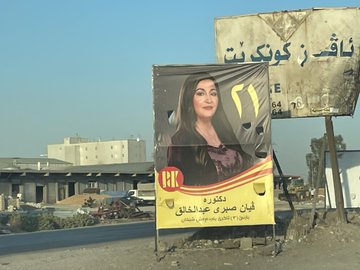


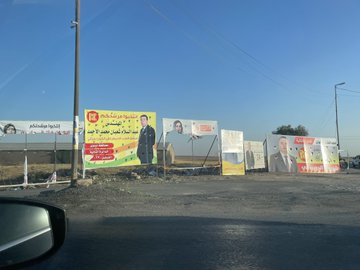
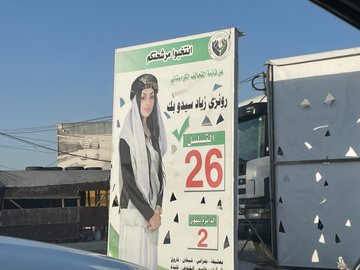
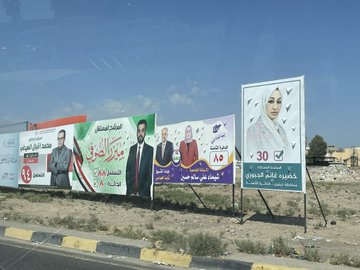
Yousif Kalian Tweets:


Election season in Nineveh and Duhok #Iraq
Image
Image
Image
Image


National elections are supported to take place October 10th in Iraq.  RUDAW is currently doing a survey on voter preferences.  We'll note two Tweets from Joel Wing regarding the elections.


Iraq govt talks about free & fair elections and will be monitoring on election day Little being done beforehand with tons of reports of cheating going on Complicated by several members of Election Comm being accused of cheating musingsoniraq.blogspot.com/2021/09/more-o


And:


After Oct election likely claims of fraud but in the end results will be certified and parties will continue to run Iraq because none of them really believe in democracy musingsoniraq.blogspot.com/2021/09/more-o


The early elections have only been scheduled because of the brave protesters. The October Revolution  kicked off protests in the fall of 2019 and forced the prime minister to step down and early elections to be announced.  As ARAB WEEKLY notes, "Tens of thousands of Iraqi youths took to the streets to decry rampant corruption, poor services and unemployment. Hundreds died as security forces used live ammunition and tear gas to disperse crowds."  This is what forced the resignation of one prime minister and has led to national elections which are supposed to take place October 10th.  (Members of the Iraqi military will vote October 8th.  Two election simulations have been carried out by the IEC and the third and final one will take place September 22nd.)    that the candidates for Parliament include 951 women ("close to 30% of the total number of candidates") who are running for the 329 seats.  Halgurd Sherwani (KURDISTAN 24) has reported Jeanine Hannis-Plasschaert, the Special Representiative in Iraq to the United Nations Secretary-General Antonio Guterres, declared that Iraq's "Female candidates face increasing levels of hate speech, violence, and blackmail intended to force them to withdraw their candidacy." 


Sinan Mahmoud (THE NATIONAL) counts 3,249 people in all seeking seats in Parliament  BROOKINGS notes this is a huge drop from 2018 when 7,178 candidates ran for office.   RUDAW is among those noting perceived voter apathy, "Turnout for Iraq’s October 10 parliamentary election is expected to be a record low, with a recent poll predicting just 29 percent of eligible voters will cast ballots." Human Rights Watch has identified another factor which may impact voter turnout, "People with disabilities in Iraq are facing significant obstacles to participating in upcoming parliamentary elections on October 10, 2021, due to discriminatory legislation and inaccessible polling places, Human Rights Watch said in a report released today. Without urgent changes, hundreds of thousands of people may not be able to vote.  The 36-page report, “‘No One Represents Us’: Lack of Access to Political Participation for People with Disabilities in Iraq,” documents that Iraqi authorities have failed to secure electoral rights for Iraqis with disabilities. People with disabilities are often effectively denied their right to vote due to discriminatory legislation and inaccessible polling places and significant legislative and political obstacles to running for office."  And Human Rights Watch Tweets:


“Every election day is the most depressing day for me,” said Suha Khalil, 44, who uses a wheelchair said she has never participated in an election. “Everyone goes to vote and I am stuck at home waiting for the day to end.” #IraqElection Take action: bddy.me/3optQAG
Image


Another obstacle is getting the word out on a campaign.  Political posters are being torn down throughout Iraq.  Halgurd Sherwani  (KURDiSTAN 24) observes, "Under Article 35 of the election law, anyone caught ripping apart or vandalizing an electoral candidate's billboard could be punished with imprisonment for at least a month but no longer than a year, Joumana Ghalad, the spokesperson for the Iraqi Independent High Electoral Commission (IHEC), told a press conference on Wednesday."  And there's also the battles in getting out word of your campaign online.  THE NEW ARAB reported weeks ago, "Facebook is restricting advertisements for Iraqi political parties and candidates in the run-up to the country's parliamentary elections, an official has told The New Arab's Arabic-language sister site."

THE WASHINGTON POST's Louisa Loveluck Tweeted: of how "chromic mistrust in [the] country's political class" might also lower voter turnout.  Mina Aldroubi (THE NATIONAL) also notes, "Experts are predicting low turnout in October due to distrust of the country’s electoral system and believe that it will not deliver the much needed changes they were promised since 2003."  Mistrust would describe the feelings of some members of The October Revolution.  Mustafa Saadoun (AL-MONITOR) notes some of their leaders, at the recent  Opposition Forces Gathering conference announced their intent to boycott the elections because they "lack integrity, fairness and equal opportunities."  Distrust is all around.  Halkawt Aziz  (RUDAW) reported on how, " In Sadr City, people are disheartened after nearly two decades of empty promises from politicians." 


How to address apathy?  Ignore it and redo how you'll count voter turnout.  RUDAW reports, "raq’s election commission announced on Sunday that turnout for the election will be calculated based on the number of people who have biometric voter cards, not the number of eligible voters. The move will likely inflate turnout figures that are predicted to hit a record low."  As for the apathy, John Davison and Ahmed Rasheed (REUTERS) convey this image


Iraq’s tortured politics are graphically illustrated in a town square in the south, where weathered portraits displayed on large hoardings honor those killed fighting for causes they hoped would help their country.

The images of thousands of militiamen whose paramilitary factions battled ISIS hang beside those of hundreds of young men killed two years later protesting against the same paramilitaries.


After the election, there will be a scramble for who has dibs on the post of prime minister.  Murat Sofuoglu (TRT) observes, "The walls of Baghdad are covered with posters of Iraq’s former leaders, especially Nouri al Maliki and Haidar al Abadi, as the country moves toward its early elections on October 10. Both men however were forced out of power for their incompetence, and yet they are leading in the country’s two powerful Shia blocks."  Outside of Baghdad?  THE NEW ARAB explains, "However, in the provinces of Anbar, Saladin, Diyala, Nineveh, Kirkuk, Babel and the Baghdad belt, candidates have focussed on the issue of the disappeared and promised to attempt to find out what happened to them."


Shi'ite cleric Moqtada al-Sadr has 90 candidates in his bloc running for seats in the Parliament and one of those, Hassan Faleh, has insisted to RUDAW, "The position of the next prime minister is the least that the Sadrist movement deserves, and we are certain that we will be the largest and strongest coalition in the next stage."  Others are also claiming the post should go to their bloc such as the al-Fatah Alliance -- the political wing of the Badr Organization (sometimes considered a militia, sometimes considered a terrorist group).  ARAB WEEKLY reported, "Al-Fateh Alliance parliament member Naim Al-Aboudi said that Hadi al-Amiri is a frontrunner to head the next government, a position that can only be held by a Shia, according to Iraq’s power-sharing agreement."  Some also insist the prime minister should be the head of the State of Law bloc, two-time prime minister and forever thug Nouri al-Maliki.  Moqtada al-Sadr's supporters do not agree and have the feeling/consensus that,  "Nouri al-Maliki has reached the age of political menopause and we do not consider him to be our rival because he has lost the luster that he once had so it is time for him to retire."


In one surprising development, Dilan Sirwan (RUDAW) has reported: "Iraq’s electoral commission aims to announce the results of the upcoming parliamentary elections on October 10 within 24 hours, they announced on Thursday following a voting simulation."


Throughout the year, RUDAW has attempted to be a fair news outlet.  We'll close with this statement from the outlet regarding an attack:


The following is a statement from Rudaw Media Network on the attack on its office in Qamishli:

Last night at 12:05 a.m. three masked individuals attacked Rudaw Media Network’s office in Qamishli, Western Kurdistan. Two of the attackers who were young men, threw Molotov cocktails into Rudaw’s office while the other was recording the attack, as it appears in the security cameras. As a result, the ground floor of Rudaw’s Qamishli office alongside some equipment was burned and damaged.  
 
This is the sixth attack on Rudaw Media Network’s office in Qamishli. So far, no arrests have been made regarding previous attacks, though they happened during the daytime and with the presence of security forces. The last five attacks were done by the Revolutionary Youth Movement, an organization belonging to PYD, where threw rocks at Rudaw’s office in Qamishli. To this moment, no group or organization has claimed responsibility for these attacks, and the attackers wore masks, to keep their anonymity. 
 
This attack is a very serious threat to the work and lives of Rudaw Media Network’s team in Western Kurdistan. While it is also a very dangerous assault on the freedom of journalism in the area. 
 
Rudaw Media Network is asking the relevant departments within the democratic autonomous administration not to remain silent regarding the attacks. Rudaw is also asking the civil organizations and all the advocates for freedom of journalism to break their silence and make efforts to protect our colleagues and office in Western Kurdistan.
 
 
Rudaw Media Network
28/09/2021


The following sites updated:


Tuesday, September 28, 2021

Where's the head of the FDA?

We're focusing on only one bit of science news because it's really important. This is from Monday's ALL THINGS CONSIDERED (NPR):


LEILA FADEL, HOST: As the Biden administration enters its 10th month, one of the most critical jobs on its public health team still hasn't been filled. There's no confirmed leader of the Food and Drug Administration despite its central role in responding to the challenges of the COVID pandemic. Here to explain what's going on is Rachana Pradhan, a reporter with Kaiser Health News who wrote recently about the FDA situation. Hi, Rachana.

RACHANA PRADHAN, BYLINE: Hi. Thank you for having me.

FADEL: So give us some context here. How unusual is it for a new administration to go this long without having a confirmed commissioner in place?

PRADHAN: It is pretty unusual. You'd have to go back about 20 years, to the start of the George W. Bush administration, to find a longer delay. For context, the Trump administration installed Scott Gottlieb within a few months. He was confirmed in early May 2017. And President Obama's first FDA commissioner, Margaret Hamburg, was in place by May 2009.

FADEL: And all those leaders weren't dealing with a global pandemic. Do we know if the administration has someone in mind to run the FDA?

PRADHAN: Well, for now, Dr. Janet Woodcock, who is a 30-plus-year veteran of the agency, has been serving as acting commissioner. But the president hasn't nominated her or anyone else for the permanent job.

And Dr. Woodcock has generated some opposition herself. When her name was floated, multiple Senate Democrats protested her potential nomination because of her time at the agency when opioids were approved. And she's also drawn complaints about the agency's approval of a controversial new Alzheimer's drug. So overall, a lot of criticism has been directed her way that she's too close to the pharmaceutical industry.

FADEL: Does it matter if there is an acting commissioner instead of one who's been confirmed by the Senate?

PRADHAN: Yes, it does in a lot of different ways. First of all, there's a time limit on how long an acting commissioner can serve. Second, almost more importantly, is that an acting commissioner just doesn't have as much power. They have less ability to chart a strategic course for the agency. And here we are in the middle of a pandemic with some of the most consequential decisions on vaccines, treatments, tests. They are all happening without a fully empowered leader at the helm of this agency. The other thing that's really important, I think, to keep in mind is an acting commissioner is also just less accountable, usually to the public and also to lawmakers. That's why they really like to have someone who's confirmed in that position.


Please explain that to me. We're making do with an acting commissioner of the FDA. In the midst of a pandemic. This is unacceptable.  


"Iraq snapshot" (THE COMMON ILLS):

Tuesday, September 28, 2021.  As elections are days away in Iraq, there's a call for them to be delayed, the climate crisis is impacting Iraq, as it corruption, and much more.


With Iraq scheduled to hold national elections in less than two weeks, there's a call for a delay.  RUDAW reports: 

The governor of Kirkuk said he supports a two-day postponement of the election in the ethnically diverse province in order to resolve disputes between different groups and to prevent a repeat of the allegations of fraud that were made after the 2018 vote.

"The reason behind that suggestion is that we want the national office [of the Independent High Electoral Commission] to come and end the conflict between the components,” Rakan al-Jabouri told Rudaw’s Shahyan Tahseen in an interview on September 14 in Kirkuk.

Turkmen and Arab politicians have called for a week-long delay. One of their concerns was the impartiality of the election office in Kirkuk where they claimed Kurdish staff were stacking the vote in favour of their fellow Kurds. 


The early elections have only been scheduled because of the brave protesters. The October Revolution  kicked off protests in the fall of 2019 and forced the prime minister to step down and early elections to be announced.  As ARAB WEEKLY notes, "Tens of thousands of Iraqi youths took to the streets to decry rampant corruption, poor services and unemployment. Hundreds died as security forces used live ammunition and tear gas to disperse crowds."  This is what forced the resignation of one prime minister and has led to national elections which are supposed to take place October 10th.  (Members of the Iraqi military will vote October 8th.  Two election simulations have been carried out by the IEC and the third and final one will take place September 22nd.)    that the candidates for Parliament include 951 women ("close to 30% of the total number of candidates") who are running for the 329 seats.  Halgurd Sherwani (KURDISTAN 24) has reported Jeanine Hannis-Plasschaert, the Special Representiative in Iraq to the United Nations Secretary-General Antonio Guterres, declared that Iraq's "Female candidates face increasing levels of hate speech, violence, and blackmail intended to force them to withdraw their candidacy." 


Sinan Mahmoud (THE NATIONAL) counts 3,249 people in all seeking seats in Parliament  BROOKINGS notes this is a huge drop from 2018 when 7,178 candidates ran for office.   RUDAW is among those noting perceived voter apathy, "Turnout for Iraq’s October 10 parliamentary election is expected to be a record low, with a recent poll predicting just 29 percent of eligible voters will cast ballots." Human Rights Watch has identified another factor which may impact voter turnout, "People with disabilities in Iraq are facing significant obstacles to participating in upcoming parliamentary elections on October 10, 2021, due to discriminatory legislation and inaccessible polling places, Human Rights Watch said in a report released today. Without urgent changes, hundreds of thousands of people may not be able to vote.  The 36-page report, “‘No One Represents Us’: Lack of Access to Political Participation for People with Disabilities in Iraq,” documents that Iraqi authorities have failed to secure electoral rights for Iraqis with disabilities. People with disabilities are often effectively denied their right to vote due to discriminatory legislation and inaccessible polling places and significant legislative and political obstacles to running for office."  Another obstacle is getting the word out on a campaign.  Political posters are being torn down throughout Iraq.  Halgurd Sherwani  (KURDiSTAN 24) observes, "Under Article 35 of the election law, anyone caught ripping apart or vandalizing an electoral candidate's billboard could be punished with imprisonment for at least a month but no longer than a year, Joumana Ghalad, the spokesperson for the Iraqi Independent High Electoral Commission (IHEC), told a press conference on Wednesday."  And there's also the battles in getting out word of your campaign online.  THE NEW ARAB reported weeks ago, "Facebook is restricting advertisements for Iraqi political parties and candidates in the run-up to the country's parliamentary elections, an official has told The New Arab's Arabic-language sister site."

THE WASHINGTON POST's Louisa Loveluck Tweeted: of how "chromic mistrust in [the] country's political class" might also lower voter turnout.  Mina Aldroubi (THE NATIONAL) also notes, "Experts are predicting low turnout in October due to distrust of the country’s electoral system and believe that it will not deliver the much needed changes they were promised since 2003."  Mistrust would describe the feelings of some members of The October Revolution.  Mustafa Saadoun (AL-MONITOR) notes some of their leaders, at the recent  Opposition Forces Gathering conference announced their intent to boycott the elections because they "lack integrity, fairness and equal opportunities."  Distrust is all around.  Halkawt Aziz  (RUDAW) reported on how, " In Sadr City, people are disheartened after nearly two decades of empty promises from politicians." 


After the election, there will be a scramble for who has dibs on the post of prime minister.  Murat Sofuoglu (TRT) observes, "The walls of Baghdad are covered with posters of Iraq’s former leaders, especially Nouri al Maliki and Haidar al Abadi, as the country moves toward its early elections on October 10. Both men however were forced out of power for their incompetence, and yet they are leading in the country’s two powerful Shia blocks."  Outside of Baghdad?  THE NEW ARAB explains, "However, in the provinces of Anbar, Saladin, Diyala, Nineveh, Kirkuk, Babel and the Baghdad belt, candidates have focussed on the issue of the disappeared and promised to attempt to find out what happened to them."


Shi'ite cleric Moqtada al-Sadr has 90 candidates in his bloc running for seats in the Parliament and one of those, Hassan Faleh, has insisted to RUDAW, "The position of the next prime minister is the least that the Sadrist movement deserves, and we are certain that we will be the largest and strongest coalition in the next stage."  Others are also claiming the post should go to their bloc such as the al-Fatah Alliance -- the political wing of the Badr Organization (sometimes considered a militia, sometimes considered a terrorist group).  ARAB WEEKLY reported, "Al-Fateh Alliance parliament member Naim Al-Aboudi said that Hadi al-Amiri is a frontrunner to head the next government, a position that can only be held by a Shia, according to Iraq’s power-sharing agreement."  Some also insist the prime minister should be the head of the State of Law bloc, two-time prime minister and forever thug Nouri al-Maliki.  Moqtada al-Sadr's supporters do not agree and have the feeling/consensus that,  "Nouri al-Maliki has reached the age of political menopause and we do not consider him to be our rival because he has lost the luster that he once had so it is time for him to retire."


In one surprising development, Dilan Sirwan (RUDAW) has reported: "Iraq’s electoral commission aims to announce the results of the upcoming parliamentary elections on October 10 within 24 hours, they announced on Thursday following a voting simulation."


REUTERS looks at various groupings in the planned elections.  We'll note their comments regarding the Sunnis since they've been ignored in most of the western coverage:


The Sunni parliament speaker Mohammed al-Halbousi is leading the Taqaddum, or progress, alliance which comprises several Sunni leaders from the Sunni-majority north and west of Iraq and is expected to get many Sunni votes.

Halbousi's main competitor is Khamis al-Khanjar, a tycoon who joined the Iran-backed Fatah Alliance after the 2018 election. Khanjar's coalition is called Azm.

The Sunni parties usually seek to appeal to tribal and clan loyalties. Sunni groups have shown little unity since 2003, which Sunni voters complains makes them weak in trying to rival Shi'ite power.

Sunnis were attacked and discouraged from participating in Iraq's first elections after 2003 by Sunni insurgents who supported Saddam and Islamist militants who opposed democracy.


The voters are largely apathetic -- in many ways do to a corrupt government that does not serve the people.  The President of Iraq has identified corruption as one of the biggest issues in Iraq.

Aaron Mate may not give a damn about corruption but it impacts people's lives.  And you can see that in any region of the world.  In Iraq?  Samya Kullab (AP) reports:

Baghdad: In the Baghdad suburb of Sadr City, glossy election campaign posters are plastered alongside jungles of sagging electrical wires lining the alleyway to Abu Ammar’s home.

But his mind is far from Iraq’s Oct. 10 federal election. The 56-year-old retired soldier’s social welfare payments barely cover the cost of food and medicine, let alone electricity. Despite chronic outages from the national grid, Abu Ammar can’t afford a generator.

When the lights go off, he has no choice but to steal power from a neighbour’s line. He doesn’t have the right political connections to get electricity otherwise, he says, a frail figure seated in a spartan living room.

In this country, if you don’t have these contacts, “your situation will be like ours,” Abu Ammar says.

 In Iraq, electricity is a potent symbol of endemic corruption, rooted in the country’s sectarian power-sharing system that allows political elites to use patronage networks to consolidate power. It’s perpetuated after each election cycle: Once results are tallied, politicians jockey for appointments in a flurry of negotiations based on the number of seats won. Ministry portfolios and state institutions are divided between them into spheres of control.

In the Electricity Ministry, this system has enabled under-the-table payments to political elites who siphon state funds from companies contracted to improve the delivery of services.

The Associated Press spoke to a dozen former and current ministry officials and company contractors. They described tacit partnerships secured through intimidation and mutual benefit between ministry political appointees, political parties and the companies, ensuring that a percentage of those funds end up in party coffers. All spoke on condition of anonymity because they feared reprisal from political groups.


Assad Alzalzalee (OCCRP) zooms in on the impact corruption had on schools -- specifically, the promise of anew and state of the art schools:

Mohammad was 11 years old when teachers at his southern Baghdad school told him they would soon be moving from their dilapidated facility into a modern new building.

Today, at 24, Mohammad teaches classes in an overcrowded room in the same old crumbling structure. In Iraq’s searing summer heat, it is almost impossible to get his 60 students to sit still, let alone learn. Nearby, the planned new building remains a steel skeleton on a dirt patch strewn with garbage and populated by wandering cows.

“The modern school we were promised as children remains an elusive dream,” said Mohammad, who asked to be identified by a pseudonym to protect his job.

His school was one of 200 meant to be built by private contractors across the country in a project launched by Iraq’s Education Ministry in 2008. With hundreds of millions of dollars in funding, the effort aimed to rebuild the country’s education infrastructure after years of war and political chaos.

The program has endured a decades-long saga marked by poor administrative oversight, missed deadlines, and low-quality work. And now, 13 years later, most of the schools haven’t been finished to the government’s standards and most of the money is spent, according to government officials.

The school-building effort — known as the Duwaliya projects — came amid the broader failure of Iraq’s education system. In 2011 and 2012, the government took charge of building 1,500 other schools, mostly using state-run contractors who worked with private firms. Most of the money disappeared and only about 10 percent of the schools were finished.


Corruption harms lives, it is a serious issue.  Aaron Mate dismissed it last year and then again last week.  He's too-cool-for-school apparently -- or seems to thin he is.  


In the real world, the author of WE MEANT WELL: HOW I HELPED LOSE THE BATTLE FOR THE HEARTS AND MINDS OF THE IRAQI PEOPLE, Peter van Buren, has a piece at THE AMERICAN CONSERVATIVE:


Yet, as if to create the anti-widget of my dreams, the Washington Post instead reviewed the sprawling literature to emerge from 9/11 over the past two decades—what they generously called “works of investigation, memoir, and narrative by journalists and former officials.” The books included on the list were written by people taking post-mortem credit for issuing warnings they themselves never acted on, agencies blaming other agencies as if all that happened was the FBI lost a pickup softball game to the CIA, and, of course, journalists who helped sell the whole WMD line profiting off their mini-embeds to write a new “classic” war book about What It’s Really Like Out There, Man.

WaPo left my Iraq book off the list, an accidental omission I’m sure. I joke, but I don’t. I wrote ten years ago, as it was happening, how nation building was going to fail in Iraq. It would have made a good bathroom read for anyone headed into the same situation in Afghanistan. So, while WaPo‘s list does a good job with the “celebrity” books of the era, it ignores the people who saw through the lies at nearly every step. I guess many of them did not write books, or at least not Washington Post kind of books.

So of course the list includes Petraeus’ Counterinsurgency Field Manual—the Bible behind the Surge, which outlined how nation building was going to work (update: he was wrong)—but nothing from the weapons inspectors who told the world quite clearly Saddam had no WMD and the whole premise of the Iraq war was a lie. Nothing explaining how the Afghan war was reinvented to cover up not finding bin Laden. Nothing about drone killing American citizens, bombing wedding parties, torture, collateral damage, or any of the things that actually caused us to lose the multiple wars of terror.

I’ve read almost all the books on WaPo‘s list. They would make for a decent but obviously incomplete undergrad survey class syllabus, something like “Opportunities and Losses: America in the Middle East post-9/11,” lots of facts amassed without the necessary critical thinking applied. So here’s what’s missing, the conclusions we do not want to see in black and white 20 years later.

Think of what follows as a B+ final exam submission for that imaginary survey class:

Post-9/11, nobody trusts the government about anything. Partisans support their guy but with a wry “Hey, they all lie.” Any rebuilding of trust post-Watergate died with the weapons of mass destruction and is unlikely to be restored in our age of social media manipulation.

Why the distrust? It’s because they didn’t make mistakes. They lied. Four presidents lied about how 9/11 happened, they lied about WMD, they lied about intentions, they lied about goals, they lied about Pakistan’s role, they lied about the strength of the puppet governments in Baghdad and Kabul, they lied about the vitality of ISIS, Al Qaeda, and the Taliban, they lied about our progress, they lied about it all. They lied to make Pat Tillman’s death seem like Captain Miller’s. And no one was ever punished. Most of the liars were promoted. Quite a few are still working in government, for Joe Biden.

On a simple material level, all the wars—Iraq, Afghanistan, Libya, Syria, Yemen—were a waste of lives and money and let loose the havoc of the refugee crisis. And yet we demand the point of 9/11 be our national victimization alone. We even appropriated the term Ground Zero, which once referred universally to Hiroshima.

American foreign policy credibility and our post-WWII imperialist strategy have finally been shown to be a farce. A lesson that should have been clear post-Vietnam needed to be relearned. That means we the public are stupid and gullible. We the nation are still a big, mean dog, but our ability to influence events around the world is limited to barking and biting and only works when barking and biting is the solution. When anything beyond threats is needed, say when dealing with peers, near-peers, or non-allied countries with shared interests, we have few if any tools. That’s why we have no idea whatsoever how to work with Iran or China, and why our strategy with North Korea is hope fat boy slim dies before he (likely accidentally) blows up half of Asia.


The climate crisis effects the whole planet.  In Iraq, how's it playing out currently?  TJE STRAIT TIMES notes:

In the deserts of Muthanna province, nomadic herders paint a grim picture an increasingly uninhabitable environment.

Decades ago, April used to be a time when the sandy soil turned into grazing land to allow livestock to gain weight ahead of the scorching summer heat. But in recent years, camels have had to make do with scattered patches of scruffy grass.

There's been no rain and the land is dry. The grass has turned into a desert and people have had to sell some of their animals to buy food for the rest.


Simona Foltyn (ALJAZEERA) probed the issue back in April:


“There’s no rain, and the land is dry. The grass has turned into desert. We have to sell some animals to buy food for the rest. This is what life has become,” said Thajeel, his kaffiyeh pulled tightly across his face to shield it from the dry, dusty air.

During our two-day trip across Muthanna’s deserts, nomadic herders painted a grim picture of an increasingly uninhabitable environment, where temperature increases and erratic rains have eroded the sustenance of animals and humans alike.

Studies suggest that temperatures in Iraq will increase two to seven times faster compared to the global rise, while the United Nations projects that temperatures in Iraq will climb by two degrees and that rainfall will decline by nine percent in the coming three decades.

The ramifications can already be felt across Iraq, with urban areas suffering from more frequent dust storms, while farming communities struggle to cope with irrigation water shortages and rising soil salinity.

But in the country’s inhospitable deserts, where the margin of tolerance for weather fluctuations is razor-thin, climate change is spelling an existential crisis for pastoralist tribes.


The crisis is real and there are people who do damage by ignoring it while there are others who do damage by making it worse -- an example of the latter would be the government of Turkey.  ANHA reports on the International Water Forum in North and East Syria:


They stressed that the 19-dam "GAP" project of Turkey on the Tigris and Euphrates rivers, most of which is located in Kurdistan territory, had eliminated employment opportunities for approximately 5,000 Kurds, increased Turkey's colonial control over Kurdistan, forcibly emptied 4,000 villages of its population for colonial motives, and displaced 1 million people because of these dams, many of them from Kurdistan, and their purpose to displace them.

They went on to say that: "Turkey's objectives from these dams are primarily political, using them as weapons against Syrians and Iraqis, while failing to comply with international treaties. Other facts are that they not only use water as a weapon, but in NE, Syria and Iraq for political, economic and social ends.

They added, "It seeks to displace people by blocking water from them, as the Tigris and Euphrates rivers are of great importance to the people of the region and use them as a negotiating paper against Kurdish areas with the Governments of Syria and Iraq."

They considered the decreasing level of the Euphrates River to be the greatest form of aggression and aggression against Syrians, Iraqis and other neighboring countries, and a crime at the international level, in addition to cutting off drinking water after the occupation of Ras al-Ain in the Allouk water station in the city of Hasaka.

That's how Turkey's government is harming the area.  Hunar Hamid (RUDAW) notes how Iran's government is doing the same:          


The water level at Darbandikhan dam is the lowest ever seen in the dam’s 65-year history. The shortage is caused by dams in Iran and a lack of rainfall and it is having a devastating effect on farmers and the tourism industry.

“The decrease in water will be a severe catastrophe if the drought continues next year,” said Rahman Khani, director of the dam. 

Farhan Hussein, 52, has been growing rice in Darbandikhan for 35 years and this is the driest year he has ever seen. He can only sow his rice field every other year in order to share the dwindling resource. 

“There are around 80 farmers in Banki Khelan village. Those 80 farmers have been divided into two groups due to a lack of rain and drought. Each group plants rice every second year because of water shortages,” he said. 

Downstream in Zhallanaw, Yasa Ahmed owns a resort that provides a living for 10 families, but the drop in the water level is shrinking his business. It “means people don’t visit here,” he explained. 

A Kurdish official earlier this year declared a “water crisis”. Across Iraq and Syria, more than 12 million people are losing access to water and wheat production has plummeted. 


Again, the climate crisis is a crisis for the entire planet.  At COUNTERPUNCH, Patrick Mazza reports:

“If we don’t get climate justice, what do we do?“

“Shut it down!”

Call and response when we took a downtown Seattle street in front of the Canadian Consulate and Chase and Bank of America branches and shut it down for 1-1/2 hours last Friday.  Our 350 Seattle activists took petitions signed by tens of thousands into all three locations, demanding an end to funding fossil fuel infrastructure, especially tar sands pipelines Line 3 in Minnesota and the Trans Mountain Pipeline in British Columbia, both of which cut through native lands. Outside, the crowd held signs, strung “CLIMATE CRIME SCENE” tape, worked props such as a Biden-Trudeau puppet, did street theater, and made noise.

The event was part of a nationwide wave of actions staged by Stop the Money Pipeline as part of the Deadline Glasgow: Defund Climate Chaos campaign, intended to build heat on political and business leaders to take action equal to the climate crisis at the COP26 climate summit in Scotland November 1-12. Ours was not intended to be an arrest action. The Seattle police were so good as to direct traffic around our blockade.  The bike cops were nestled up against a building just out of sight waiting to clear us -using their bicycles as weapons – in case the order was given. But the authorities let our limited-time action pass, knowing it would just make a bigger story if the cops got violent. Over 40 activists were arrested at J.P Morgan & Chase headquarters in New York.

Today, Sept. 24, the youth-led Fridays for the Future stages another wave of protests with a global Climate Strike themed #UprootTheSystem. To find an event in your area, go here. I’ll be heading out to the Seattle action a little later today.


New content at THIRD:


The following sites updated: