Stop Muslims Genocide
#syria #iraq #Afghanistan #Kashmir #Russia #Iran #SaudiArabia #USA
#Bosnia #Somalia

"Iraq snapshot" (The Common Ills):
Wednesday, September 30, 2015. Chaos and violence continue, Iraq's
prime minister Haider al-Abadi continues his trip to the United States,
more e-mails reveal the real Hillary Clinton (homophobe and greedy), and
much more.
As part of Haider al-Abadi's continued visit to the United States, the prime minister of Iraq sat down with Margaret Warner (PBS' The NewsHour -- link is text, audio and video) for an interview. Excerpt.
MARGARET WARNER: Another thing, of course, that happened over the last few days was news that Iraq had entered an intelligence pact with Russia and Iran and Syria to share intelligence about ISIS. Why did you join that?
HAIDER AL-ABADI: ISIL is an international terrorist organization. As far as the intelligence is concerned, we can only gather information about ISIL inside Iraq.
We need the help of other countries. Russia now considers ISIL as a national threat to them. It is a national threat to Syria. And, of course, it is a threat to Iran as well. Now, to share this intelligence with these countries is going to help us. I will do whatever it takes to protect the Iraqi people.
And there are many terrorist networks all over the world and fighters coming across different countries, to Syria, to Iraq. I need the help of that intelligence, as well as the intelligence of the international coalition, which is…
(CROSSTALK)
MARGARET WARNER: But doesn’t most of your intelligence in fact come from the Americans? And are you worried that the U.S. will become more wary and less forthcoming sharing intelligence with you if they know it also goes to Iran and Russia and Syria?
HAIDER AL-ABADI: No, we will be careful not to share this information which comes from other parties with another party.
Some have little faith in Haider al-Abadi's ability to self-censor. It was on another US trip, for instance, when he created an international incident by declaring he had intel about planned attacks on American targets including the NYC subway system.
It was a year ago when Arshad Mohammed and Jonathan Allen (Reuters) reported:
Iraq has "credible" intelligence that Islamic State militants plan to attack subway systems in Paris and the United States, the prime minister said on Thursday, but U.S. and French officials said they had no evidence to back up his claims.
Prime Minister Haider al-Abadi's comments were met with surprise by security, intelligence and transit officials in both countries. New York's leaders scrambled to ride the subway to reassure the public that the nation's largest city was safe.
As his heavily reported claims were rebuked by both US and French government officials, Haider was left standing alone on the world stage and returned to Iraq an object of both ridicule and scorn.
The man who can't trust his own mouth now says he can handle top secret intelligence and not pass it on to Russia?
Noting that Iraq has long allowed Russia to fly over the country, in Iraq air space, David L. Phillips points out at CNBC:
Iraq's Shiite-led government appears to be more loyal to Iran than the United States. Iran's Quds Force is fighting alongside Shiite militias against the Islamic State in Anbar and other western provinces of Iraq. Iran's political support and security assistance are critical for the survival of Iraq Prime Minister Haider al-Abadi's government.
Iraq's Shiite-led government appears to be more loyal to Iran than the United States. Iran's Quds Force is fighting alongside Shiite militias against the Islamic State in Anbar and other western provinces of Iraq. Iran's political support and security assistance are critical for the survival of Iraq Prime Minister Haider al-Abadi's government.
Further demonstration of Iraq's non-cooperation with the United States surfaced over the weekend: Iraq has reached an understanding with Russia, Iran and Syria to share intelligence about the Islamic State. Iraqi officials kept Washington in the dark during negotiations.
The Obama administration should be able to influence the government of Iraq. Washington supported Abadi's bid to become prime minister. The Pentagon has an extensive equip-and-train program bolstering the Iraqi Security Forces. Between 2005 and 2013, the U.S. spent $25 billion on security assistance to Iraq. U.S.troops were indispensable in toppling Saddam Hussein, which created conditions for Shiites to ascend in Iraq.
Should be able to but apparently the puppet pulls the strings.
Operation Inherent Failure we dubbed it.
And the final grades keep rolling in.
Take this week's [PDF format warning] Foreign Fighter Task Force report from the House Homeland Security Committee.
The report explains:
One jihadist group in particular saw an opening. The Islamic State of Iraq (ISI), a successor organization to al Qaeda in Iraq (AQI), called for sectarian war and the creation of a regional Islamic state. AQI was a terrorist group whose leadership had pledged allegiance to Osama bin Laden in 2004 and which led an insurgency against U.S. forces in the country. After the group's leader Abud Musab al-Zarqai was killed in a 2006 U.S. airstrike, it rebranded as ISL. The terror outfit was weakened by the surge of U.S. troops into Iraq, the Anbar awakening, and later the death of its two top leaders in 2010. With the eventual withdrawal of American forces, however, ISI took advantage of the security vacuum and Sunni disenfranchisement with the central government to ramp up attacks. Its new leader, Abu Bakr al-Baghdadi, oversaw the escalation in violence.
In April 2013, al-Baghdadi declared the creation of the Islamic State of Iraq and the Levant (hereafter, ISIS). He sought to merge his forces with those of al Qaeda's Syrian affiliate, but al Qaeda leader Ayman al-Zawahirl rejected the merger, creating a schism between the groups. Nevertheless, ISIS expanded its operations in northern and eastern Syria, claiming territory and creating tension with other rebel factions. The momentum allowed ISIS to attract additional resources, especially more foreign fighters.
On New Year's Day 2014, ISIS convoys stormed Falluja and Ramadi, Iraqi cities which only a few years earlier had been liberated by U.S. forces. The Iraqi army crumbled as the fighters arrived in convoys of 70-100 trucks, armed with heavy weapons and anti-aircraft guns. The group's growing success resonated with Islamist radicals across social media. ISIS launched another major offensive in June 2014, capturing Iraq's second largest city, Mosul, and taking control of others towns as it pushed south toward Baghdad.
Further in, the report offers this stark assessment:
The United States conducted its first series of coordinated airstrikes against ISIS in August 2014. The strikes focused initially on curbing ISIS advances in nothern Iraq and protecting religious minorities but eventually shifted to supporting offensive operations against the militant group in both Iraq and its Syrian territory. In September, President Obama declared the aim of degrading and ultimately destroying the group. The United States has since conducted more than 5,000 airstrikes against ISIS.
Airstrikes, however, do not appear to have kept aspiring foreign fighters away. When the strikes began, counterterrorism officials estimated the total number of extremists was around 15,000. However, fighters continued to enter Syria at a rate of 1,000 per month. In December 2014, intelligence officials pegged the total at more than 18,000 and by February 2015 it surpassed 20,000. Today the figure stands at 25,000-plus foreign fighters, more than triple the number from just a year ago. The majority of these fighters still come from the Middle East and North Africa, with Tunisia as the most significant source country. But the total also includes 4,500 Westerners and more than 250 Americans, figures which have surged since 2014.
Indeed, foreign fighters have helped ISIS to remain strong. Nearly 10,000 of the group's foot soldiers have been killed by airstrikes, but they have been replaced by new foreign and domestic fighters almost as quickly as they are taken off the battlefield. There has been "no meaningful degradition in their numbers," according to one defense official, as estimates place ISIS's total fighting force at 20-30,000 -- the same as it was last fall.
Operation Inherent Failure continues on, doing the same thing with no real results.
Some call it a 'plan,' some call it stupidity.
Meanwhile, the US State Dept issued a press release today:
Media Note
Sarah Sewall -- aka Sarah Sewer -- remains a threat to peace and humanity no matter how many titles she buys in Barack's administration.
The counter-insurgency guru used her time at Harvard to pimp war and now thinks she can pretend she stands for anything but destruction.
Even more amazing, as 2007 drew to a close, there was Sewer and Monty McFate chatting with Charlie (bloom off the) Rose about how Sewer could use a politician as a puppet and the unnamed politician she was speaking of was Barack Obama.
After public claims like that, you'd think Barack would make sure she had no seat at the table but, apparently, she can in fact use Barack like a puppet hence her continued role in his administration.
Sarah Sewer's not the only State Dept trash in the news.
There's former Secretary of State Hillary Clinton.
Yes, yes, the latest batch of e-mails released reveal her homophobic hatred of non-traditional families.
But there's also David Sirota and Andrew Perez's report for International Business Times which opens:
When then-U.S. Sen. Hillary Clinton voted to authorize the war against Iraq in 2002, she justified her support of the invasion as a way to protect America’s national security. But less than a decade later, as secretary of state, Clinton promoted the war-torn country as a place where American corporations could make big money.
“It's time for the United States to start thinking of Iraq as a business opportunity," she said in a 2011 speech.
The quote was included in an email released by the State Department on Wednesday that specifically mentioned JPMorgan and Exxon Mobil. JPMorgan was selected by the U.S. government to run a key import-export bank in Iraq and in 2013 announced plans to expand its operations in the country. Exxon Mobil signed a deal to redevelop Iraqi oil fields. JPMorgan has collectively paid the Clintons and the Clinton Foundation at least $450,000 for speeches, and Exxon Mobil has donated over $1 million to the family’s foundation.
She's sorry, you understand, that she voted for the Iraq War and supported it for years until well after the majority of Americans had turned against it.
Her sorry is the same as her husband's when his affair with Monica Lewinsky was exposed -- embarrassment at being caught out.
She has no real regrets about the destruction of Iraq, the refugee crises she helped create, the increased birth defects directly tied into the illegal weapons the US government used in Iraq --
She has only one regret, that the mean press asks her about Iraq today.
Oh, that mean, evil press, expecting the would be Queen of America to answer questions.
How awful.
How horrible.
She's happy to talk about Iraq -- when she thinks the press isn't around and she won't be reported.
Everything about that woman is fake, not just her hair color.
And her pretense that she's a fighter took a huge hit over the weekend as she brought out the latest man to fight her battles for her: her husband Bill Clinton.
If Hillary can't take on the press by herself, how would she ever be able to stand up to world leaders.
The general rule in a campaign with regards to spouses of candidates is that the spouse smiles and stays positive throughout.
When your spouse fights your battle -- as Marilyn Quayle did early on for husband Dan -- the candidate gets the image of being weak.
All that time Hillary's spent trying to out macho her competition just went down the drain.
Hillary gave a speech this month which Betty noted in "Not On My Watch -- says manly Hillary."
A few whiners e-mailed thinking I would attack Betty for the post because I'm a feminist.
Because I'm a feminist, I agree with Betty.
Hillary's using macho b.s. language which is actually further alienating her from would-be supporters.
Instead of always putting the emphasis on her own (self)perceived greatness, she should be making her campaign about 'us.'
But as though she's prepping for a concert, she can only keep singing 'me-me-me-me-me.'
"Not on our watch" would be inclusive language.
"Not on my watch" is Hillary aping the most macho posing candidate and swinging her phantom cock at the crowds.
It's really sad.
But so is she these days.
Finally, 16 people who were kidnapped have been released in Iraq. September 2nd, in the Sadr section of Baghdad, 18 people were abducted -- Turkish workers and a translator. Two were released earlier this month leaving 16 still held hostage.
The Dow Jones Business Wire notes that the 16 were released in Mosayeb and then taken to the Turkish Embassy in Baghdad. CBC quotes Ugur Dogan, the head of their employer Nurol Holding, declaring the workers are safe.
Sputnik reminds, "This is not the first case of Turkish citizens being kidnapped in Iraq. In June 2014, militants from the terrorist group Islamic State took 49 employees of the Turkish consulate in Mosul in northern Iraq hostage. The hostages were released after three months in captivity."
Rumors swirl on Arabic social media regarding whether a ransom was paid.
Kidnapping is an occupation in Iraq -- one that brings in lots of money.
Along with individual Iraqis having to pay hefty ransoms, many companies (including news outlets) and governments have paid ransoms throughout the ongoing Iraq War.
iraq
pbs
the newshour
margaret warner
As part of Haider al-Abadi's continued visit to the United States, the prime minister of Iraq sat down with Margaret Warner (PBS' The NewsHour -- link is text, audio and video) for an interview. Excerpt.
MARGARET WARNER: Another thing, of course, that happened over the last few days was news that Iraq had entered an intelligence pact with Russia and Iran and Syria to share intelligence about ISIS. Why did you join that?
HAIDER AL-ABADI: ISIL is an international terrorist organization. As far as the intelligence is concerned, we can only gather information about ISIL inside Iraq.
We need the help of other countries. Russia now considers ISIL as a national threat to them. It is a national threat to Syria. And, of course, it is a threat to Iran as well. Now, to share this intelligence with these countries is going to help us. I will do whatever it takes to protect the Iraqi people.
And there are many terrorist networks all over the world and fighters coming across different countries, to Syria, to Iraq. I need the help of that intelligence, as well as the intelligence of the international coalition, which is…
(CROSSTALK)
MARGARET WARNER: But doesn’t most of your intelligence in fact come from the Americans? And are you worried that the U.S. will become more wary and less forthcoming sharing intelligence with you if they know it also goes to Iran and Russia and Syria?
HAIDER AL-ABADI: No, we will be careful not to share this information which comes from other parties with another party.
Some have little faith in Haider al-Abadi's ability to self-censor. It was on another US trip, for instance, when he created an international incident by declaring he had intel about planned attacks on American targets including the NYC subway system.
It was a year ago when Arshad Mohammed and Jonathan Allen (Reuters) reported:
Iraq has "credible" intelligence that Islamic State militants plan to attack subway systems in Paris and the United States, the prime minister said on Thursday, but U.S. and French officials said they had no evidence to back up his claims.
Prime Minister Haider al-Abadi's comments were met with surprise by security, intelligence and transit officials in both countries. New York's leaders scrambled to ride the subway to reassure the public that the nation's largest city was safe.
As his heavily reported claims were rebuked by both US and French government officials, Haider was left standing alone on the world stage and returned to Iraq an object of both ridicule and scorn.
The man who can't trust his own mouth now says he can handle top secret intelligence and not pass it on to Russia?
Noting that Iraq has long allowed Russia to fly over the country, in Iraq air space, David L. Phillips points out at CNBC:
Iraq's Shiite-led government appears to be more loyal to Iran than the United States. Iran's Quds Force is fighting alongside Shiite militias against the Islamic State in Anbar and other western provinces of Iraq. Iran's political support and security assistance are critical for the survival of Iraq Prime Minister Haider al-Abadi's government.
Iraq's Shiite-led government appears to be more loyal to Iran than the United States. Iran's Quds Force is fighting alongside Shiite militias against the Islamic State in Anbar and other western provinces of Iraq. Iran's political support and security assistance are critical for the survival of Iraq Prime Minister Haider al-Abadi's government.
Further demonstration of Iraq's non-cooperation with the United States surfaced over the weekend: Iraq has reached an understanding with Russia, Iran and Syria to share intelligence about the Islamic State. Iraqi officials kept Washington in the dark during negotiations.
The Obama administration should be able to influence the government of Iraq. Washington supported Abadi's bid to become prime minister. The Pentagon has an extensive equip-and-train program bolstering the Iraqi Security Forces. Between 2005 and 2013, the U.S. spent $25 billion on security assistance to Iraq. U.S.troops were indispensable in toppling Saddam Hussein, which created conditions for Shiites to ascend in Iraq.
Should be able to but apparently the puppet pulls the strings.
Operation Inherent Failure we dubbed it.
And the final grades keep rolling in.
Take this week's [PDF format warning] Foreign Fighter Task Force report from the House Homeland Security Committee.
The report explains:
One jihadist group in particular saw an opening. The Islamic State of Iraq (ISI), a successor organization to al Qaeda in Iraq (AQI), called for sectarian war and the creation of a regional Islamic state. AQI was a terrorist group whose leadership had pledged allegiance to Osama bin Laden in 2004 and which led an insurgency against U.S. forces in the country. After the group's leader Abud Musab al-Zarqai was killed in a 2006 U.S. airstrike, it rebranded as ISL. The terror outfit was weakened by the surge of U.S. troops into Iraq, the Anbar awakening, and later the death of its two top leaders in 2010. With the eventual withdrawal of American forces, however, ISI took advantage of the security vacuum and Sunni disenfranchisement with the central government to ramp up attacks. Its new leader, Abu Bakr al-Baghdadi, oversaw the escalation in violence.
In April 2013, al-Baghdadi declared the creation of the Islamic State of Iraq and the Levant (hereafter, ISIS). He sought to merge his forces with those of al Qaeda's Syrian affiliate, but al Qaeda leader Ayman al-Zawahirl rejected the merger, creating a schism between the groups. Nevertheless, ISIS expanded its operations in northern and eastern Syria, claiming territory and creating tension with other rebel factions. The momentum allowed ISIS to attract additional resources, especially more foreign fighters.
On New Year's Day 2014, ISIS convoys stormed Falluja and Ramadi, Iraqi cities which only a few years earlier had been liberated by U.S. forces. The Iraqi army crumbled as the fighters arrived in convoys of 70-100 trucks, armed with heavy weapons and anti-aircraft guns. The group's growing success resonated with Islamist radicals across social media. ISIS launched another major offensive in June 2014, capturing Iraq's second largest city, Mosul, and taking control of others towns as it pushed south toward Baghdad.
Further in, the report offers this stark assessment:
The United States conducted its first series of coordinated airstrikes against ISIS in August 2014. The strikes focused initially on curbing ISIS advances in nothern Iraq and protecting religious minorities but eventually shifted to supporting offensive operations against the militant group in both Iraq and its Syrian territory. In September, President Obama declared the aim of degrading and ultimately destroying the group. The United States has since conducted more than 5,000 airstrikes against ISIS.
Airstrikes, however, do not appear to have kept aspiring foreign fighters away. When the strikes began, counterterrorism officials estimated the total number of extremists was around 15,000. However, fighters continued to enter Syria at a rate of 1,000 per month. In December 2014, intelligence officials pegged the total at more than 18,000 and by February 2015 it surpassed 20,000. Today the figure stands at 25,000-plus foreign fighters, more than triple the number from just a year ago. The majority of these fighters still come from the Middle East and North Africa, with Tunisia as the most significant source country. But the total also includes 4,500 Westerners and more than 250 Americans, figures which have surged since 2014.
Indeed, foreign fighters have helped ISIS to remain strong. Nearly 10,000 of the group's foot soldiers have been killed by airstrikes, but they have been replaced by new foreign and domestic fighters almost as quickly as they are taken off the battlefield. There has been "no meaningful degradition in their numbers," according to one defense official, as estimates place ISIS's total fighting force at 20-30,000 -- the same as it was last fall.
Operation Inherent Failure continues on, doing the same thing with no real results.
Some call it a 'plan,' some call it stupidity.
Meanwhile, the US State Dept issued a press release today:
Media Note
Office of the Spokesperson
Washington, DC
September 30, 2015
Today at the UN General Assembly event on the
humanitarian emergency in Iraq, Under Secretary of State for Civilian
Security, Democracy, and Human Rights Sarah Sewall announced that the
United States is providing more than $56 million in additional
humanitarian assistance to Iraqis who have been affected by violence and
are in urgent need of help from the international community. This new
funding brings total U.S. humanitarian assistance for the Iraq
humanitarian response to nearly $534 million since the start of Fiscal
Year 2014.
Nearly 3.2 m
illion Iraqis have been internally displaced due to conflict since January 2014—the fastest growing displacement crisis in the world. Iraq’s neighbors are hosting approximately 370,000 Iraqi refugees, on top of the millions of Syrians who have also sought refuge and are in need of aid. U. S. humanitarian assistance aims to assist millions of Iraqi civilians affected by conflict, providing them with critically needed relief commodities, food, shelter, clean water and sanitation, protection, medical services, livelihoods support, and other essential goods and services.
In June, the UN issued a $498 million appeal for the highest priority needs inside Iraq for July through December 2015. The United States is extremely concerned that there has not been a more robust response to this appeal from other international donors. Despite U.S. contributions, only 40 percent of the necessary funds for the most critical needs have been committed. As a result, humanitarian programs that provide essential food, health, water and sanitation, shelter and other relief services are shutting down. The Government of Iraq and the Kurdistan Regional Government are taking steps to provide for the 3.2 million IDPs and the 250,000 Syrian refugees in Iraq. But more needs to be done, and the international community’s help is urgently needed.A range of organizations will receive this funding, including the UN Children’s Fund (UNICEF), the International Organization for Migration (IOM), the World Food Program (WFP), and other international and nongovernmental organizations.
For further information, please contact Danna Van Brandt, vanbrandtdj@state.gov, or visit PRM’s website.
Nearly 3.2 m
illion Iraqis have been internally displaced due to conflict since January 2014—the fastest growing displacement crisis in the world. Iraq’s neighbors are hosting approximately 370,000 Iraqi refugees, on top of the millions of Syrians who have also sought refuge and are in need of aid. U. S. humanitarian assistance aims to assist millions of Iraqi civilians affected by conflict, providing them with critically needed relief commodities, food, shelter, clean water and sanitation, protection, medical services, livelihoods support, and other essential goods and services.
In June, the UN issued a $498 million appeal for the highest priority needs inside Iraq for July through December 2015. The United States is extremely concerned that there has not been a more robust response to this appeal from other international donors. Despite U.S. contributions, only 40 percent of the necessary funds for the most critical needs have been committed. As a result, humanitarian programs that provide essential food, health, water and sanitation, shelter and other relief services are shutting down. The Government of Iraq and the Kurdistan Regional Government are taking steps to provide for the 3.2 million IDPs and the 250,000 Syrian refugees in Iraq. But more needs to be done, and the international community’s help is urgently needed.A range of organizations will receive this funding, including the UN Children’s Fund (UNICEF), the International Organization for Migration (IOM), the World Food Program (WFP), and other international and nongovernmental organizations.
For further information, please contact Danna Van Brandt, vanbrandtdj@state.gov, or visit PRM’s website.
Sarah Sewall -- aka Sarah Sewer -- remains a threat to peace and humanity no matter how many titles she buys in Barack's administration.
The counter-insurgency guru used her time at Harvard to pimp war and now thinks she can pretend she stands for anything but destruction.
Even more amazing, as 2007 drew to a close, there was Sewer and Monty McFate chatting with Charlie (bloom off the) Rose about how Sewer could use a politician as a puppet and the unnamed politician she was speaking of was Barack Obama.
After public claims like that, you'd think Barack would make sure she had no seat at the table but, apparently, she can in fact use Barack like a puppet hence her continued role in his administration.
Sarah Sewer's not the only State Dept trash in the news.
There's former Secretary of State Hillary Clinton.
Yes, yes, the latest batch of e-mails released reveal her homophobic hatred of non-traditional families.
But there's also David Sirota and Andrew Perez's report for International Business Times which opens:
When then-U.S. Sen. Hillary Clinton voted to authorize the war against Iraq in 2002, she justified her support of the invasion as a way to protect America’s national security. But less than a decade later, as secretary of state, Clinton promoted the war-torn country as a place where American corporations could make big money.
“It's time for the United States to start thinking of Iraq as a business opportunity," she said in a 2011 speech.
The quote was included in an email released by the State Department on Wednesday that specifically mentioned JPMorgan and Exxon Mobil. JPMorgan was selected by the U.S. government to run a key import-export bank in Iraq and in 2013 announced plans to expand its operations in the country. Exxon Mobil signed a deal to redevelop Iraqi oil fields. JPMorgan has collectively paid the Clintons and the Clinton Foundation at least $450,000 for speeches, and Exxon Mobil has donated over $1 million to the family’s foundation.
She's sorry, you understand, that she voted for the Iraq War and supported it for years until well after the majority of Americans had turned against it.
Her sorry is the same as her husband's when his affair with Monica Lewinsky was exposed -- embarrassment at being caught out.
She has no real regrets about the destruction of Iraq, the refugee crises she helped create, the increased birth defects directly tied into the illegal weapons the US government used in Iraq --
She has only one regret, that the mean press asks her about Iraq today.
Oh, that mean, evil press, expecting the would be Queen of America to answer questions.
How awful.
How horrible.
She's happy to talk about Iraq -- when she thinks the press isn't around and she won't be reported.
Everything about that woman is fake, not just her hair color.
And her pretense that she's a fighter took a huge hit over the weekend as she brought out the latest man to fight her battles for her: her husband Bill Clinton.
If Hillary can't take on the press by herself, how would she ever be able to stand up to world leaders.
The general rule in a campaign with regards to spouses of candidates is that the spouse smiles and stays positive throughout.
When your spouse fights your battle -- as Marilyn Quayle did early on for husband Dan -- the candidate gets the image of being weak.
All that time Hillary's spent trying to out macho her competition just went down the drain.
Hillary gave a speech this month which Betty noted in "Not On My Watch -- says manly Hillary."
A few whiners e-mailed thinking I would attack Betty for the post because I'm a feminist.
Because I'm a feminist, I agree with Betty.
Hillary's using macho b.s. language which is actually further alienating her from would-be supporters.
Instead of always putting the emphasis on her own (self)perceived greatness, she should be making her campaign about 'us.'
But as though she's prepping for a concert, she can only keep singing 'me-me-me-me-me.'
"Not on our watch" would be inclusive language.
"Not on my watch" is Hillary aping the most macho posing candidate and swinging her phantom cock at the crowds.
It's really sad.
But so is she these days.
Finally, 16 people who were kidnapped have been released in Iraq. September 2nd, in the Sadr section of Baghdad, 18 people were abducted -- Turkish workers and a translator. Two were released earlier this month leaving 16 still held hostage.
The Dow Jones Business Wire notes that the 16 were released in Mosayeb and then taken to the Turkish Embassy in Baghdad. CBC quotes Ugur Dogan, the head of their employer Nurol Holding, declaring the workers are safe.
Sputnik reminds, "This is not the first case of Turkish citizens being kidnapped in Iraq. In June 2014, militants from the terrorist group Islamic State took 49 employees of the Turkish consulate in Mosul in northern Iraq hostage. The hostages were released after three months in captivity."
Rumors swirl on Arabic social media regarding whether a ransom was paid.
Kidnapping is an occupation in Iraq -- one that brings in lots of money.
Along with individual Iraqis having to pay hefty ransoms, many companies (including news outlets) and governments have paid ransoms throughout the ongoing Iraq War.
iraq
pbs
the newshour
margaret warner



 Haider Al-Abadi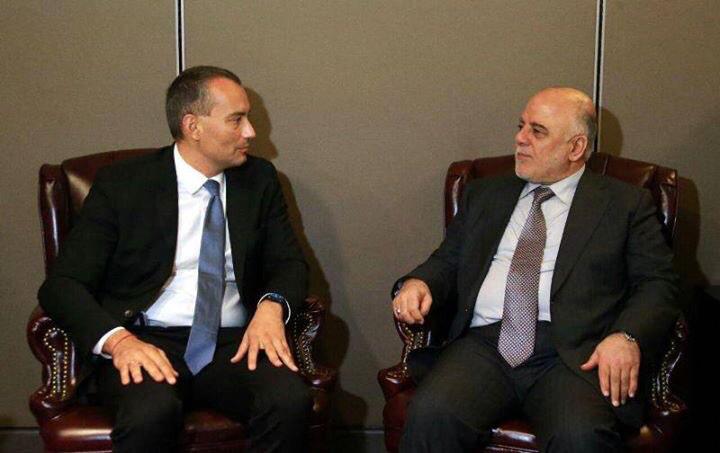
 Patrick Youssef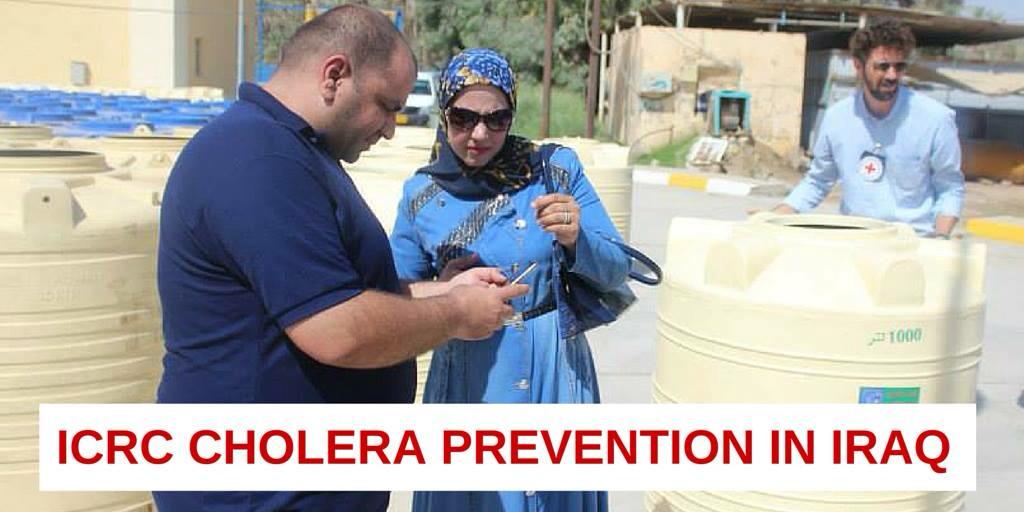
 Arwa Damon
 Neil Naessens


 Brett McGurk